Muhammad and the Birth of Islam
Interactive passage with audio narration, comprehension questions, and printable PDF.
By completing this purchase you agree to our Terms of Use and Privacy Policy. Your subscription renews automatically until you cancel. You can cancel anytime from your account settings. All sales are final and non-refundable. Digital content is available for download in your account immediately upon purchase.
What's included
Muhammad and the Birth of Islam preview and details
About this printable Muhammad and the Birth of Islam reading passage (Grades 5-8)
Sample passage and quiz from Muhammad and the Birth of Islam
Reading passage and comprehension quiz preview
Muhammad and the Birth of Islam
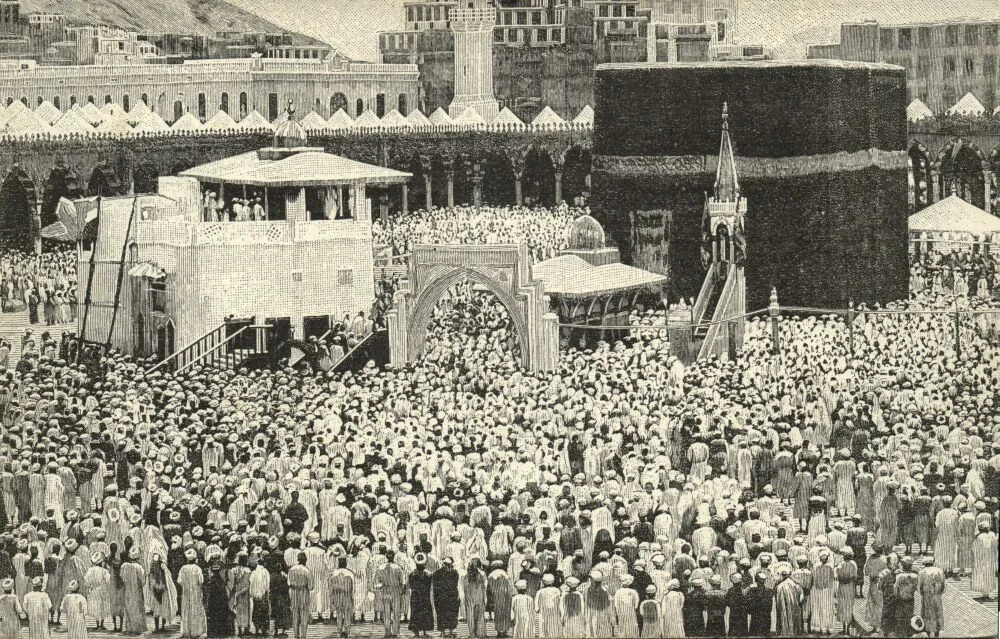
"Kaaba during the Hajj" / Wikimedia Commons (Public domain).
The rise of Islam began in the early 7th century in the Arabian city of Mecca. At that time, the Arabian Peninsula was home to many tribes, each with its own beliefs and traditions. Into this diverse and changing world, a man named Muhammad was born around 570 CE. His life and teachings would transform not only the Middle East, but also the course of world history.
Muhammad grew up as an orphan in Mecca and became known for his honesty and fairness as a merchant. The city of Mecca was an important trade center and a religious site, home to the sacred Kaaba. According to Islamic tradition, when Muhammad was about 40 years old, he began receiving messages from the angel Gabriel while meditating in a cave near Mecca. These messages became the foundation of the Qur'an, the holy book of Islam. Muhammad taught that there is only one God, called Allah, and that all people are equal in the eyes of God. This idea challenged the powerful leaders and existing social order in Mecca, who feared losing their influence and wealth.
The opposition Muhammad faced forced him and his followers to leave Mecca in 622 CE, in a journey called the Hijra to the city of Medina. This event marks the beginning of the Islamic calendar. In Medina, Muhammad became both a religious and political leader. He helped unite the tribes of the region through treaties and his teachings. Archaeological evidence, such as early mosques and historical records, show how Islam quickly spread across the Arabian Peninsula. Primary sources like the Constitution of Medina demonstrate how Muhammad established rules for cooperation among different groups, including Jews and Muslims. Over the next ten years, Muhammad and his followers gained more supporters. In 630 CE, they returned to Mecca peacefully and dedicated the Kaaba to the worship of one God.
The birth of Islam changed society in Arabia. It created a sense of unity among people who had previously been divided by tribe. Islam promoted justice, charity, and learning, and these values helped build a new social order. The teachings of Muhammad and the spread of the Qur'an influenced law, culture, and daily life throughout the Middle East and beyond. Even after Muhammad's death in 632 CE, the Islamic community continued to expand rapidly, reaching as far as North Africa and Central Asia within a century.
The story of Muhammad and the birth of Islam is significant because it shows how one person's beliefs and actions can reshape an entire region. Islam remains one of the world's major religions, and its origins connect to themes of faith, leadership, and change over time in history.
Interesting Fact: The city of Mecca is visited by millions of Muslims every year during the Hajj, a pilgrimage that follows routes traveled by Muhammad and his followers.
Comprehension quiz (8 questions)
1. Where was Muhammad born?
2. What is the Qur'an?
3. Who delivered messages to Muhammad?
4. Why did Muhammad leave Mecca?
5. What was the Hijra?
6. How did Islam affect Arabian society?
7. Muhammad returned to Mecca in 630 CE.
8. What is a pilgrimage?
Perfect for the way you teach
- Build comprehension skills
- Auto-graded quiz
- Differentiated reading
- Read together at home
- Improve fluency
- Quiet reading time
- Reading curriculum support
- Independent practice
- Track Lexile growth