Muslim Trade in West Africa — Reading Comprehension
Rate this
Premium Resource
Present
Present in classroom. No work saved
Assign
Classroom with student accounts, Track progress
Quick Play
No student accounts, assign with a link
Grades
5
6
7
8
PRINT+DIGITAL RESOURCE
This learning resource is available in interactive and printable formats. The interactive worksheet can be played online and assigned to students. The Printable PDF version can be downloaded and printed for completion by hand.
This passage explores how Muslim traders played a crucial role in connecting North and West Africa during the medieval period. It details the spread of goods like gold and salt, the introduction of Islam, and the impact on local societies. Students will learn about the rise of trading cities, the influence of geography, and how cultural and economic exchanges shaped civilizations. The text is aligned with HSS 6.2 and RH.6-8.1 standards, supporting analysis of historical sources and understanding of world world history. The passage includes a glossary, reading comprehension and writing activities, graphic organizers, and a Spanish translation. Students can listen to the passage with audio and use visual resources such as a public domain image of a trans-Saharan caravan. This resource helps students analyze cause and effect in history, understand continuity and change, and connect regional histories to global trends.
CONTENT PREVIEW
Expand content preview
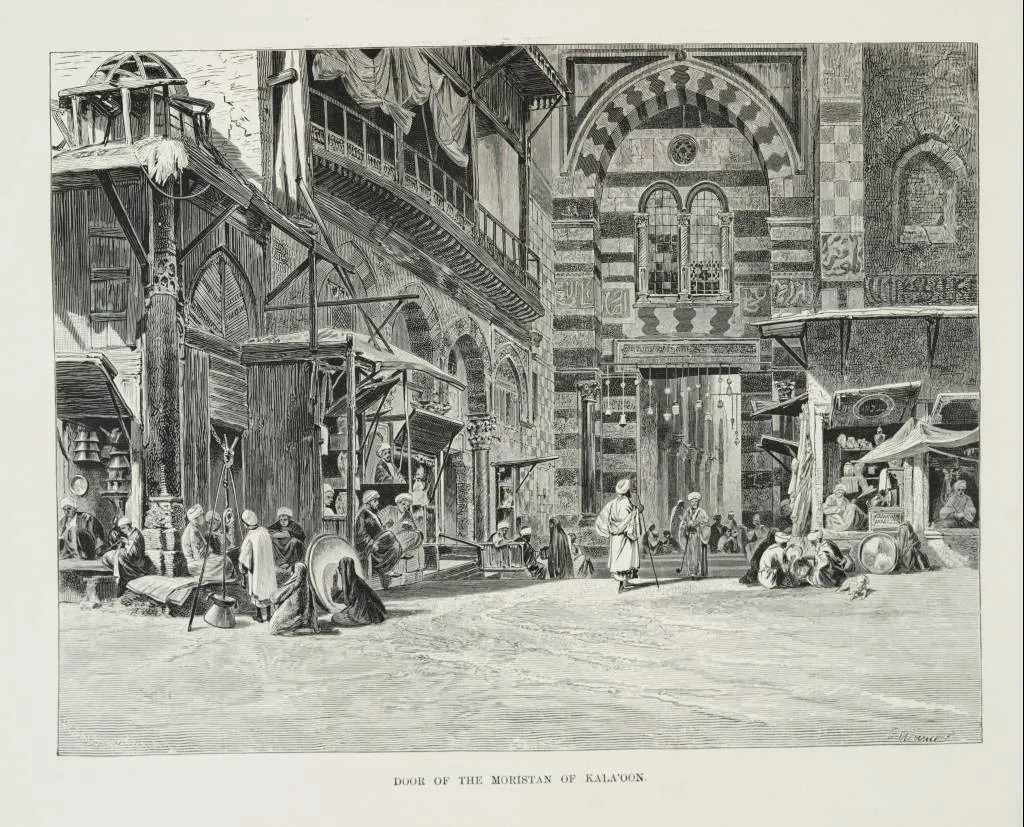
Door of the Moristan in Kala'oon, with many people selling things, or sitting nearby.Image by Carl Werner / Wikimedia Commons
Muslim traders built important links between North Africa and West Africa from the 8th to the 16th centuries. Their journeys across the Sahara Desert were key to the development of ancient states like Ghana, Mali, and Songhai. These traders not only exchanged goods but also shared their religion, customs, and new ideas, helping to shape the history of Africa and the Middle East.
The trans-Saharan trade routes connected cities such as Timbuktu, Gao, and Marrakech. Muslim merchants traveled by camel caravan, carrying gold from West African mines and salt from North African deserts. Gold was highly valued in the Middle East and Europe for making coins and jewelry, while salt was essential for preserving food and maintaining health. One of the earliest written records of this trade comes from the Arab geographer Al-Bakri, who described the city of Ghana in the 11th century as a rich and vibrant market.
The spread of Islam was closely tied to trade. Muslim traders brought their faith, language, and scholarship to West Africa. Many local rulers, including Mansa Musa of Mali in the 14th century, converted to Islam. Mansa Musa’s famous pilgrimage to Mecca in 1324 showcased the wealth of West Africa and established diplomatic ties with other Muslim lands. Along trade routes, Muslim scholars built schools and libraries, especially in cities like Timbuktu, which became centers of learning and culture.
Trade also changed daily life and social structures. Merchants gained high status, and cities grew larger and wealthier. The arrival of new technologies, such as written Arabic and advanced farming methods, improved communication and food production. However, the journey across the desert was dangerous due to harsh climate and the threat of bandits. Caravans depended on skilled navigators and trusted guides to survive the trek.
Over time, the connection between North and West Africa gave rise to powerful empires, new forms of government, and lasting cultural exchanges. These networks illustrate how geography, trade, and religion combined to shape human societies. The legacy of Muslim traders can still be seen today in art, language, and religious practices across Africa.
These trade routes are important examples of how regions are connected by shared interests, resources, and beliefs, forming part of the larger story of world history.
Interesting Fact: In the 14th century, Timbuktu’s libraries contained thousands of manuscripts on science, math, and law, making it one of the world’s greatest centers of learning.
Who described Ghana in the 11th century?
Al-BakriMansa MusaIbn BattutaSundiata
What was gold used for?
Coins and jewelryBuilding housesFeeding animalsFarming tools
Which city became a learning center?
TimbuktuCairoMeccaAlexandria
Why was salt important?
To preserve foodAs clothingFor building wallsTo make weapons
How did Muslim traders influence West Africa?
Spread Islam and new ideasDestroyed citiesBanned tradeBuilt pyramids
What was a danger on the trade routes?
BanditsFloodsSnowstormsEarthquakes
Mansa Musa traveled to Mecca. True or false?
TrueFalse
What does 'scholarship' mean in the passage?
Learning and studyMaking moneyOwning goldTraveling by camel
Perfect For:
👩🏫 Teachers
• Reading comprehension practice
• Auto-graded assessments
• Literacy skill development
👨👩👧👦 Parents
• Reading practice at home
• Comprehension improvement
• Educational reading time
🏠 Homeschoolers
• Reading curriculum support
• Independent reading practice
• Progress monitoring
Reading Features:
📖
Reading Passage
Engaging fiction or nonfiction text
❓
Comprehension Quiz
Auto-graded questions
📊
Instant Feedback
Immediate results and scoring
📄
Printable Version
Download for offline reading
🔊
Read Aloud
Voice-over with word highlighting
Reviews & Ratings
No reviews yet. Be the first to share your experience!
Related Content
Ancient Civilizations and the Environment
This engaging history reading passage explores how ancient civilizations such as Mesopotamia, Egypt, and the Maya adapte...
Gender Roles in Ancient Civilizations
This engaging history reading passage explores the roles of men and women in various ancient civilizations, including Me...
Writing Prompts Ancient Civilizations
Step into the shoes of an archaeologist with this engaging worksheet focused on ancient civilizations. Students will be ...
W.5.2.A-2W.5.1.CW.5.1.D
Power and Authority in Ancient Civilizations
This passage explores the roles of men in positions of power within ancient civilizations, focusing on their authority i...
Ancient Monarchy
This reading passage explores the concept of monarchy in ancient civilizations, focusing on the origins, structure, and ...
Evidence in Ancient History
This engaging history reading passage investigates how archaeologists and historians discover clues about how ancient pe...
Ancient Theocracy
This engaging history reading passage explores the concept of theocracy in ancient civilizations, where priests and reli...
Ancient Mathematics
This passage explores the essential role of mathematics in ancient civilizations, including Mesopotamia, Egypt, Greece, ...
Ancient Canaan
This educational passage explores the land of Canaan, the historical homeland of the ancient Israelites. Students will l...
Ancient Money Barter
This passage explores the fascinating evolution from barter to the earliest coins in ancient civilizations, focusing on ...
Ancient Science and Medicine
This comprehensive reading passage explores the development of science and medicine in ancient civilizations, including ...
Ancient Literature
This passage explores the importance of ancient stories and poems from civilizations such as Greece, India, and Israel. ...
Ancient Agriculture Farming
This passage explores the transformative impact of farming on ancient societies, examining how the Neolithic Revolution ...
Ancient Writing Systems
This engaging history reading passage explores the origins and evolution of ancient writing systems, including cuneiform...
Geography of Ancient Israel
This passage explores the rich geography of Ancient Israel, focusing on how landforms, climate, and natural resources sh...
Slavery Across Civilizations
This detailed history reading passage explores the role and impact of slavery across several ancient civilizations, incl...
Social Classes in Ancient Societies
This passage explores the concept of social hierarchies in ancient civilizations, focusing on why societies such as Meso...
Social structures in Ancient World
This passage explores the organization and significance of family life in ancient societies, focusing on how extended fa...
Polytheism and Monotheism in Ancient Times
This passage explores the religious beliefs of ancient civilizations, focusing on the differences and similarities betwe...
Women in Ancient Societies
This reading passage explores the complex roles of women in the ancient world, focusing on civilizations such as Mesopot...