New Inventions Emerge
Interactive passage with audio narration, comprehension questions, and printable PDF.
By completing this purchase you agree to our Terms of Use and Privacy Policy. Your subscription renews automatically until you cancel. You can cancel anytime from your account settings. All sales are final and non-refundable. Digital content is available for download in your account immediately upon purchase.
What's included
New Inventions Emerge preview and details
About this printable New Inventions Emerge reading passage (Grades 6-8)
Sample passage and quiz from New Inventions Emerge
Reading passage and comprehension quiz preview
New Inventions Emerge
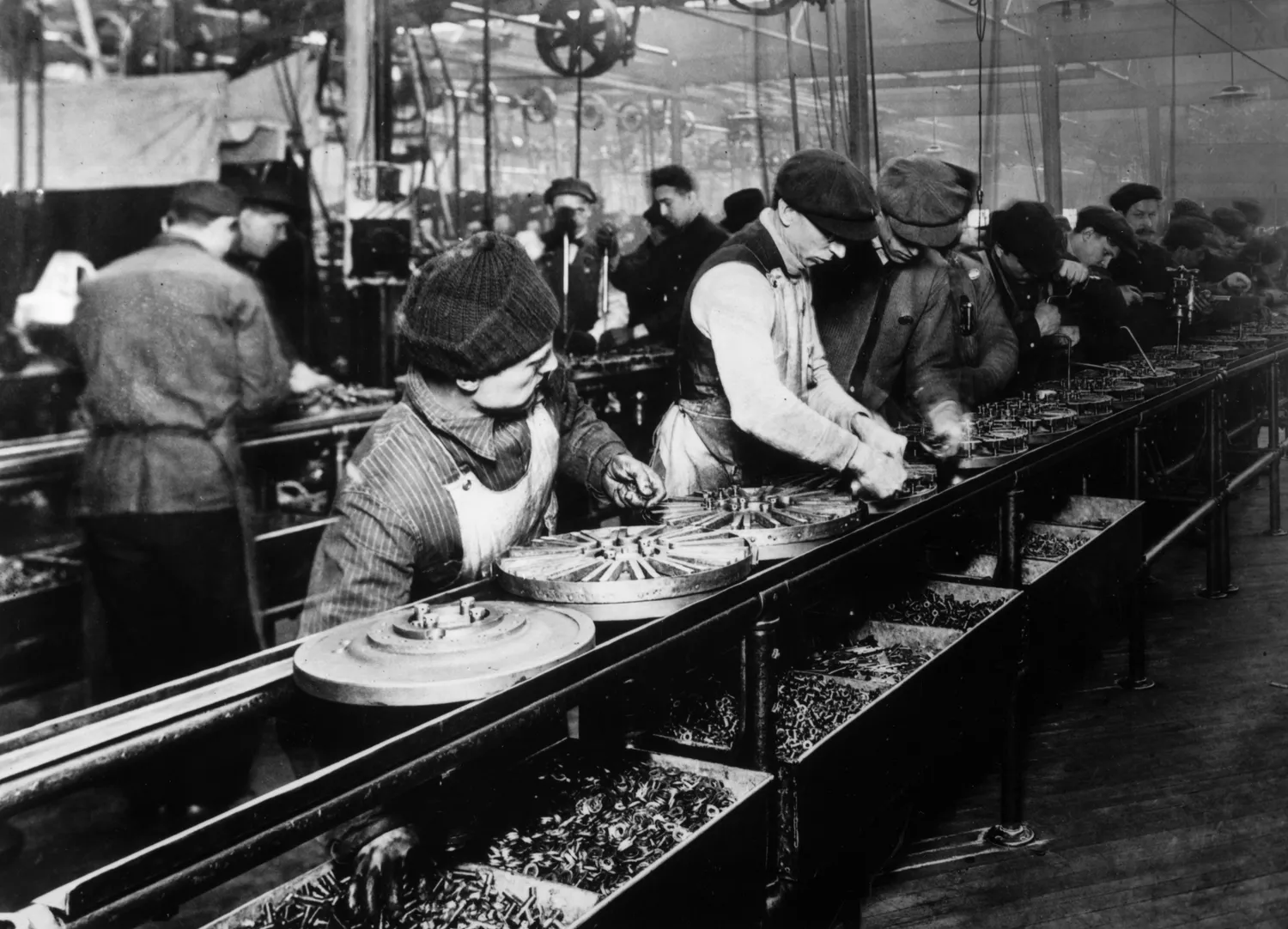
"Ford assembly line - 1913" by Unknown authorUnknown author / Wikimedia Commons (Public domain).
Throughout the 1800s, the United States experienced a wave of invention and innovation that dramatically changed American life and work. The rapid development of new technology helped solve problems of production, communication, and transportation. These changes did not happen overnight, but by comparing life before and after these inventions, we can see how deeply they shaped society.
Before the 1800s, most Americans lived and worked on small farms. Production of goods was slow and required much manual labor. This situation changed when inventors like Eli Whitney created machines such as the cotton gin in 1793. The cotton gin quickly separated cotton fibers from seeds, making cotton production much faster and more profitable. However, the increased demand for cotton also led to a rise in slavery in the South, a major conflict that affected the nation's future.
In the area of communication, the invention of the telegraph by Samuel Morse in the 1840s made it possible to send messages across long distances in minutes instead of days. This breakthrough helped connect people, businesses, and even government offices from coast to coast. The telegraph used electrical signals and a code, known as Morse code, to transmit information rapidly. This marked a major shift from handwritten letters, which were slow and sometimes unreliable.
Transportation also changed with the arrival of the steam engine and new forms of railroads. Trains, powered by steam, allowed goods and people to travel farther and faster than ever before. Factories could now sell their products in distant markets, and people could move to new cities or territories with greater ease. These changes supported the growth of cities and the spread of ideas and cultures.
One important part of these changes was the patent system, which gave inventors the legal right to control their inventions. Patents encouraged people to develop new ideas, knowing they could benefit from their work. Yet, not everyone had equal access to patents or the resources needed to invent. Women, African Americans, and immigrants often faced barriers when trying to gain recognition for their inventions.
Some Americans worried about the effects of new technology. Machines sometimes replaced workers, leading to unemployment and changes in family life. Others argued that these inventions improved life by making goods cheaper and more available, while also creating new kinds of jobs. This debate continues today as we think about the role of technology in society.
In summary, the inventions of the 1800s set the stage for rapid industrialization and modernization in the U.S. These advancements changed how people lived, worked, and communicated, but they also brought new challenges and conflicts. By analyzing the causes and effects of these inventions, historians can better understand the complex story of American progress.
Interesting Fact: In 1844, the first telegraph message sent by Samuel Morse read, "What hath God wrought?" This historic event marked the beginning of instant communication.
Comprehension quiz (8 questions)
1. Who invented the cotton gin?
2. What did the telegraph improve?
3. What powered early trains?
4. How did the cotton gin affect slavery?
5. Why was the patent system important?
6. What is an effect of new machines?
7. The first telegraph message was sent in 1844.
8. What does 'innovation' mean?
Perfect for the way you teach
- Build comprehension skills
- Auto-graded quiz
- Differentiated reading
- Read together at home
- Improve fluency
- Quiet reading time
- Reading curriculum support
- Independent practice
- Track Lexile growth