Factory Work in Industrial America
Interactive passage with audio narration, comprehension questions, and printable PDF.
By completing this purchase you agree to our Terms of Use and Privacy Policy. Your subscription renews automatically until you cancel. You can cancel anytime from your account settings. All sales are final and non-refundable. Digital content is available for download in your account immediately upon purchase.
What's included
Factory Work in Industrial America preview and details
About this printable Factory Work in Industrial America reading passage (Grades 6-8)
Sample passage and quiz from Factory Work in Industrial America
Reading passage and comprehension quiz preview
Factory Work in Industrial America
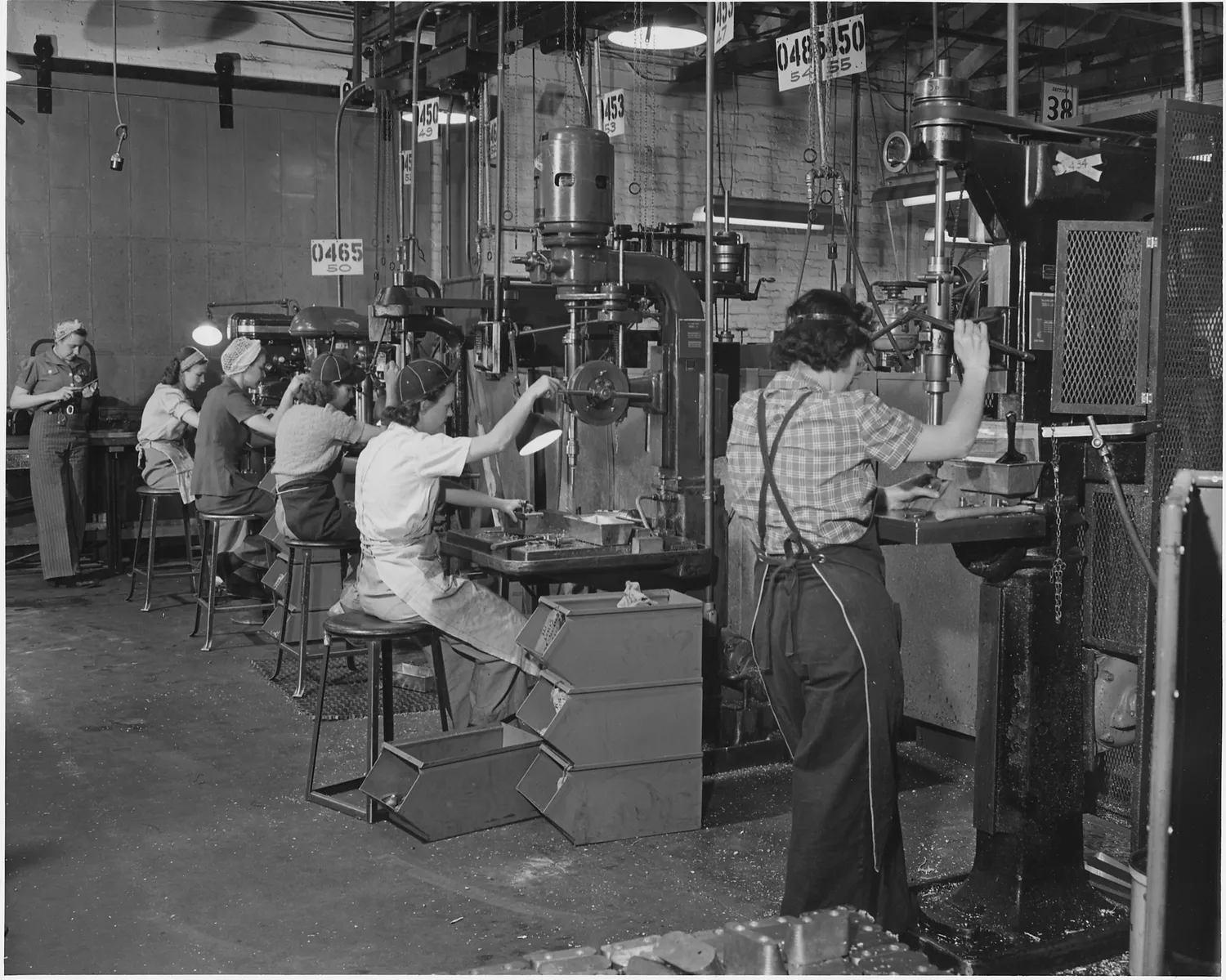
"Women man America's machines in a west coast airplane factory, where the swing shift of drill press operators is... - NARA - 196486" by Source: Wikimedia Commons (Public domain).
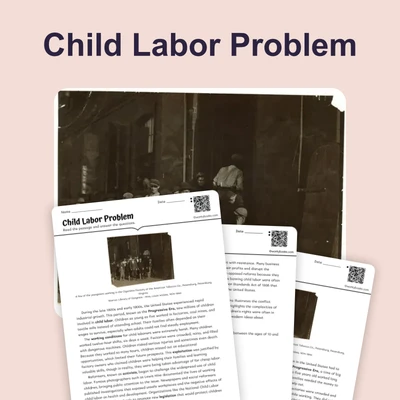
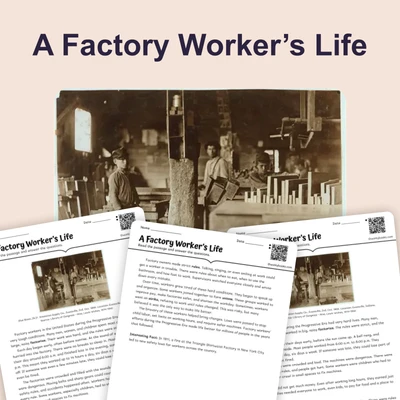
Factory work in the United States during the late 1800s and early 1900s was defined by long hours, low pay, and unsafe environments. As industrial cities grew, thousands of people moved from rural areas and other countries to find jobs in factories. These factories produced goods like textiles, steel, and automobiles, helping the nation become an economic power. However, the rapid growth of industry brought serious challenges for workers. Many laborers, including women and children, worked ten to twelve hours a day, often six days a week. Their daily lives were shaped by strict schedules and repetitive tasks.
Working conditions inside factories were often dangerous and unhealthy. Machines were large, fast, and sometimes lacked safety protections. Workers risked injury from sharp parts, moving belts, and toxic fumes. Crowded spaces increased the risk of accidents, and ventilation was usually poor. Factory owners, focused on productivity and profit, rarely invested in safety improvements. For many workers, poor working conditions were simply part of the job.
Wages were typically very low, especially for women and children. Some families depended on every member, even young children, bringing home a paycheck to survive. This system of child labor meant that many children missed school and faced the same dangers as adults. Despite their hard work, factory laborers had little individual power to change their situations. If a worker was injured or complained, they could be easily replaced.
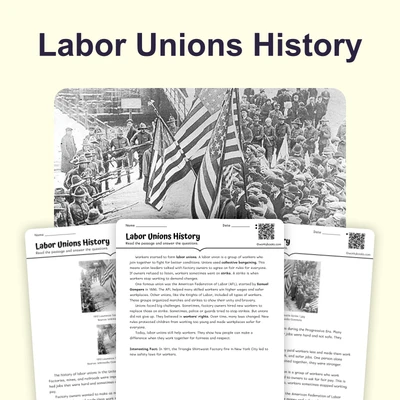
In response to these problems, workers began to organize. The rise of labor unions was a major development of the Progressive Era. Unions like the American Federation of Labor (AFL) and the Knights of Labor united workers to demand better wages, safer workplaces, and shorter hours. Through strikes, protests, and negotiations, unions tried to force factory owners to improve conditions. Although not all efforts were immediately successful, some strikes led to higher pay or new safety rules. These actions often met resistance from factory owners and sometimes even from the government.
The movement for reform gained support from journalists and social activists known as muckrakers. They published articles and photographs exposing the harsh realities of factory work. This public attention helped inspire new laws, such as child labor regulations and workplace safety standards. Over time, these reforms changed the American workplace and established rights most workers have today, like the right to a minimum wage and safer working environments.
Factory work during the Progressive Era was marked by hardship, but also by determination and the desire for change. The struggles of workers and the rise of labor unions shaped the future of American labor and led to important social and legal reforms.
Interesting Fact: In 1911, the Triangle Shirtwaist Factory fire in New York City killed 146 workers, mostly young women. The tragedy led to major improvements in factory safety laws.
Comprehension quiz (8 questions)
1. What did many factories produce?
2. Who often worked long hours in factories?
3. What was a common danger in factories?
4. Why did workers form unions?
5. How did muckrakers help workers?
6. What was one result of the Triangle Shirtwaist fire?
7. Factory work was always safe. True or false?
8. What does 'wages' mean?
Perfect for the way you teach
- Build comprehension skills
- Auto-graded quiz
- Differentiated reading
- Read together at home
- Improve fluency
- Quiet reading time
- Reading curriculum support
- Independent practice
- Track Lexile growth