Child Labor Problem
Interactive passage with audio narration, comprehension questions, and printable PDF.
By completing this purchase you agree to our Terms of Use and Privacy Policy. Your subscription renews automatically until you cancel. You can cancel anytime from your account settings. All sales are final and non-refundable. Digital content is available for download in your account immediately upon purchase.
What's included
Child Labor Problem preview and details
About this printable Child Labor Problem reading passage (Grades 6-8)
Sample passage and quiz from Child Labor Problem
Reading passage and comprehension quiz preview
Child Labor Problem
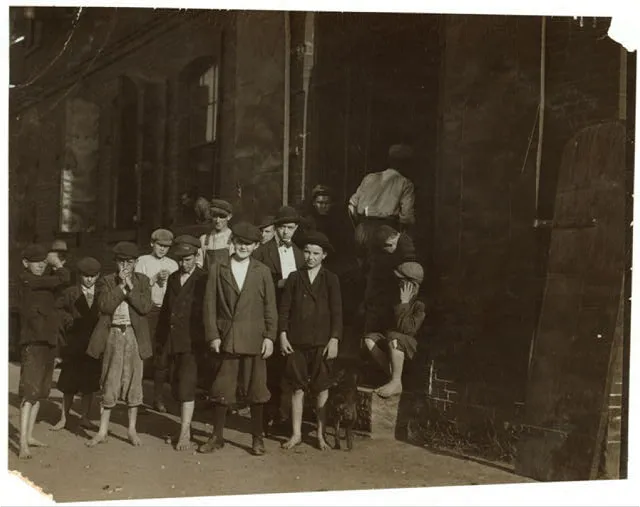
Source: Library of Congress - Hine, Lewis Wickes, 1874-1940
During the late 1800s and early 1900s, the United States experienced rapid industrial growth. This period, known as the Progressive Era, saw millions of children involved in child labor. Children as young as five worked in factories, coal mines, and textile mills instead of attending school. Their families often depended on their wages to survive, especially when adults could not find steady employment.
The working conditions for child laborers were extremely harsh. Many children worked twelve-hour shifts, six days a week. Factories were crowded, noisy, and filled with dangerous machines. Children risked serious injuries and sometimes even death. Because they worked so many hours, children missed out on educational opportunities, which limited their future prospects. This exploitation was justified by factory owners who claimed children were helping their families and learning valuable skills, though in reality, they were being taken advantage of for cheap labor.
Reformers, known as activists, began to challenge the widespread use of child labor. Famous photographers such as Lewis Hine documented the lives of working children, bringing public attention to the issue. Newspapers and social reformers published investigations that exposed unsafe workplaces and the negative effects of child labor on health and development. Organizations like the National Child Labor Committee worked tirelessly to promote new legislation that would protect children and set minimum age requirements for work.
Despite these efforts, progress was slow and met with resistance. Many business owners argued that ending child labor would hurt their profits and disrupt the economy. Some families, struggling with poverty, also opposed reforms because they depended on their children's income. As a result, laws banning child labor were often weak or poorly enforced. It was not until the Fair Labor Standards Act of 1938 that strong federal laws finally limited child labor across the United States.
The problem of child labor during the Progressive Era illustrates the conflict between economic growth and social responsibility. It highlights the complexities of reform, where business interests, family needs, and children's rights were often in conflict. The movement to end child labor helped shape modern ideas about children's welfare, education, and workplace safety.
Interesting Fact: In 1900, about 1 in 6 American children between the ages of 10 and 15 was employed for pay outside the home.
Comprehension quiz (8 questions)
1. What was the Progressive Era?
2. Where did many children work?
3. Who took photographs of working children?
4. Why did families often allow child labor?
5. How did reformers fight child labor?
6. What was the effect of the Fair Labor Standards Act?
7. Child labor ended quickly in the U.S.
8. What does 'exploitation' mean?
Common Core standards for Child Labor Problem
Explain events, procedures, ideas, or concepts in a historical, scientific, or technical text, including what happened and why, based on specific information in the text.
Determine the meaning of general academic and domain-specific words or phrases in a text relevant to a grade 4 topic or subject area.
Write informative/explanatory texts to examine a topic and convey ideas and information clearly.
Perfect for the way you teach
- Build comprehension skills
- Auto-graded quiz
- Differentiated reading
- Read together at home
- Improve fluency
- Quiet reading time
- Reading curriculum support
- Independent practice
- Track Lexile growth