This learning resource is available in interactive and printable formats. The interactive worksheet can be played online and assigned to students. The Printable PDF version can be downloaded and printed for completion by hand.
This engaging history reading passage explores the life and legacy of Sargon of Akkad, the founder of the world's first known empire in ancient Mesopotamia. Students will learn how Sargon rose from humble origins to unite the city-states of Sumer through military conquest and innovative government, establishing the Akkadian Empire around 2334 BCE. The passage integrates key vocabulary such as 'city-state,' 'conquest,' and 'cuneiform,' and examines the historical context, primary sources, and the impact of Sargon's reign on later civilizations. Activities include comprehension questions, a writing task, graphic organizers, timeline, and a glossary to support close reading and historical analysis. The lesson is aligned with CA HSS 6.2.2 and CCSS RI.6.1, and provides read aloud audio and Spanish translation for accessibility.
CONTENT PREVIEW
Expand content preview
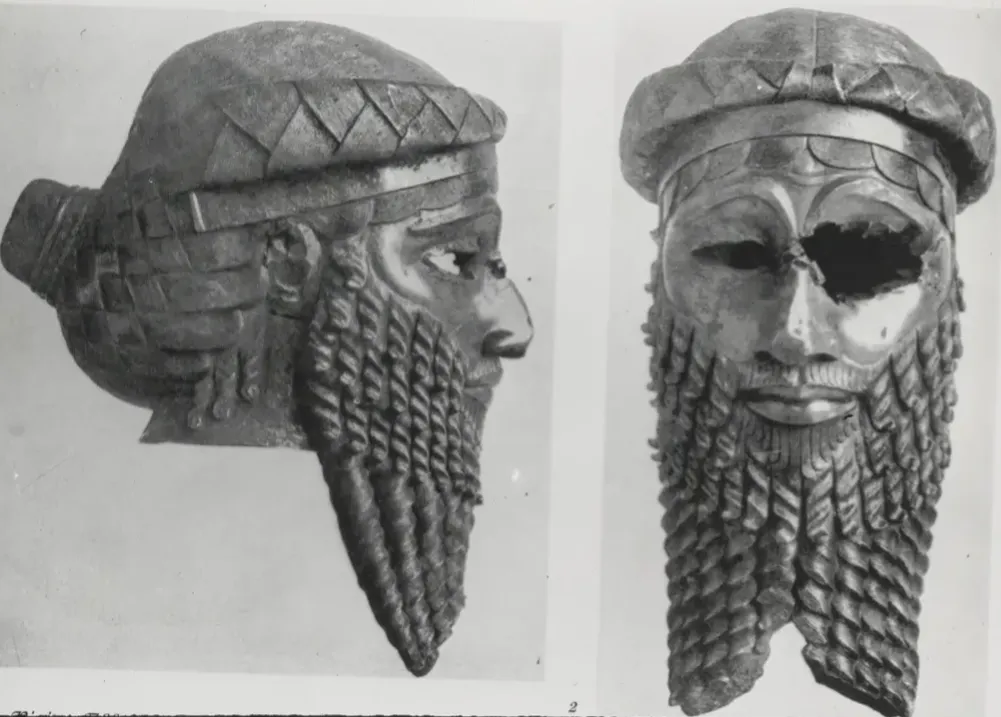
"Hoofd van Sargon van Akkad Twee zichten, GD006689" by Unknown authorUnknown author / Wikimedia Commons (Public domain).
Sargon of Akkad is recognized as one of history’s most influential rulers because he founded the world’s first known empire in ancient Mesopotamia. Around 2334 BCE, Sargon rose to power in the northern Mesopotamian city-state of Akkad and began a campaign that dramatically changed the political landscape of the region.
Before Sargon, Mesopotamia was divided into many independent city-states such as Uruk, Ur, and Lagash. These city-states often competed for resources and land, and were ruled by their own kings. Sargon, originally a cupbearer to the king of Kish, overthrew his master and began conquering neighboring territories. He used a strong, disciplined military and new tactics, such as maintaining a standing army and appointing loyal officials to govern conquered cities. Archaeological discoveries, like royal inscriptions and the famous 'Sargon Legend' tablet, provide evidence of his military campaigns and administration. According to one inscription, Sargon claimed to have ruled from the 'Upper Sea to the Lower Sea,' referring to the Mediterranean and the Persian Gulf.
Under Sargon’s leadership, the Akkadian Empire expanded rapidly. He united Sumerian and Akkadian speakers, creating a single political entity that spanned much of present-day Iraq and parts of Syria. His administration relied on the use of cuneiform writing to record laws, taxes, and official decrees. Sargon established a central government, installed his own family members as governors, and encouraged trade across his empire. The empire’s capital, Akkad, became a center for culture and commerce, though its exact location remains unknown to archaeologists today. The Akkadian language also replaced Sumerian as the region’s common language for administration and literature.
The impact of Sargon’s empire was significant. He created a model for future rulers—such as Hammurabi of Babylon—on how to organize and control a vast territory. Despite facing rebellions and geographic challenges like the unpredictable Euphrates River, Sargon’s system of governance endured for over a century after his death. The Akkadian Empire eventually fell around 2154 BCE due to internal strife and invasions by the Gutians, but its legacy shaped Mesopotamian civilization for centuries. Sargon’s success demonstrated the power of unification, innovation, and strong leadership in shaping history.
Sargon’s rise and the Akkadian Empire connect to broader themes of world history, such as the development of early states, the importance of administration, and the lasting influence of Mesopotamian culture on later societies.
Interesting Fact: Sargon’s birth story became legendary—he was said to have been set afloat in a basket on a river as a baby, a tale similar to that of Moses in later traditions.
Who was Sargon of Akkad?
Founder of the Akkadian EmpireKing of EgyptBabylonian farmerGreek philosopher
Which city was Sargon’s capital?
AkkadUrBabylonNineveh
When did Sargon rise to power?
c. 2334 BCE1200 BCE300 BCE500 CE
Why was Sargon’s military effective?
Used a standing armyBuilt pyramidsOnly traded goodsInvented the wheel
How did Sargon control conquered cities?
Appointed loyal officialsDestroyed all citiesIgnored themGave them independence
What happened after Sargon’s death?
His descendants ruledEmpire was forgottenEgypt took overSumerians ruled
The Akkadian Empire lasted about 180 years. True or false?
TrueFalse
What does 'cuneiform' mean?
Wedge-shaped writingCity wallsA type of boatA mountain
Perfect For:
👩🏫 Teachers
• Reading comprehension practice
• Auto-graded assessments
• Literacy skill development
👨👩👧👦 Parents
• Reading practice at home
• Comprehension improvement
• Educational reading time
🏠 Homeschoolers
• Reading curriculum support
• Independent reading practice
• Progress monitoring
Reading Features:
📖
Reading Passage
Engaging fiction or nonfiction text
❓
Comprehension Quiz
Auto-graded questions
📊
Instant Feedback
Immediate results and scoring
📄
Printable Version
Download for offline reading
🔊
Read Aloud
Voice-over with word highlighting
Reviews & Ratings
No reviews yet. Be the first to share your experience!
Related Content
Daily Life in Ancient Mesopotamia
This engaging history reading passage explores daily life in ancient Mesopotamia, focusing on the social structure, role...
Trade Between Mesopotamian Cities
This history reading passage explores the development and significance of trade networks among ancient Mesopotamian citi...
Environmental Challenges in Mesopotamia
This reading passage explores the environmental challenges faced by ancient Mesopotamia, the 'land between the rivers.' ...
Mesopotamia Ziggurats
This engaging history reading passage explores the awe-inspiring ziggurats of ancient Mesopotamia, focusing on their con...
Mesopotamian Kings and Priests
This reading passage explores the complex relationship between power, religion, and patriarchy in Ancient Mesopotamia, f...
Mesopotamia Agriculture
This engaging reading passage explores how the geography of Mesopotamia shaped its civilization through innovative irrig...
Math and Astronomy in Mesopotamia
This engaging passage explores the scientific achievements of ancient Mesopotamia, the region between the Tigris and Eup...
Persian Empire in Mesopotamia
This engaging passage explores the rise of the Persian Empire and its impact on Mesopotamia, aligning with CA HSS 6.2 an...
Mesopotamian Inventions: Wheel, Plow, and More
This passage explores the major inventions of ancient Mesopotamia, focusing on technological breakthroughs such as the w...
Life Under Mesopotamian Empire
This passage explores the transformation of Mesopotamian life under powerful empires, including Sargon’s Akkadian Empire...
Evidence in Ancient History
This engaging history reading passage investigates how archaeologists and historians discover clues about how ancient pe...
Assyrian and Babylonian Empires
This comprehensive history reading passage explores the rise and fall of Assyria and Babylon, two great empires that rul...
The Tigris and Euphrates Rivers
This engaging history reading passage explores the vital role of the Tigris and Euphrates rivers in the development of a...
Ancient Greek City-States
This history reading passage explores the development and significance of city-states in ancient civilizations, focusing...
Code of Hammurabi
This rigorous history reading passage explores Hammurabi's Code, one of the earliest and most influential legal codes in...
Ancient Agriculture Farming
This passage explores the transformative impact of farming on ancient societies, examining how the Neolithic Revolution ...
Epic of Gilgamesh
This engaging passage delves into The Epic of Gilgamesh, the oldest known epic poem and a key artifact from ancient Meso...
Ancient Mathematics
This passage explores the essential role of mathematics in ancient civilizations, including Mesopotamia, Egypt, Greece, ...
Women in Ancient Societies
This reading passage explores the complex roles of women in the ancient world, focusing on civilizations such as Mesopot...
Mesopotamia—Informatonal Text
This informational text on Mesopotamia is a great way to practice reading comprehension. Students will read the text the...