This learning resource is available in interactive and printable formats. The interactive worksheet can be played online and assigned to students. The Printable PDF version can be downloaded and printed for completion by hand.
This Grade 4-5 science passage explores how the brain uses the senses to help us understand and interact with the world around us. Students will learn about the five main senses—sight, hearing, smell, taste, and touch—and how these senses send information to the brain. The passage introduces key terms such as neurons, sensory organs, and perception, providing clear definitions and real-world examples. It also explains how the brain processes sensory information, allowing us to react to our environment. The passage is aligned with NGSS standards and includes audio integration for accessibility. Interactive activities such as a multiple-choice quiz and writing prompts encourage students to think critically about scientific concepts, make real-life connections, and understand cause and effect relationships. An engaging glossary and Spanish translation are provided to support language learners. Ideal for classroom or independent study.
CONTENT PREVIEW
Expand content preview
How-Your-Brain-Uses-Your-Senses
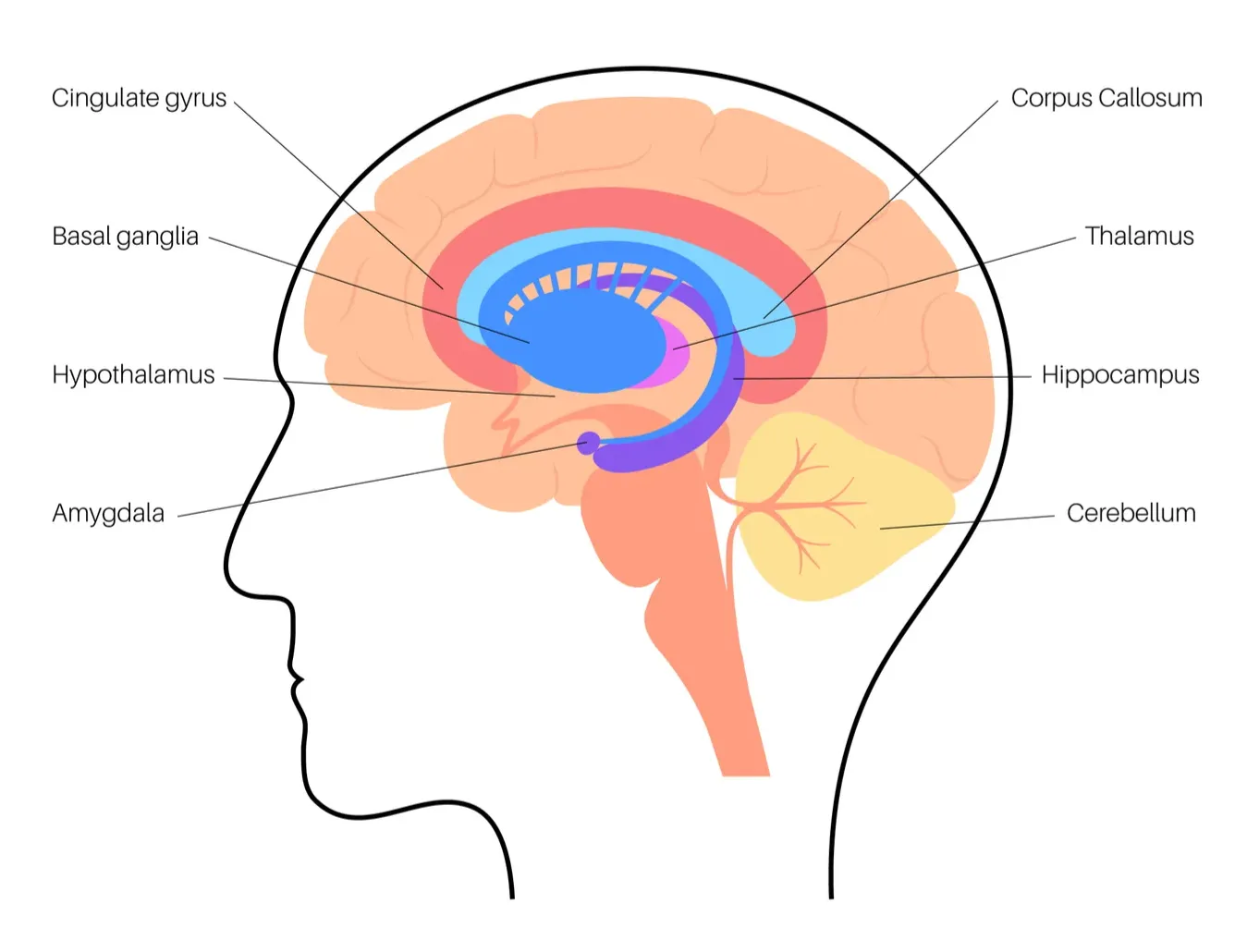
The brain is the command center of your body. It helps you think, learn, and understand what is happening around you. To do this, the brain needs information from your senses.
Your body has five main senses: sight, hearing, smell, taste, and touch. Each sense has special body parts called sensory organs. For example, your eyes help you see, your ears help you hear, your nose helps you smell, your tongue helps you taste, and your skin helps you feel touch.
When you see a bright red apple, your eyes collect the light and send a message to your brain. When you touch something hot, nerves in your skin send a signal to your brain to pull your hand away. The cells that carry these messages are called neurons. Neurons are like tiny messengers that travel very fast. All your senses send information to your brain using neurons.
Your brain takes all this information and makes sense of it. This process is called perception. For example, when you hear a dog bark, your ears send the sound to your brain, and your brain tells you, "That is a dog barking." If you smell cookies, your brain helps you know what you are smelling and might make you feel hungry!
Your senses and brain work together every second. They help you cross the street safely, enjoy your favorite foods, listen to music, and even feel the warmth of the sun. Without your senses and brain working together, you would not know what is happening around you.
Interesting Fact: Some animals have senses much stronger than humans. For example, dogs can smell thousands of times better than people!
Which organ controls your body?
BrainHeartLungsStomach
How many main senses do we have?
FiveThreeSevenTwo
What are neurons?
Message-carrying cellsBonesMusclesOrgans
What happens when you touch something hot?
Skin sends signal to brainBrain sends signal to skinHand gets colderYou taste it
How does the brain know you hear a dog bark?
Ears send sound to brainEyes see the dogSkin feels vibrationNose smells the dog
Why do you feel hungry when you smell cookies?
Brain connects smell with hungerCookies are loudEyes see the cookiesTongue tastes the cookies
Dogs can smell better than humans. True or false?
TrueFalse
What is perception?
Understanding information from sensesRunning fastEating foodTouching objects
Perfect For:
👩🏫 Teachers
• Reading comprehension practice
• Auto-graded assessments
• Literacy skill development
👨👩👧👦 Parents
• Reading practice at home
• Comprehension improvement
• Educational reading time
🏠 Homeschoolers
• Reading curriculum support
• Independent reading practice
• Progress monitoring
Reading Features:
📖
Reading Passage
Engaging fiction or nonfiction text
❓
Comprehension Quiz
Auto-graded questions
📊
Instant Feedback
Immediate results and scoring
📄
Printable Version
Download for offline reading
🔊
Read Aloud
Voice-over with word highlighting
Reviews & Ratings
No reviews yet. Be the first to share your experience!
Related Content
The Nature of Life Science
This passage, aligned with NGSS MS-LS1-1, introduces students in grades 6-8 to the foundational concepts of life science...
MS-LS1-1
Aerobic Organisms
This engaging, audio-integrated reading passage, titled 'Aerobic Organisms: The Breath of Life,' introduces students to ...
From Cells to Organisms
This educational passage, "From Cells to Organisms," explores the fundamental concept of how living things are built, st...
Using Dichotomous Keys to Identify Organisms
This audio-integrated passage, 'Using Dichotomous Keys to Identify Organisms,' introduces 6th-grade students to a fundam...
Science Vocabulary
This worksheet on domain-specific words will help students learn some science vocabulary. Students will be asked to matc...
L.3.6L.3.4.A
The Aorta: Molecules to Organisms of the Body's Largest Artery
This educational content features a fascinating reading passage, audio integrated for an enhanced learning experience, a...
Simple Machines Science Report
This science writing task requires students to clearly explain how three simple machines work using precise domain-speci...
W.5.4
Tools and Technology for Life Scientists
This informational passage for grades 6-8 explores the essential tools and technology used by life scientists, aligned t...
MS-LS1-1MS-LS1.A
Cryptobiosis: Pausing Life to Survive
This engaging, audio-integrated reading passage explores the amazing biological process of cryptobiosis, where organisms...
From Senses to Actions
This Grade 4-5 science passage, 'From Senses to Actions,' explores how our senses work together with the brain and body ...
The Science of Hibernation
This educational module, featuring an audio-integrated reading passage titled 'The Science of Hibernation,' is designed ...
The Life Cycle of a Giant Panda
This engaging, audio-integrated reading passage, titled "The Life Cycle of a Giant Panda," explores the fascinating stag...
How Bats Use Sound to See
This Grade 4-5 science passage, 'How Bats Use Sound to See,' explores the fascinating process of echolocation in bats. S...
Citizen Science and Ecological Monitoring
This engaging passage for grades 6-8 introduces the concept of citizen science and its critical role in ecological monit...
MS-LS2-1
The Pumpkin Life Cycle
This informational worksheet explores the pumpkin lifecycle, guiding students through procedural steps in a scientific t...
RI.2.3RI.2.10
Life Cycle Stages
This comprehensive word sort activity helps Grade 3 students understand the universal stages of life cycles as outlined ...
Growth and Development of Organisms
This middle school science passage, aligned with NGSS standards MS-LS1-4 and MS-LS1-5, provides an in-depth look at the ...
MS-LS1-4MS-LS1-5
What Is Earth Science?
This engaging middle school science passage introduces students to the field of Earth science, aligning with NGSS standa...
MS-ESS1MS-ESS2MS-ESS3SEP
Life Makers
This engaging word sort activity helps elementary students understand the diverse methods of reproduction in living orga...
Barnacles and Biofouling
This engaging, audio-integrated reading passage, 'Barnacles and Biofouling,' delves into the fascinating world of how ti...