The Americas: Developing in Isolation
Interactive passage with audio narration, comprehension questions, and printable PDF.
By completing this purchase you agree to our Terms of Use and Privacy Policy. Your subscription renews automatically until you cancel. You can cancel anytime from your account settings. All sales are final and non-refundable. Digital content is available for download in your account immediately upon purchase.
What's included
The Americas: Developing in Isolation preview and details
About this printable The Americas: Developing in Isolation reading passage (Grades 5-8)
Sample passage and quiz from The Americas: Developing in Isolation
Reading passage and comprehension quiz preview
The Americas: Developing in Isolation
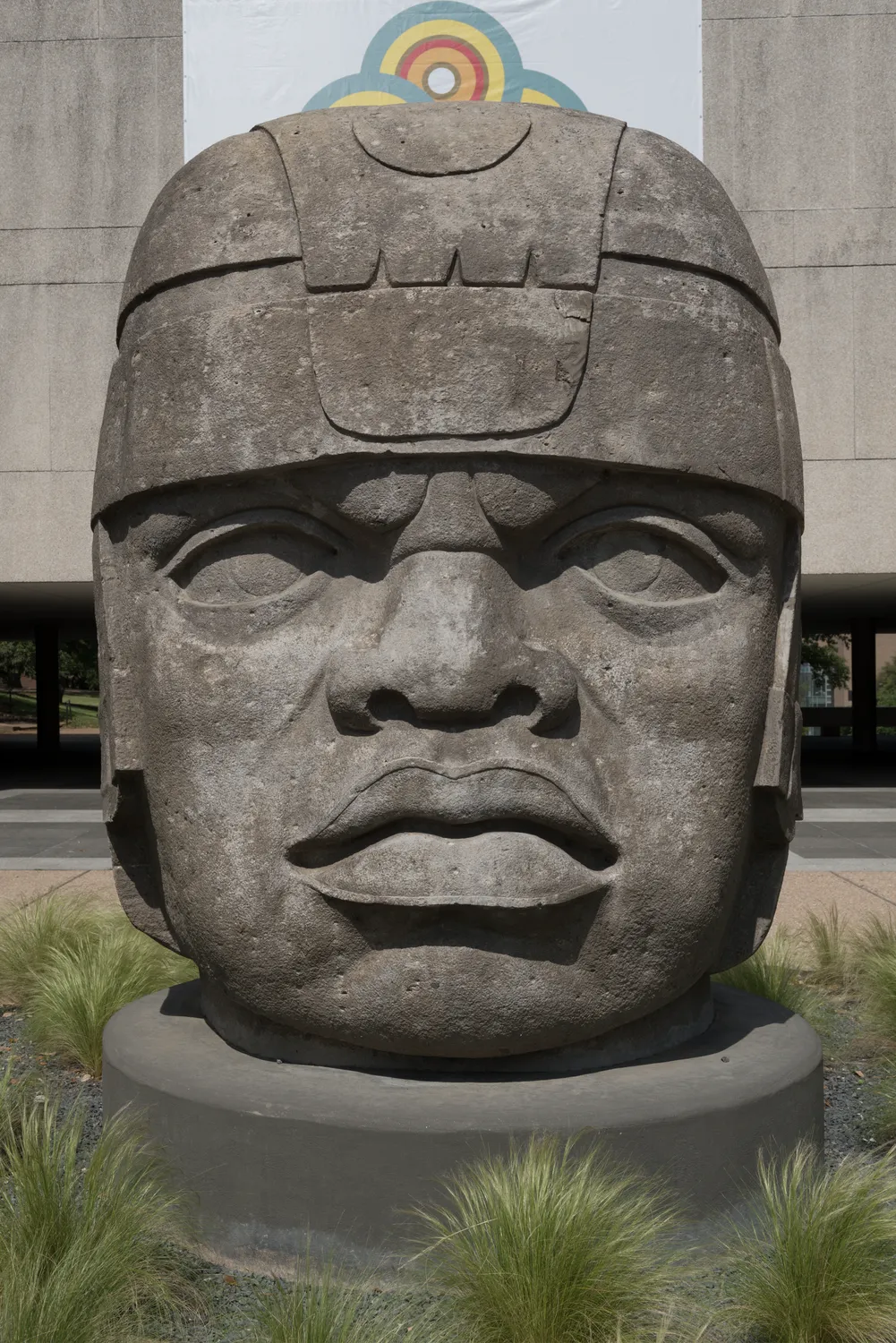
"The San Lorenzo Monument, a replica of an Olmec colossal head of ancient Mesoamerica. Also known as El Rey, the monument is located on the campus of the University of Texas at Austin" by Carol M. Highsmith / Wikimedia Commons
The Americas are a vast region, separated from Eurasia and Africa by wide oceans. In ancient times, this separation meant that civilizations in the Americas developed in isolation, without regular contact with the rest of the world. The geography of the Americas, including towering mountain ranges, dense rainforests, and wide deserts, made travel and communication between regions difficult. This isolation shaped the emergence of unique societies and cultures from North to South America.
One of the earliest complex societies in the Americas was the Olmec civilization, which arose around 1200 BCE along the Gulf Coast of present-day Mexico. The Olmec built large stone monuments, including colossal heads carved from basalt, some weighing over 20 tons. Archaeologists believe these heads may represent rulers or ancestors, showing the importance of leadership and social hierarchy. The Olmec also developed the earliest known writing systems and a calendar in Mesoamerica, innovations that influenced later civilizations.
Further south, the Maya civilization thrived in the rainforests of Central America from about 250 CE to 900 CE. The Maya created advanced cities such as Tikal and Copán, featuring monumental pyramids and plazas. Their society was organized into city-states, each ruled by a king and supported by nobles, priests, and skilled artisans. Maya achievements include a complex mathematics system using the concept of zero, a detailed astronomy tradition, and beautiful hieroglyphic writing. Archaeological evidence, such as the Dresden Codex, shows how the Maya recorded historical events, religious ceremonies, and daily life.
Geography played a major role in shaping these civilizations. The Andes mountains of South America were home to early cultures such as the Chavín (around 900 BCE), who adapted to high-altitude farming by building terraces and irrigation systems. Meanwhile, maize agriculture spread slowly across the Americas because of barriers like mountains and deserts. As a result, societies developed at different rates and with distinct traditions. For example, while the Maya and Olmec built cities in the jungle, peoples of the North American plains lived as hunter-gatherers for much longer.
The isolation of the Americas meant that technologies such as the wheel or metal tools were not adopted as early as in Eurasia. However, American societies created their own innovations, including rubber balls, chocolate, and unique styles of pottery and textiles. Social hierarchies, religious beliefs, and trade networks developed independently, resulting in cultures that were both diverse and sophisticated.
Studying the ancient Americas reveals how geography and isolation influenced the rise of complex societies. Despite challenges, people built cities, developed writing and mathematics, and formed rich traditions that shaped the continent's history. This story connects to broader themes of how environment and human creativity interact across world civilizations.
Interesting Fact: The Olmec colossal heads are so large that archaeologists believe hundreds of workers were needed just to move a single head from its quarry to its final location.
Comprehension quiz (8 questions)
1. What separated the Americas from Eurasia?
2. Which group built colossal stone heads?
3. Which Maya city is mentioned?
4. Why did maize farming spread slowly?
5. What did the Maya use the Dresden Codex for?
6. How did geography affect civilizations?
7. The Americas quickly adopted metal tools.
8. What is a terrace?
Perfect for the way you teach
- Build comprehension skills
- Auto-graded quiz
- Differentiated reading
- Read together at home
- Improve fluency
- Quiet reading time
- Reading curriculum support
- Independent practice
- Track Lexile growth