The Cytoplasm: The Cell's Inner World — Reading Comprehension
Rate this
Premium Resource
Present
Present in classroom. No work saved
Assign
Classroom with student accounts, Track progress
Quick Play
No student accounts, assign with a link
Grades
3
4
5
6
PRINT+DIGITAL RESOURCE
This learning resource is available in interactive and printable formats. The interactive worksheet can be played online and assigned to students. The Printable PDF version can be downloaded and printed for completion by hand.
This reading passage, on the Cytoplasm is designed for middle school students and aligns with the NGSS standard MS-LS1-2 (From Molecules to Organisms: Structures and Processes). It focuses on the Disciplinary Core Idea LS1.A: Structure and Function, specifically exploring how **special structures are responsible for particular functions** within a cell and how the **cell membrane forms the boundary that controls what enters and leaves the cell**. The passage defines key terms like **cytoplasm**, **organelles**, and **cell membrane** using a simple, easy-to-understand analogy of a city. It highlights the crucial role of the cytoplasm in holding organelles and facilitating chemical reactions. The text also explains the function of the cell membrane and provides examples of organelles like **mitochondria** and **ribosomes**. This resource is audio-integrated, making it accessible for diverse learners, and includes a fun fact to engage students. It is a comprehensive tool for teaching the fundamental concepts of cell biology.
CONTENT PREVIEW
Expand content preview
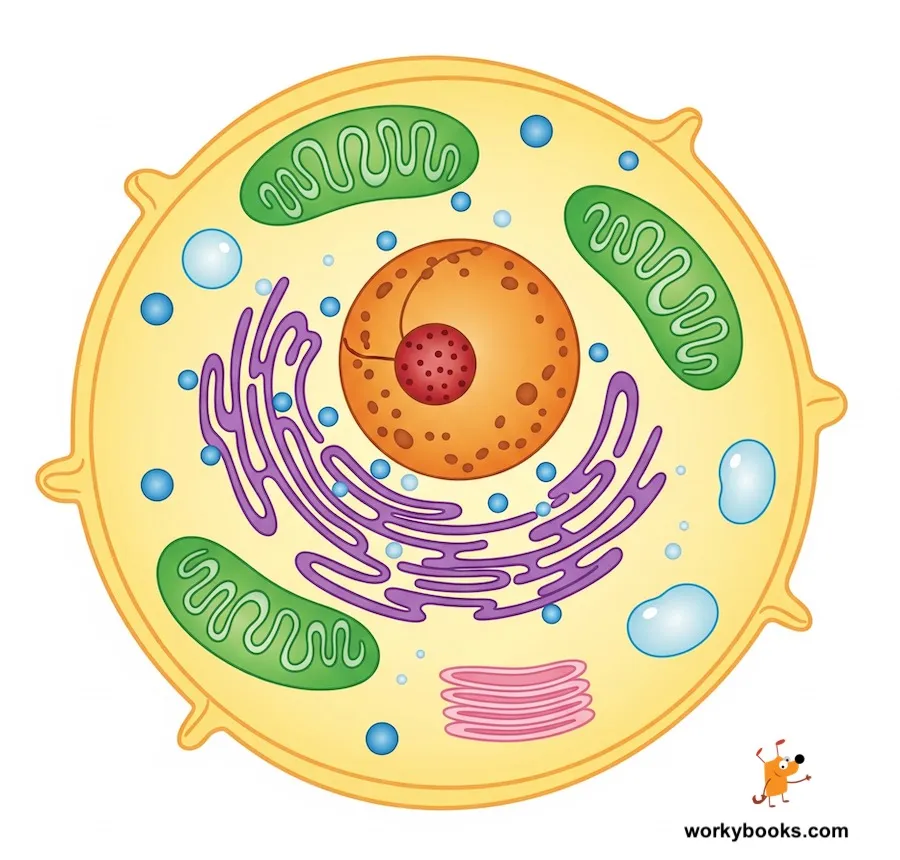
Imagine a cell as a tiny city. The cytoplasm is like the city's watery environment, filling the space inside the cell membrane. It’s a thick, jelly-like substance that holds all the other parts of the cell, called organelles, in place. Think of it as the "cytosol" or a living soup where all the action happens.
The cytoplasm's main job is to provide a medium for all the cell's activities. It's where many important chemical reactions, like breaking down nutrients to create energy, take place.
The cell membrane acts as the city's security wall, a boundary that controls what enters and leaves the cell. This is a crucial function, as it protects the cell from the outside world while allowing necessary nutrients in and waste products out. Within the cytoplasm, special structures are responsible for particular functions.
Each organelle has a specific job. For example, the mitochondria are like the city's power plants, producing energy for the cell. The ribosomes are like tiny factories that build proteins, essential building blocks for the cell. These specialized structures are suspended and protected within the cytoplasm. The cytoplasm also helps give the cell its shape and allows for the movement of materials throughout the cell, like a river carrying supplies to different parts of the city. The cytoplasm is not just a passive space; it’s an active part of the cell, constantly changing and moving. This movement, called cytoplasmic streaming, helps to distribute nutrients and organelles throughout the cell.
Without the cytoplasm, the organelles would be unprotected and unable to function properly, and the cell would not be able to carry out its essential life processes. The cytoplasm is found in both plant cells and animal cells, making it a fundamental component of all living things.
Interesting Fact: The cytoplasm of a cell is about 80% water and is a bustling environment filled with a complex network of fibers and molecules that give it its jelly-like consistency.
What is the cytoplasm compared to in the passage?
A city's security wallA city's power plantA city's watery environmentA city's tiny factories
What is the name for the movement of the cytoplasm?
Cytoplasmic streamingCytoplasmic flowingCellular transportOrganelle movement
Based on the passage, what would happen if a cell lost its cytoplasm?
It would become a plant cellIts organelles would not function correctlyIt would produce more energyIt would grow larger
Why is the cell membrane described as a security wall?
It is thick and unbreakableIt holds all the organelles insideIt allows everything to enter the cellIt controls what enters and leaves the cell
What is a key difference between the cytoplasm and organelles?
Cytoplasm is an organelleOrganelles are in the cytoplasmCytoplasm is only in plant cellsOrganelles are only in animal cells
If a cell needed to transport nutrients to a specific organelle, which part would be most involved?
The cell membraneThe cytoplasmThe mitochondriaThe ribosomes
A scientist observes a cell's movement of materials. What is the scientist most likely observing?
The creation of proteinsThe formation of the nucleusCytoplasmic streamingThe cell growing larger
Which part of the cell is most similar to a delivery service carrying packages throughout a city?
The cell membraneThe ribosomesThe mitochondriaThe cytoplasm
True or False: The cytoplasm is only found in animal cells.
TrueFalse
What is the definition of an organelle based on the passage?
The cell's watery environmentA type of cellA structure with a specific functionThe cell's outer boundary
Perfect For:
👩🏫 Teachers
• Reading comprehension practice
• Auto-graded assessments
• Literacy skill development
👨👩👧👦 Parents
• Reading practice at home
• Comprehension improvement
• Educational reading time
🏠 Homeschoolers
• Reading curriculum support
• Independent reading practice
• Progress monitoring
Reading Features:
📖
Reading Passage
Engaging fiction or nonfiction text
❓
Comprehension Quiz
Auto-graded questions
📊
Instant Feedback
Immediate results and scoring
📄
Printable Version
Download for offline reading
🔊
Read Aloud
Voice-over with word highlighting
Reviews & Ratings
No reviews yet. Be the first to share your experience!
Related Content
The Nature of Life Science
This passage, aligned with NGSS MS-LS1-1, introduces students in grades 6-8 to the foundational concepts of life science...
MS-LS1-1
Aerobic Organisms
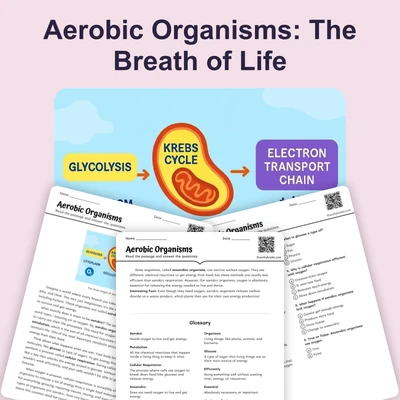
This engaging, audio-integrated reading passage, titled 'Aerobic Organisms: The Breath of Life,' introduces students to ...
From Cells to Organisms
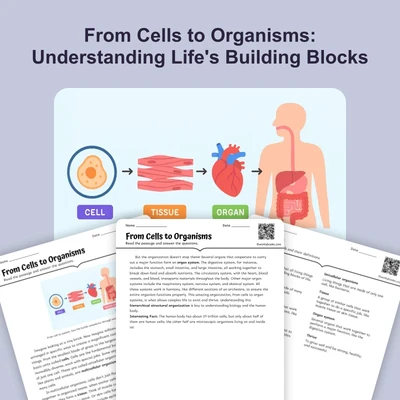
This educational passage, "From Cells to Organisms," explores the fundamental concept of how living things are built, st...
Using Dichotomous Keys to Identify Organisms
This audio-integrated passage, 'Using Dichotomous Keys to Identify Organisms,' introduces 6th-grade students to a fundam...
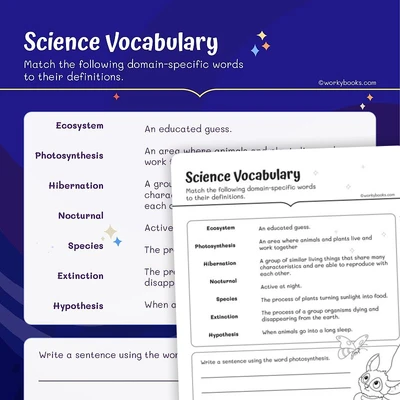
Science Vocabulary
This worksheet on domain-specific words will help students learn some science vocabulary. Students will be asked to matc...
L.3.6L.3.4.A
The Aorta: Molecules to Organisms of the Body's Largest Artery
This educational content features a fascinating reading passage, audio integrated for an enhanced learning experience, a...
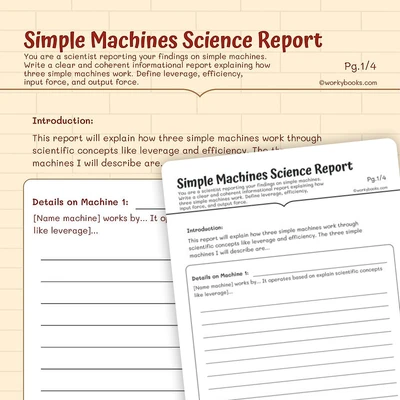
Simple Machines Science Report
This science writing task requires students to clearly explain how three simple machines work using precise domain-speci...
W.5.4
Tools and Technology for Life Scientists
This informational passage for grades 6-8 explores the essential tools and technology used by life scientists, aligned t...
MS-LS1-1MS-LS1.A
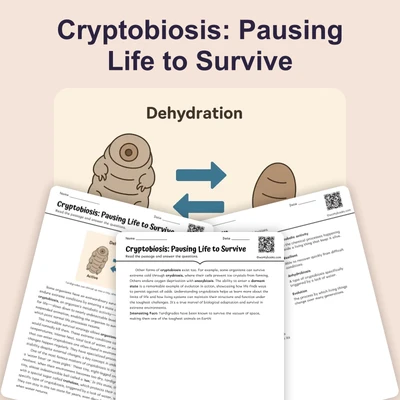
Cryptobiosis: Pausing Life to Survive
This engaging, audio-integrated reading passage explores the amazing biological process of cryptobiosis, where organisms...
From Senses to Actions
This Grade 4-5 science passage, 'From Senses to Actions,' explores how our senses work together with the brain and body ...
The Science of Hibernation
This educational module, featuring an audio-integrated reading passage titled 'The Science of Hibernation,' is designed ...
The Life Cycle of a Giant Panda
This engaging, audio-integrated reading passage, titled "The Life Cycle of a Giant Panda," explores the fascinating stag...
How Bats Use Sound to See
This Grade 4-5 science passage, 'How Bats Use Sound to See,' explores the fascinating process of echolocation in bats. S...
Citizen Science and Ecological Monitoring
This engaging passage for grades 6-8 introduces the concept of citizen science and its critical role in ecological monit...
MS-LS2-1
The Pumpkin Life Cycle
This informational worksheet explores the pumpkin lifecycle, guiding students through procedural steps in a scientific t...
RI.2.3RI.2.10
Life Cycle Stages
This comprehensive word sort activity helps Grade 3 students understand the universal stages of life cycles as outlined ...
What Is Earth Science?
This engaging middle school science passage introduces students to the field of Earth science, aligning with NGSS standa...
MS-ESS1MS-ESS2MS-ESS3SEP
Growth and Development of Organisms
This middle school science passage, aligned with NGSS standards MS-LS1-4 and MS-LS1-5, provides an in-depth look at the ...
MS-LS1-4MS-LS1-5
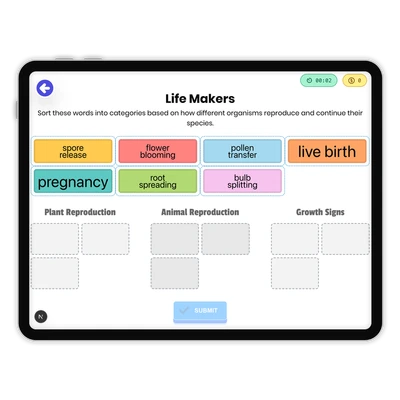
Life Makers
This engaging word sort activity helps elementary students understand the diverse methods of reproduction in living orga...
Barnacles and Biofouling
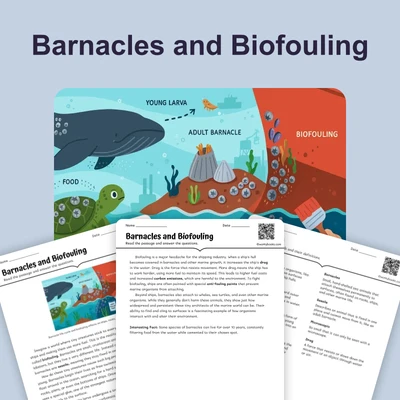
This engaging, audio-integrated reading passage, 'Barnacles and Biofouling,' delves into the fascinating world of how ti...