Nervous System and Senses
Interactive passage with audio narration, comprehension questions, and printable PDF.
By completing this purchase you agree to our Terms of Use and Privacy Policy. Your subscription renews automatically until you cancel. You can cancel anytime from your account settings. All sales are final and non-refundable. Digital content is available for download in your account immediately upon purchase.
What's included
Nervous System and Senses preview and details
About this printable Nervous System and Senses science reading passage, NGSS-aligned (Grade 6)
Sample passage and quiz from Nervous System and Senses
Reading passage and comprehension quiz preview
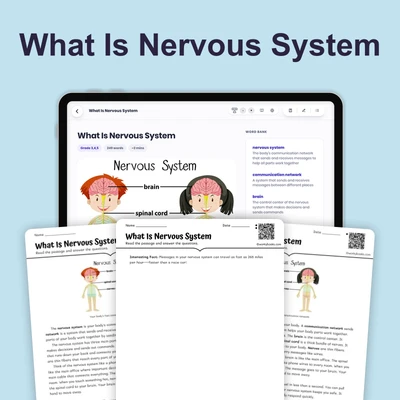
The Nervous System and Sensory Receptors
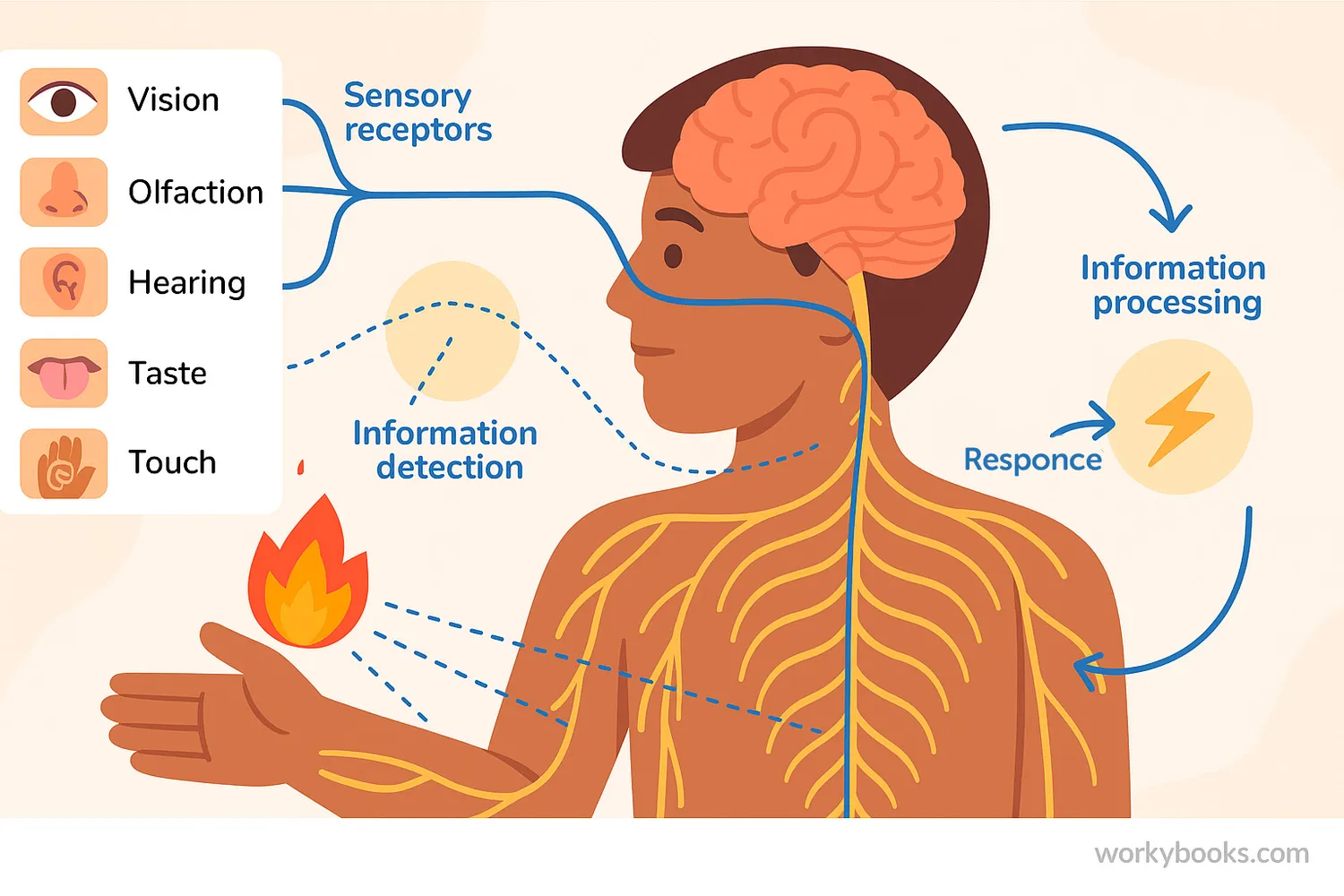
Imagine catching a ball or tasting your favorite food. These everyday actions, and countless others, are made possible by an incredible network inside your body: the nervous system. This amazing system is like the body's control center, constantly gathering information, processing it, and telling your body how to respond. It’s essential for how we experience the world around us.
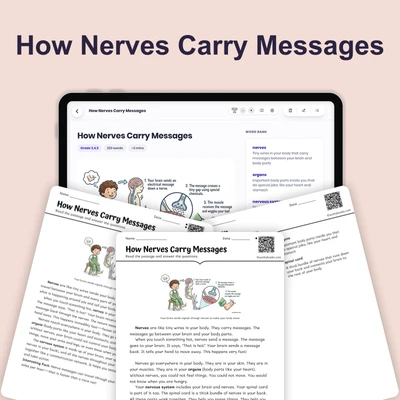
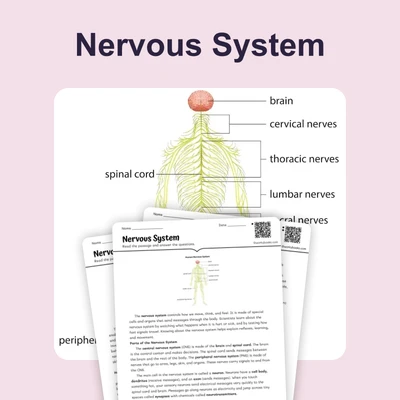
The nervous system is made up of the brain, the spinal cord, and a vast network of nerves that reach every part of your body. Think of nerves as tiny electrical wires that carry messages. The basic building blocks of this system are called neurons, which are specialized cells that transmit these signals.
How does the nervous system gather information? That's where sensory receptors come in. These are specialized cells or organs designed to detect changes in our environment, called stimuli. For example, when you touch a hot stove, the heat is a stimulus. Sensory receptors in your skin detect this heat. These receptors are located in your sensory organs like your eyes, ears, nose, tongue, and skin. Each type of receptor is designed to pick up a specific kind of information – light, sound, smell, taste, or touch.
Once a sensory receptor detects a stimulus, it converts that information into an electrical signal. This signal travels along neurons to the spinal cord, and then up to the brain. Your brain then processes this information. It interprets the signals, telling you what you're seeing, hearing, smelling, tasting, or feeling. Based on this processing, your brain decides on a response. For the hot stove example, your brain quickly tells your muscles to pull your hand away – a rapid response to prevent injury. This entire process, from detecting a stimulus to making a response, is called information processing. It's happening constantly, allowing us to interact safely and effectively with our world.
Interesting Fact: Your brain weighs about 3 pounds but uses 20% of your body's oxygen and calories!
Comprehension quiz (10 questions)
1. What is the body's control center?
2. What are neurons?
3. Which is NOT a part of the nervous system?
4. What do sensory receptors detect?
5. How does information travel to the brain?
6. What happens after the brain processes information?
7. Why is a rapid response important for a hot stove?
8. Which of these is NOT a sensory organ mentioned?
9. The nervous system is only for feeling touch and pain. (True/False)
10. What is a 'stimulus'?
Perfect for the way you teach
- Build comprehension skills
- Auto-graded quiz
- Differentiated reading
- Read together at home
- Improve fluency
- Quiet reading time
- Reading curriculum support
- Independent practice
- Track Lexile growth