The Ottoman Empire Expands with Gunpowder — Reading Comprehension
Rate this
Premium Resource
Present
Present in classroom. No work saved
Assign
Classroom with student accounts, Track progress
Quick Play
No student accounts, assign with a link
Grades
5
6
7
8
PRINT+DIGITAL RESOURCE
This learning resource is available in interactive and printable formats. The interactive worksheet can be played online and assigned to students. The Printable PDF version can be downloaded and printed for completion by hand.
This engaging passage explores how the Ottoman Empire, one of the most powerful gunpowder empires, expanded its territory and influence using new military technology. Students will learn how the Ottomans used cannons and muskets to conquer cities like Constantinople, analyze the role of leaders such as Mehmed II and Suleiman the Magnificent, and understand the impact of gunpowder on warfare and society. The text incorporates primary and archaeological evidence, references to social hierarchy and daily life, and change over time, aligning with CA HSS 7.2.1 and CCSS RI.6.1, RI.6.3. Additional resources include a glossary, Spanish translation, multiple-choice quiz, writing prompts, graphic organizers (cause-effect and chronological), and a timeline. This resource features read aloud audio and Spanish translation, making it accessible for diverse learners. Key concepts such as military innovation, conquest, and empire-building are woven throughout, challenging students to think like historians and connect to broader world history themes.
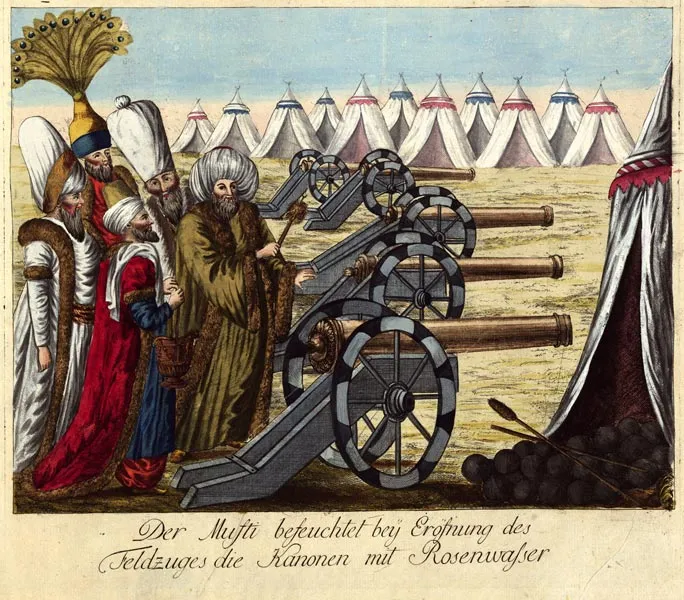
The Ottoman Empire became one of the world’s strongest powers by using new military technology: gunpowder. In the 1400s and 1500s, the Ottomans expanded across three continents—Europe, Asia, and Africa. Their success was tied to their ability to adapt and use innovation in warfare, especially with cannons and muskets. These weapons changed the way battles were fought and helped the Ottomans defeat their rivals.
The use of gunpowder weapons was especially important during the siege of Constantinople in 1453. Led by Sultan Mehmed II, the Ottomans used giant cannons to break through the city’s massive walls. According to a Venetian observer, "the thunder of their guns was like a storm." The capture of Constantinople marked the end of the Byzantine Empire and allowed the Ottomans to control a major trade crossroads between Europe and Asia. Archaeological evidence shows damage to the city’s walls from cannon fire, supporting written accounts of the battle.
After conquering Constantinople, the Ottomans continued to expand. Under Suleiman the Magnificent (ruled 1520–1566), the empire reached its greatest size. Suleiman modernized the army and government, using gunpowder weapons to conquer parts of Hungary, North Africa, and the Middle East. The Ottomans’ territory grew to include many ethnic groups, religions, and languages. The social hierarchy changed as soldiers and officials who mastered gunpowder weapons gained new status. City life flourished in places like Istanbul, where trade and culture mixed from different regions.
The spread of gunpowder also changed the balance of power in the region. Neighboring empires, such as the Safavid and Mughal Empires, began to use similar technology. This competition led to further innovation and conflict. The Ottomans’ use of gunpowder marked a turning point in ancient and early modern history, showing how technology can help civilizations rise and shape the world.
Gunpowder and military innovation allowed the Ottoman Empire to expand rapidly, control important cities, and rule over diverse peoples. Their achievements influenced world history, trade, and culture for centuries.
The Ottoman example connects to the broader theme of how technology and new ideas can transform societies throughout history.
Interesting Fact: The huge Ottoman cannon used at Constantinople was so large that it took sixty oxen to move it into position!
Who led the Ottomans at Constantinople?
Mehmed IISuleimanBaburAkbar
What weapon broke Constantinople's walls?
Bow and arrowHuge cannonsChariotsSwords
Under which leader did the empire reach its largest size?
Mehmed IISuleiman the MagnificentOsman IShah Abbas
How did gunpowder help the Ottomans?
Made farming easierHelped win battlesBuilt roadsTaught reading
Why was Constantinople important?
It had gold minesIt was a trade crossroadsIt was in AfricaIt was a fishing town
What effect did gunpowder have on military power?
Weakened the OttomansMade conquest easierStopped warsEnded trade
The Ottoman Empire was a gunpowder empire.
TrueFalse
What does 'siege' mean?
A city celebrationA surprise attackSurrounding and attacking a cityA trade agreement
Perfect For:
👩🏫 Teachers
• Reading comprehension practice
• Auto-graded assessments
• Literacy skill development
👨👩👧👦 Parents
• Reading practice at home
• Comprehension improvement
• Educational reading time
🏠 Homeschoolers
• Reading curriculum support
• Independent reading practice
• Progress monitoring
Reading Features:
📖
Reading Passage
Engaging fiction or nonfiction text
❓
Comprehension Quiz
Auto-graded questions
📊
Instant Feedback
Immediate results and scoring
📄
Printable Version
Download for offline reading
🔊
Read Aloud
Voice-over with word highlighting
Reviews & Ratings
No reviews yet. Be the first to share your experience!
Related Content
Ancient Civilizations and the Environment
This engaging history reading passage explores how ancient civilizations such as Mesopotamia, Egypt, and the Maya adapte...
Gender Roles in Ancient Civilizations
This engaging history reading passage explores the roles of men and women in various ancient civilizations, including Me...
Writing Prompts Ancient Civilizations
Step into the shoes of an archaeologist with this engaging worksheet focused on ancient civilizations. Students will be ...
W.5.2.A-2W.5.1.CW.5.1.D
Power and Authority in Ancient Civilizations
This passage explores the roles of men in positions of power within ancient civilizations, focusing on their authority i...
Evidence in Ancient History
This engaging history reading passage investigates how archaeologists and historians discover clues about how ancient pe...
Ancient Monarchy
This reading passage explores the concept of monarchy in ancient civilizations, focusing on the origins, structure, and ...
Ancient Theocracy
This engaging history reading passage explores the concept of theocracy in ancient civilizations, where priests and reli...
Ancient Mathematics
This passage explores the essential role of mathematics in ancient civilizations, including Mesopotamia, Egypt, Greece, ...
Ancient Canaan
This educational passage explores the land of Canaan, the historical homeland of the ancient Israelites. Students will l...
Ancient Money Barter
This passage explores the fascinating evolution from barter to the earliest coins in ancient civilizations, focusing on ...
Ancient Science and Medicine
This comprehensive reading passage explores the development of science and medicine in ancient civilizations, including ...
Ancient Literature
This passage explores the importance of ancient stories and poems from civilizations such as Greece, India, and Israel. ...
Ancient Agriculture Farming
This passage explores the transformative impact of farming on ancient societies, examining how the Neolithic Revolution ...
Ancient Writing Systems
This engaging history reading passage explores the origins and evolution of ancient writing systems, including cuneiform...
Geography of Ancient Israel
This passage explores the rich geography of Ancient Israel, focusing on how landforms, climate, and natural resources sh...
Slavery Across Civilizations
This detailed history reading passage explores the role and impact of slavery across several ancient civilizations, incl...
Social Classes in Ancient Societies
This passage explores the concept of social hierarchies in ancient civilizations, focusing on why societies such as Meso...
Social structures in Ancient World
This passage explores the organization and significance of family life in ancient societies, focusing on how extended fa...
Polytheism and Monotheism in Ancient Times
This passage explores the religious beliefs of ancient civilizations, focusing on the differences and similarities betwe...
Women in Ancient Societies
This reading passage explores the complex roles of women in the ancient world, focusing on civilizations such as Mesopot...