Seed Germination Process
Interactive passage with audio narration, comprehension questions, and printable PDF.
By completing this purchase you agree to our Terms of Use and Privacy Policy. Your subscription renews automatically until you cancel. You can cancel anytime from your account settings. All sales are final and non-refundable. Digital content is available for download in your account immediately upon purchase.
What's included
Seed Germination Process preview and details
About this printable Seed Germination Process science reading passage, NGSS-aligned (Grade 6)
Sample passage and quiz from Seed Germination Process
Reading passage and comprehension quiz preview
Seed Germination Process
Seed Germination Process
Seeds are tiny packages that hold everything a new plant needs to begin life. Inside a seed, there is a baby plant called an embryo. The embryo has a bit of stored food, called the endosperm, and is protected by a tough outer layer called the seed coat.
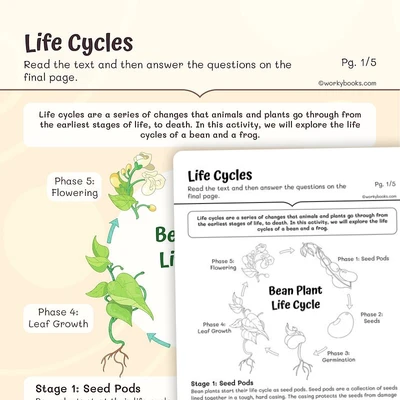
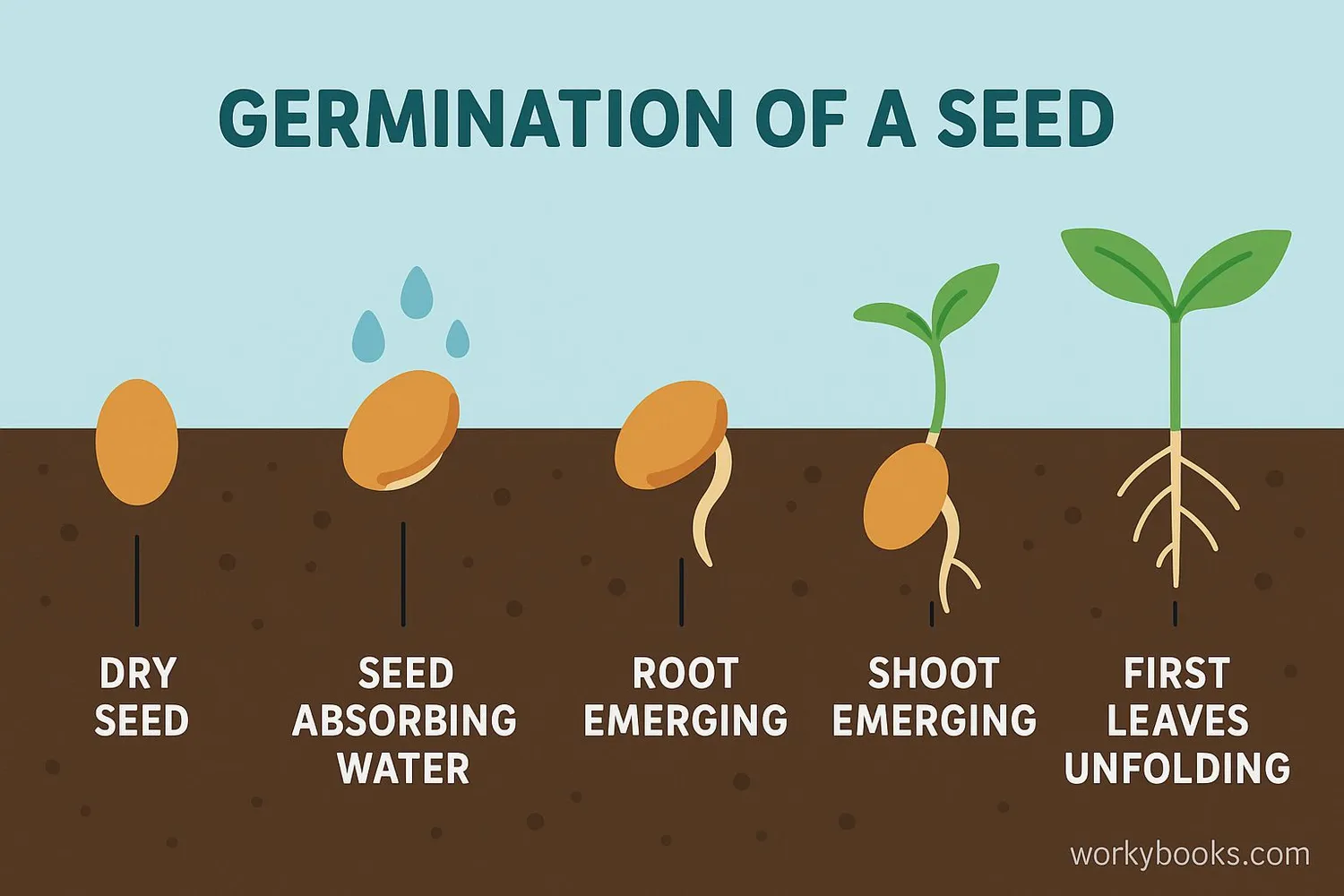
Germination is the process where a seed 'wakes up' and starts to grow into a plant. This happens in several steps. First, the seed absorbs water from the soil and swells up. The seed coat becomes soft and cracks open. Next, the tiny root, called the radicle, pushes out first. The root grows down into the soil, anchoring the plant and searching for more water.
After the root, the shoot starts to grow upward. The shoot is the part that will become the stem and leaves. Soon, the first leaves, called cotyledons, open up. These leaves help the young plant make its own food using sunlight.
Seeds need certain things to germinate. They need water to soften the seed coat, warmth to start chemical reactions, and oxygen to give the embryo energy. Without these, most seeds stay asleep.
Some seeds wait for special conditions before they germinate. For example, some need to go through cold winter, pass through the stomach of an animal, or even survive a fire before they will sprout. This helps seeds grow at the right time and place.
You can watch seed germination at home! Place a dry bean between wet paper towels in a plastic bag, and watch how the root and shoot appear in just a few days. Remember: a seed is like a tiny lunchbox with a baby plant and all the food it needs to start growing!
Interesting Fact: The world’s oldest seed that grew into a plant was about 2,000 years old!
Comprehension quiz (8 questions)
1. What is the embryo?
2. What comes out of the seed first?
3. What do seeds need to germinate?
4. Why do some seeds wait to germinate?
5. If a seed doesn't get water, what happens?
6. Which part helps the plant make food?
7. Seeds always need sunlight to germinate.
8. What does 'endosperm' mean?
Perfect for the way you teach
- Build comprehension skills
- Auto-graded quiz
- Differentiated reading
- Read together at home
- Improve fluency
- Quiet reading time
- Reading curriculum support
- Independent practice
- Track Lexile growth