Timbuktu: City of Scholars and Books — Reading Comprehension
Rate this
Premium Resource
Present
Present in classroom. No work saved
Assign
Classroom with student accounts, Track progress
Quick Play
No student accounts, assign with a link
Grades
5
6
7
8
PRINT+DIGITAL RESOURCE
This learning resource is available in interactive and printable formats. The interactive worksheet can be played online and assigned to students. The Printable PDF version can be downloaded and printed for completion by hand.
This passage explores the historical significance of Timbuktu, a legendary center of learning and trade in ancient West Africa. Students will learn how Timbuktu became a hub for scholars, the impact of trade on cultural exchange, and the city's famed manuscripts. The passage includes primary source details, examines cause-and-effect relationships, and highlights the connection between geography and human achievement. Activities include a quiz, writing prompts, graphic organizers, and a timeline to deepen understanding. A Spanish translation and read-aloud audio are available. This history reading passage is aligned with CA HSS 6.7, 6.7.7, and CCSS RH.6-8.1, RH.6-8.2, making it ideal for classroom use and independent study on ancient civilizations.
CONTENT PREVIEW
Expand content preview
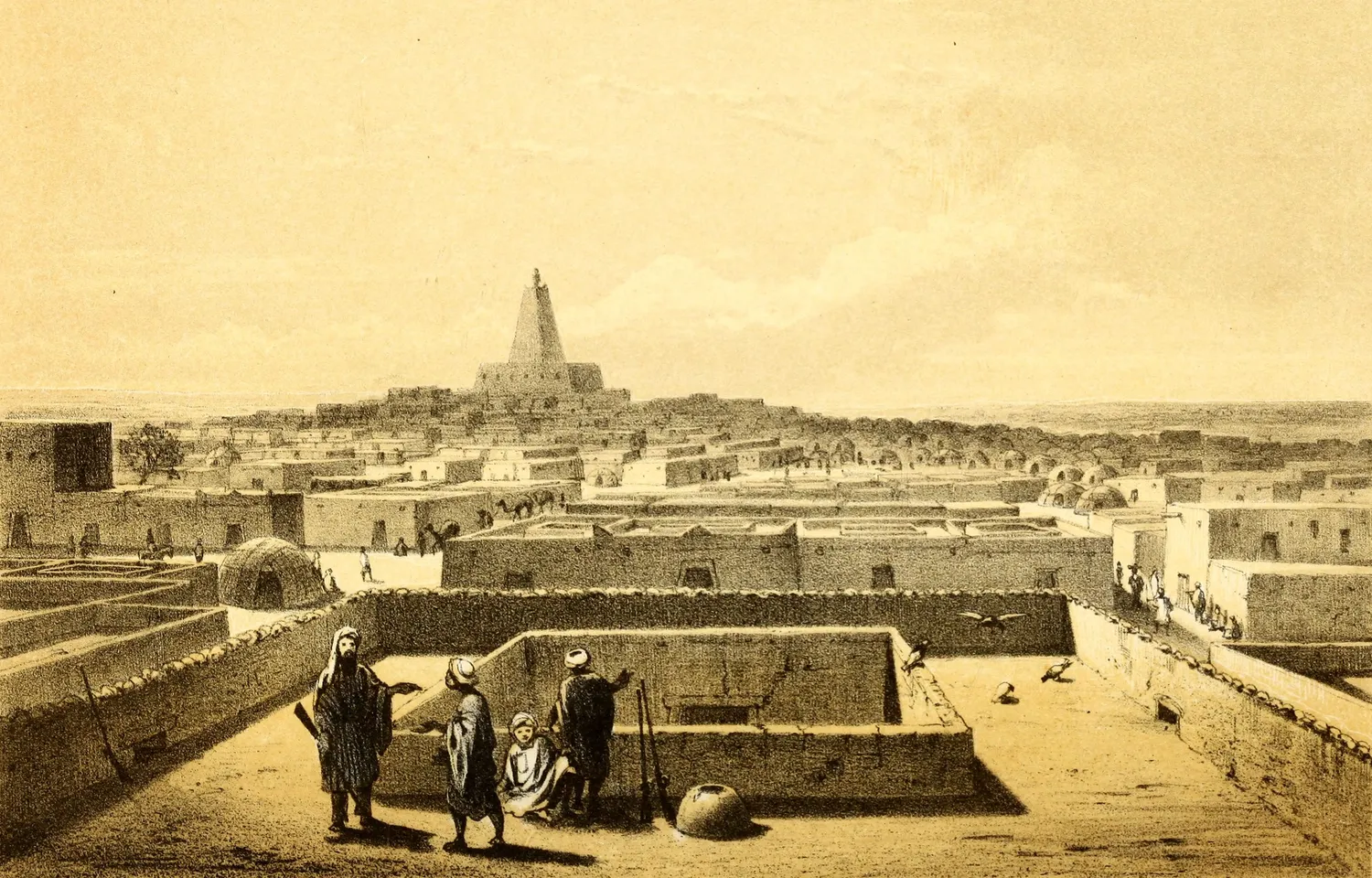
"Barth 1858 Timbuktu from terrace" by Drawn by Martin Bernatz (1802–1878) after a sketch by Heinrich Barth (1821-1865). The lithograph was produced and printed by M. & N. Hanhart / Source: Wikimedia Commons (Public domain).
Timbuktu, located near the Niger River in present-day Mali, was one of the most important cities in West Africa from the 13th to the 16th century. The city became a major center for trade, scholarship, and religion during the height of the Mali Empire. Its strategic position along trade routes connecting North Africa, West Africa, and beyond made Timbuktu a melting pot of peoples, goods, and ideas.
The rise of Timbuktu began in the early 1300s, when the Mali Empire controlled much of West Africa. Under the rule of Mansa Musa, who reigned from 1312 to 1337, Timbuktu flourished as a city of wealth and learning. Mansa Musa is famous for his pilgrimage to Mecca in 1324, during which he displayed the empire’s vast gold and generosity. He supported the construction of grand buildings, such as the Djinguereber Mosque, which became a center for Islamic study. Archaeological evidence and ancient manuscripts show that scholars from across Africa and the Middle East traveled to Timbuktu to study subjects like astronomy, law, medicine, and religion.
At its peak in the 15th and 16th centuries, Timbuktu had more than 150 schools and several universities, including the famous Sankore University. Thousands of manuscripts—handwritten books and documents—were copied and stored in private libraries. These manuscripts, written in Arabic and local languages, covered topics from mathematics to poetry. Primary sources like the writings of Leo Africanus, a traveler who visited in the early 1500s, describe Timbuktu as a place where books were more valuable than gold. The city’s merchants traded gold, salt, ivory, and slaves, but knowledge remained the greatest treasure.
Timbuktu’s prosperity depended on its connection to trade routes crossing the Sahara Desert. However, over time, changes in trade patterns and invasions by Moroccan forces in 1591 led to the city’s decline. Despite this, many manuscripts and buildings have survived, showing the lasting legacy of Timbuktu as a center for African learning and culture. Restoration projects continue today, preserving the city’s unique heritage for future generations.
Timbuktu’s history demonstrates how geography, trade, and culture can shape a civilization’s development. The city’s achievements in education and the preservation of knowledge connect to broader themes of human innovation and the spread of ideas across the ancient world.
Interesting Fact: Some families in Timbuktu today still guard ancient manuscripts that have been passed down for hundreds of years, protecting them from sand, time, and even conflict.
Who was Mansa Musa?
Ruler of Mali EmpireA famous merchantA Moroccan soldierA local poet
What was Timbuktu famous for?
Learning and tradeFarming and fishingWar and conquestMusic and dance
Which river is near Timbuktu?
Niger RiverAmazon RiverNile RiverMississippi River
Why did scholars travel to Timbuktu?
To study and learnFor gold miningTo hunt animalsTo plant crops
What caused Timbuktu's decline?
Change in trade and invasionFloods destroyed the cityLack of foodNo interest in books
Why were manuscripts important in Timbuktu?
They held knowledgeThey were used as moneyThey were tools for farmingThey were clothing
Books were valued more than gold. True or false?
TrueFalse
What does 'legacy' mean in the passage?
What is left behindA kind of foodA trade routeA desert
Perfect For:
👩🏫 Teachers
• Reading comprehension practice
• Auto-graded assessments
• Literacy skill development
👨👩👧👦 Parents
• Reading practice at home
• Comprehension improvement
• Educational reading time
🏠 Homeschoolers
• Reading curriculum support
• Independent reading practice
• Progress monitoring
Reading Features:
📖
Reading Passage
Engaging fiction or nonfiction text
❓
Comprehension Quiz
Auto-graded questions
📊
Instant Feedback
Immediate results and scoring
📄
Printable Version
Download for offline reading
🔊
Read Aloud
Voice-over with word highlighting
Reviews & Ratings
No reviews yet. Be the first to share your experience!
Related Content
Ancient Civilizations and the Environment
This engaging history reading passage explores how ancient civilizations such as Mesopotamia, Egypt, and the Maya adapte...
Gender Roles in Ancient Civilizations
This engaging history reading passage explores the roles of men and women in various ancient civilizations, including Me...
Writing Prompts Ancient Civilizations
Step into the shoes of an archaeologist with this engaging worksheet focused on ancient civilizations. Students will be ...
W.5.2.A-2W.5.1.CW.5.1.D
Power and Authority in Ancient Civilizations
This passage explores the roles of men in positions of power within ancient civilizations, focusing on their authority i...
Evidence in Ancient History
This engaging history reading passage investigates how archaeologists and historians discover clues about how ancient pe...
Ancient Monarchy
This reading passage explores the concept of monarchy in ancient civilizations, focusing on the origins, structure, and ...
Ancient Theocracy
This engaging history reading passage explores the concept of theocracy in ancient civilizations, where priests and reli...
Ancient Mathematics
This passage explores the essential role of mathematics in ancient civilizations, including Mesopotamia, Egypt, Greece, ...
Ancient Canaan
This educational passage explores the land of Canaan, the historical homeland of the ancient Israelites. Students will l...
Ancient Money Barter
This passage explores the fascinating evolution from barter to the earliest coins in ancient civilizations, focusing on ...
Ancient Science and Medicine
This comprehensive reading passage explores the development of science and medicine in ancient civilizations, including ...
Ancient Literature
This passage explores the importance of ancient stories and poems from civilizations such as Greece, India, and Israel. ...
Ancient Agriculture Farming
This passage explores the transformative impact of farming on ancient societies, examining how the Neolithic Revolution ...
Ancient Writing Systems
This engaging history reading passage explores the origins and evolution of ancient writing systems, including cuneiform...
Geography of Ancient Israel
This passage explores the rich geography of Ancient Israel, focusing on how landforms, climate, and natural resources sh...
Slavery Across Civilizations
This detailed history reading passage explores the role and impact of slavery across several ancient civilizations, incl...
Social Classes in Ancient Societies
This passage explores the concept of social hierarchies in ancient civilizations, focusing on why societies such as Meso...
Social structures in Ancient World
This passage explores the organization and significance of family life in ancient societies, focusing on how extended fa...
Polytheism and Monotheism in Ancient Times
This passage explores the religious beliefs of ancient civilizations, focusing on the differences and similarities betwe...
Women in Ancient Societies
This reading passage explores the complex roles of women in the ancient world, focusing on civilizations such as Mesopot...