Ötzi the Iceman
Interactive passage with audio narration, comprehension questions, and printable PDF.
By completing this purchase you agree to our Terms of Use and Privacy Policy. Your subscription renews automatically until you cancel. You can cancel anytime from your account settings. All sales are final and non-refundable. Digital content is available for download in your account immediately upon purchase.
What's included
Part of this bundle

Ötzi the Iceman preview and details
About this printable Ötzi the Iceman reading passage (Grades 5-8)
Sample passage and quiz from Ötzi the Iceman
Reading passage and comprehension quiz preview
Ötzi the Iceman: Solving a 5,300-Year-Old Mystery
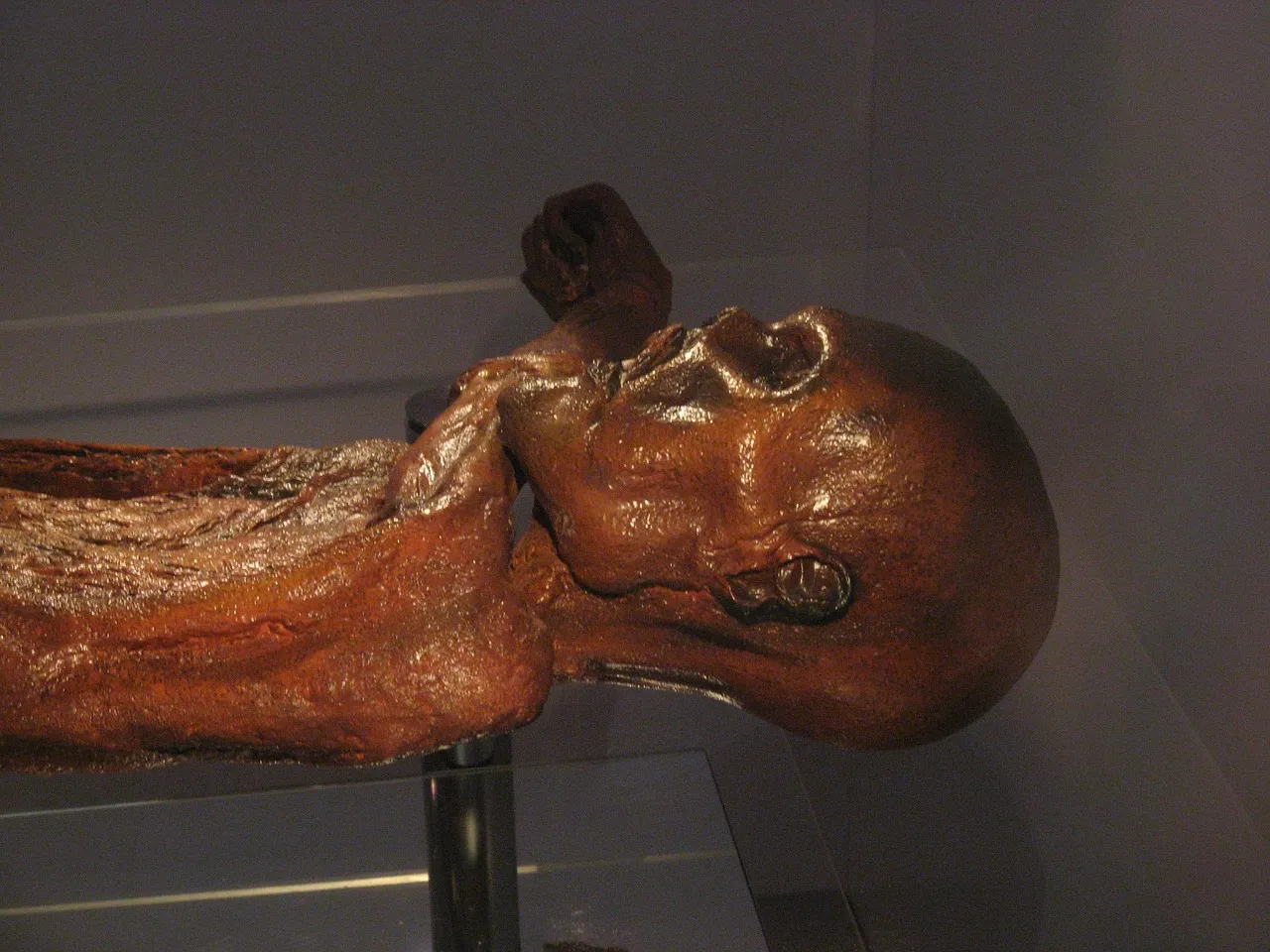
"Ötzi the Iceman" by bastiaan / Pixabay.
In 1991, two hikers discovered a frozen human body high in the Ötztal Alps, on the border between Austria and Italy. This ancient body, now known as Ötzi the Iceman, was preserved for over 5,300 years in the ice. His discovery became one of the most important archaeological finds of the twentieth century, providing a rare window into life during the Copper Age.
Ötzi’s body was found at an altitude of about 3,210 meters (10,530 feet). Scientists soon realized it was not a recent accident victim, but a mummy dating to around 3300 BCE. Archaeologists used radiocarbon dating to determine his age. His clothing and tools, such as a copper axe and a longbow, offered evidence about the technology and daily life of ancient European societies. For example, Ötzi wore a coat and leggings made from animal skins, and shoes stuffed with grass for insulation. His tools included a copper-bladed axe, which showed early metalworking skills in Europe. These artifacts were primary sources, giving direct evidence of the past.
Further scientific analysis revealed even more. Pollen grains in Ötzi’s gut showed what he ate before dying, and his last meal included grains and dried meat. Tattoos on his skin suggested early forms of medical treatment or ritual, possibly to relieve pain. CT scans and DNA analysis revealed he suffered from arthritis and had an arrowhead lodged in his shoulder. This evidence led to new theories: Ötzi may have been attacked and killed, instead of dying from exposure to the cold. This changed our understanding of violence and conflict in prehistoric Europe. His body also provided a genetic link to modern populations in the Alps, showing continuity over time.
The location where Ötzi was found is significant. The high Alpine pass was a challenging environment, and the preservation of his body was only possible because of the cold and ice. This geographic context helped scientists understand how climate and landscape can protect archaeological evidence. The find also demonstrates the importance of context in archaeology—removing artifacts or remains from their surroundings can destroy valuable information. Ötzi’s tools, clothing, and even the pollen in his body all tell a story about his world.
Ötzi the Iceman changed the way historians and archaeologists study the distant past. His body and belongings gave us a detailed look at Copper Age society, technology, health, and conflict. The ongoing study of Ötzi shows how new scientific methods can solve ancient mysteries and connect us to the people who lived thousands of years ago.
This discovery links to broader themes in world history, such as the development of technology, the importance of environment, and the ways people adapt to challenges over time.
Interesting Fact: Scientists have even recreated Ötzi’s voice using scans of his throat and vocal cords!
Comprehension quiz (8 questions)
1. When was Ötzi discovered?
2. Where was Ötzi found?
3. What tool did Ötzi carry?
4. What did scientists use to date Ötzi?
5. Why did Ötzi’s body stay preserved?
6. What did Ötzi’s tattoos suggest?
7. Ötzi lived in the Copper Age. True or false?
8. What is an artifact?
Perfect for the way you teach
- Build comprehension skills
- Auto-graded quiz
- Differentiated reading
- Read together at home
- Improve fluency
- Quiet reading time
- Reading curriculum support
- Independent practice
- Track Lexile growth