What Are Reflexes and Why Matter — Reading Comprehension
Rate this
Premium Resource
Present
Present in classroom. No work saved
Assign
Classroom with student accounts, Track progress
Quick Play
No student accounts, assign with a link
Grades
3
4
5
6
PRINT+DIGITAL RESOURCE
This learning resource is available in interactive and printable formats. The interactive worksheet can be played online and assigned to students. The Printable PDF version can be downloaded and printed for completion by hand.
This engaging science reading passage for Grade 4-5 students explains what reflexes are, how they work, and why they are important for our safety and survival. The passage uses simple language and clear explanations, introducing key terms such as 'reflex,' 'nervous system,' 'spinal cord,' and 'automatic response.' Real-life examples, such as pulling your hand away from something hot or blinking when something comes near your eyes, help students connect science concepts to everyday life. The passage aligns with NGSS standards for understanding the human body and systems. Activities include a multiple-choice quiz and writing prompts that encourage students to explain scientific concepts, make connections to daily life, and analyze cause and effect. The passage and activities are audio-integrated and suitable for classroom or independent study. Keywords featured include reflexes, nervous system, survival, and more. This resource is perfect for building foundational science literacy and vocabulary.
CONTENT PREVIEW
Expand content preview
What-Are-Reflexes-and-Why-They-Matter
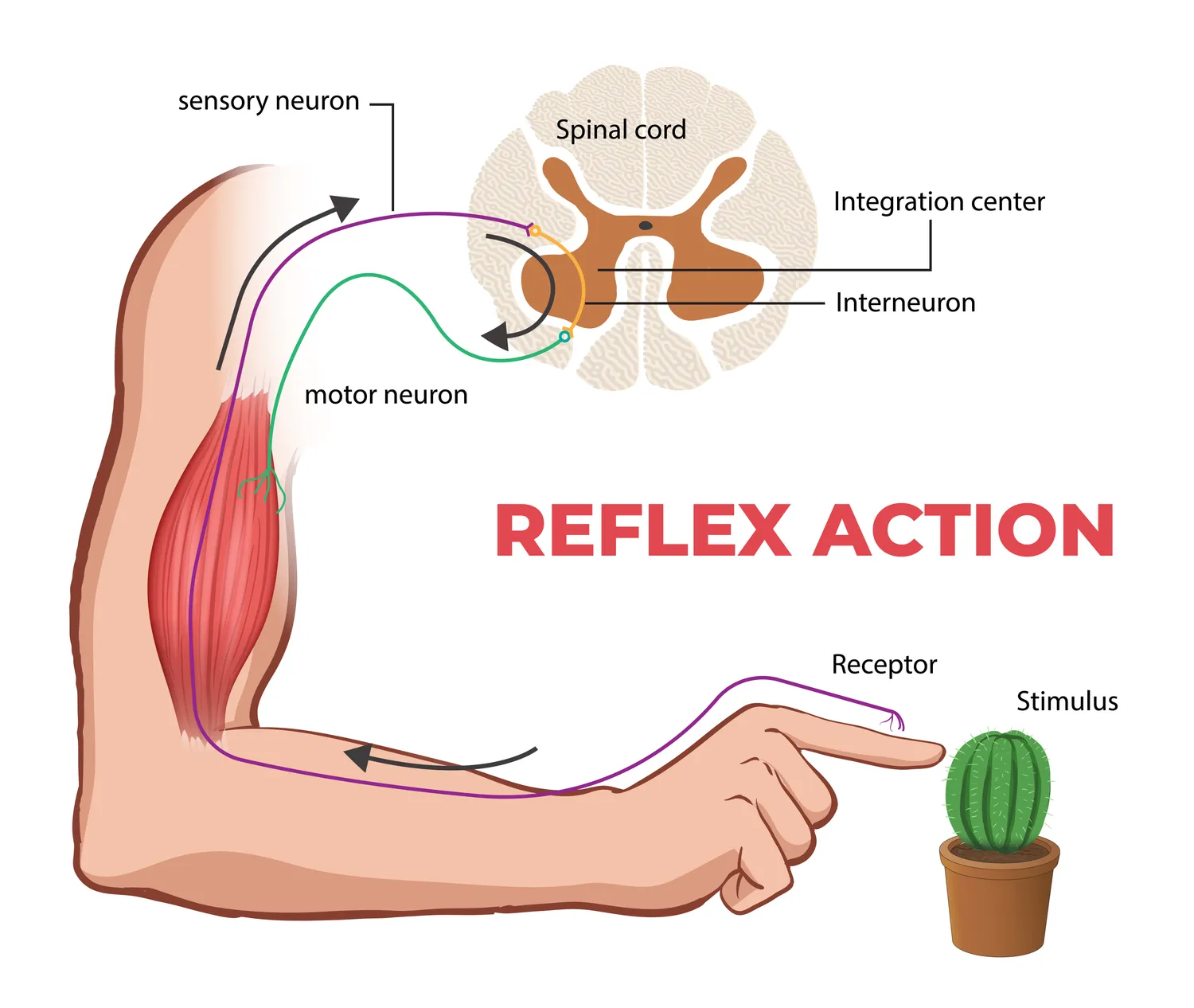
Reflexes are quick, automatic actions that your body does without you thinking about them. They help keep you safe and help your body work properly. When you touch something very hot, your hand pulls away fast. You do not have to decide to move your hand—your body does it automatically! That fast action is called a reflex.
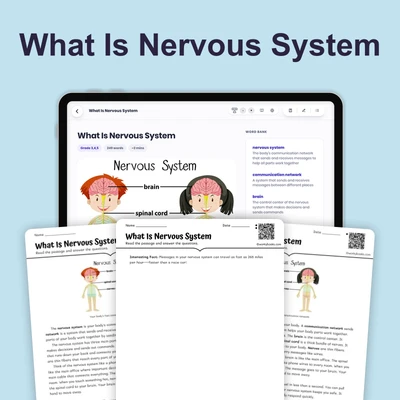
The part of your body that controls reflexes is called the nervous system. The nervous system includes your brain, spinal cord, and nerves. Nerves are like tiny wires that send messages between your body and your brain. When you touch something sharp, nerves in your skin send a message to your spinal cord. The spinal cord tells your muscles to move your hand away even before the message reaches your brain. This helps you react quickly and avoid injury.
Some common examples of reflexes are blinking when something comes close to your eyes, coughing if something tickles your throat, and your knee-jerk response at the doctor. Reflexes happen the same way every time because they are automatic. They do not need you to think or make a choice.
Reflexes are important because they protect us. Animals also have reflexes that help them survive, like jumping away from danger. Our bodies use reflexes to help us move fast and stay safe in many situations.
Interesting Fact: Some reflexes, like blinking and breathing, happen all day and night—even when you’re asleep!
What is a reflex?
A fast, automatic actionA slow, careful movementA kind of muscleA type of food
What controls reflexes?
Nervous systemBonesStomachHeart
Which is a reflex example?
BlinkingThinkingEatingSleeping
Why do reflexes help us?
They keep us safeThey help us sleepThey help us eatThey make us laugh
What happens if you touch something sharp?
Nerves send messages to moveYou have to think firstYou stay stillYou get hungry
What do animals use reflexes for?
To surviveTo growTo flyTo sleep
Blinking is a reflex.
TrueFalse
What is the nervous system?
Body's message systemPart of your footA kind of foodA type of animal
Perfect For:
👩🏫 Teachers
• Reading comprehension practice
• Auto-graded assessments
• Literacy skill development
👨👩👧👦 Parents
• Reading practice at home
• Comprehension improvement
• Educational reading time
🏠 Homeschoolers
• Reading curriculum support
• Independent reading practice
• Progress monitoring
Reading Features:
📖
Reading Passage
Engaging fiction or nonfiction text
❓
Comprehension Quiz
Auto-graded questions
📊
Instant Feedback
Immediate results and scoring
📄
Printable Version
Download for offline reading
🔊
Read Aloud
Voice-over with word highlighting
Reviews & Ratings
No reviews yet. Be the first to share your experience!
Related Content
The Nature of Life Science
This passage, aligned with NGSS MS-LS1-1, introduces students in grades 6-8 to the foundational concepts of life science...
MS-LS1-1
Aerobic Organisms
This engaging, audio-integrated reading passage, titled 'Aerobic Organisms: The Breath of Life,' introduces students to ...
From Cells to Organisms
This educational passage, "From Cells to Organisms," explores the fundamental concept of how living things are built, st...
Using Dichotomous Keys to Identify Organisms
This audio-integrated passage, 'Using Dichotomous Keys to Identify Organisms,' introduces 6th-grade students to a fundam...
Science Vocabulary
This worksheet on domain-specific words will help students learn some science vocabulary. Students will be asked to matc...
L.3.6L.3.4.A
The Aorta: Molecules to Organisms of the Body's Largest Artery
This educational content features a fascinating reading passage, audio integrated for an enhanced learning experience, a...
Simple Machines Science Report
This science writing task requires students to clearly explain how three simple machines work using precise domain-speci...
W.5.4
Tools and Technology for Life Scientists
This informational passage for grades 6-8 explores the essential tools and technology used by life scientists, aligned t...
MS-LS1-1MS-LS1.A
Cryptobiosis: Pausing Life to Survive
This engaging, audio-integrated reading passage explores the amazing biological process of cryptobiosis, where organisms...
From Senses to Actions
This Grade 4-5 science passage, 'From Senses to Actions,' explores how our senses work together with the brain and body ...
The Science of Hibernation
This educational module, featuring an audio-integrated reading passage titled 'The Science of Hibernation,' is designed ...
The Life Cycle of a Giant Panda
This engaging, audio-integrated reading passage, titled "The Life Cycle of a Giant Panda," explores the fascinating stag...
How Bats Use Sound to See
This Grade 4-5 science passage, 'How Bats Use Sound to See,' explores the fascinating process of echolocation in bats. S...
Citizen Science and Ecological Monitoring
This engaging passage for grades 6-8 introduces the concept of citizen science and its critical role in ecological monit...
MS-LS2-1
The Pumpkin Life Cycle
This informational worksheet explores the pumpkin lifecycle, guiding students through procedural steps in a scientific t...
RI.2.3RI.2.10
Life Cycle Stages
This comprehensive word sort activity helps Grade 3 students understand the universal stages of life cycles as outlined ...
What Is Earth Science?
This engaging middle school science passage introduces students to the field of Earth science, aligning with NGSS standa...
MS-ESS1MS-ESS2MS-ESS3SEP
Growth and Development of Organisms
This middle school science passage, aligned with NGSS standards MS-LS1-4 and MS-LS1-5, provides an in-depth look at the ...
MS-LS1-4MS-LS1-5
Life Makers
This engaging word sort activity helps elementary students understand the diverse methods of reproduction in living orga...
Barnacles and Biofouling
This engaging, audio-integrated reading passage, 'Barnacles and Biofouling,' delves into the fascinating world of how ti...