What Is Biomagnification
Interactive passage with audio narration, comprehension questions, and printable PDF.
By completing this purchase you agree to our Terms of Use and Privacy Policy. Your subscription renews automatically until you cancel. You can cancel anytime from your account settings. All sales are final and non-refundable. Digital content is available for download in your account immediately upon purchase.
What's included
What Is Biomagnification preview and details
About this printable What Is Biomagnification science reading passage, NGSS-aligned (Grade 6)
Sample passage and quiz from What Is Biomagnification
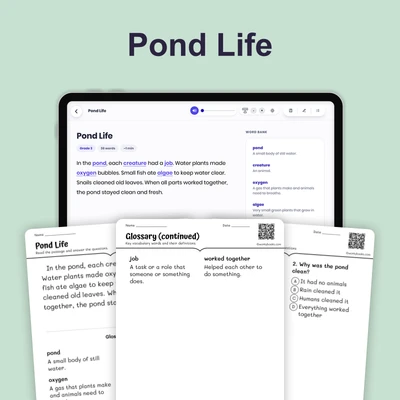
Reading passage and comprehension quiz preview
What Is Biomagnification
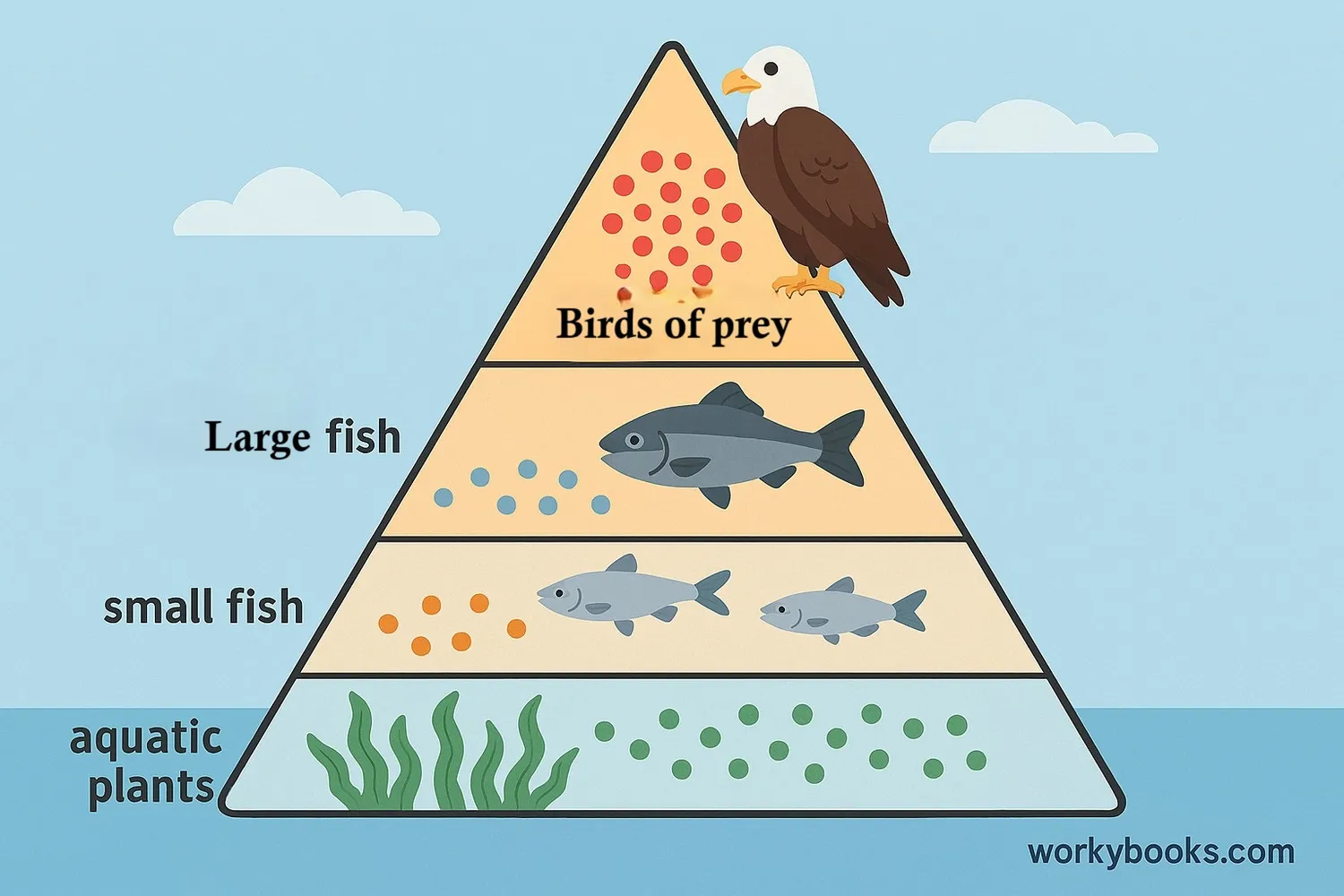
Imagine tiny creatures in the ocean, each one eating even tinier bits of food. Then, a small fish eats many of these tiny creatures. A bigger fish then eats many small fish. Finally, a large bird or animal eats many of the bigger fish. This chain of eating and being eaten is called a food chain. But what happens if something harmful, like a chemical pollutant, gets into this system?
This is where biomagnification comes in. Biomagnification is the process where certain pollutants, or harmful substances, become more and more concentrated as they move up a food chain. It's like a snowball rolling downhill, picking up more snow and getting bigger. These pollutants are often chemicals that do not break down easily in the environment or inside living things. They are persistent, meaning they stay around for a long time.
Let's look at an example. Imagine a small amount of a pesticide, a chemical used to kill insects, gets into a lake. Tiny aquatic plants and algae might absorb a little bit of this pesticide. Then, small primary consumers, like zooplankton, eat many of these contaminated plants. Each zooplankton eats many plants, so the pesticide starts to build up in their bodies. Next, small fish, which are secondary consumers, eat many zooplankton. Because each fish eats so many zooplankton, the amount of pesticide in the fish becomes even higher.
This continues up the food chain. Larger fish, acting as tertiary consumers, eat many small fish, accumulating even more of the chemical. Finally, a top predator, like an eagle or a bear, eats many of these larger fish. At each step, the concentration of the pollutant increases significantly. This means that the animal at the very top of the food chain ends up with the highest, and often most dangerous, levels of the pollutant in its body. These high levels can cause serious health problems, impact reproduction, or even lead to death for these animals.
Understanding biomagnification is crucial for protecting our ecosystems and the animals within them. It highlights the importance of managing pollution and understanding how our actions can have far-reaching effects on the natural world.
Interesting Fact: Some of the most well-known examples of biomagnification involve chemicals like DDT and mercury, which caused severe population declines in top predator birds like bald eagles in the past.
Comprehension quiz (10 questions)
1. What is a food chain?
2. What are pollutants?
3. What happens to pollutants as they move up a food chain?
4. Why are top predators most affected by biomagnification?
5. What kind of chemicals are most likely to biomagnify?
6. If a lake has a small amount of pollutant, why should humans still be concerned about eating fish from it?
7. Which of these animals would likely have the highest concentration of a pollutant in a pond food chain: algae, zooplankton, small fish, or a heron?
8. If a pollutant affects an ecosystem, which animal group would show health problems first due to biomagnification?
9. Biomagnification helps protect ecosystems. (True/False)
10. What is the best definition of 'biomagnification' based on the passage?
Perfect for the way you teach
- Build comprehension skills
- Auto-graded quiz
- Differentiated reading
- Read together at home
- Improve fluency
- Quiet reading time
- Reading curriculum support
- Independent practice
- Track Lexile growth