What Was the Neolithic Revolution
Interactive passage with audio narration, comprehension questions, and printable PDF.
By completing this purchase you agree to our Terms of Use and Privacy Policy. Your subscription renews automatically until you cancel. You can cancel anytime from your account settings. All sales are final and non-refundable. Digital content is available for download in your account immediately upon purchase.
What's included
Part of this bundle

What Was the Neolithic Revolution preview and details
About this printable What Was the Neolithic Revolution reading passage (Grades 6-8)
Sample passage and quiz from What Was the Neolithic Revolution
Reading passage and comprehension quiz preview
What Was the Neolithic Revolution
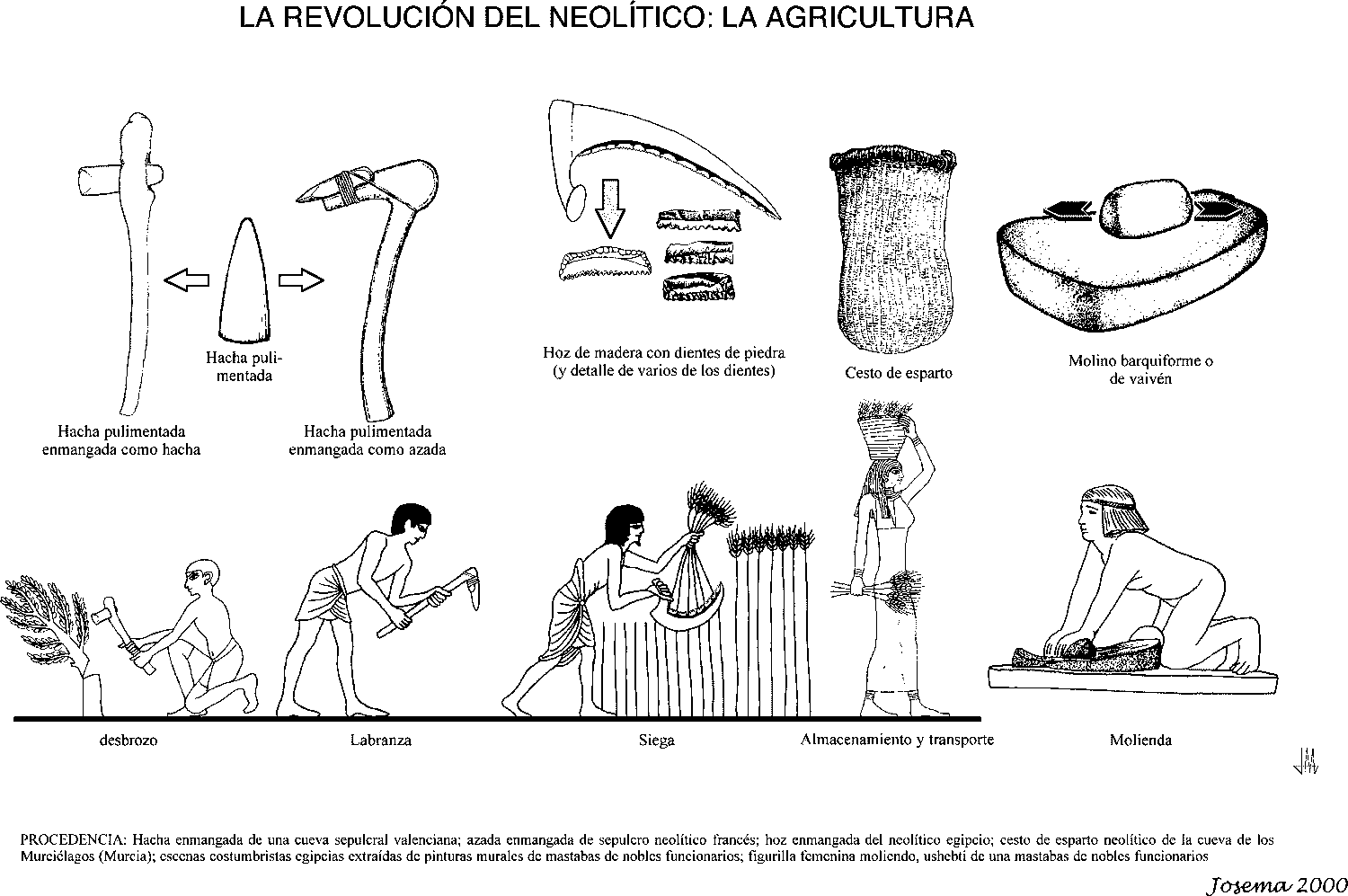
During the Neolithic period, which began around 10,000 BCE, humans made a major change from hunting and gathering to farming. This transformation, known as the Neolithic Revolution, was one of the most important developments in world history. Instead of only searching for food in the wild, people began to grow crops and raise animals. This shift allowed ancient communities to settle in one place, leading to the rise of villages and the beginning of civilization.
Early humans started by observing wild plants and animals in their environment. Archaeological evidence from sites like Jericho (in modern-day Palestine) and Çatalhöyük (in present-day Turkey) shows that people carefully watched which plants produced the best seeds or fruits. Over time, they learned to select and plant seeds from the healthiest and most productive plants. This process, called domestication, changed the traits of plants such as wheat, barley, and lentils, making them easier to harvest and more reliable as food sources. Archaeobotanists have found ancient grains and farming tools in these settlements, giving us clues about daily life and technological innovation.
Planting seeds and tending crops required new skills, including irrigation and soil preparation. Early farmers experimented with planting times and learned how geography affected their harvests. For example, the Fertile Crescent region—a rich area stretching from the Mediterranean Sea to the Persian Gulf—had the right climate and soil for early agriculture. As people became more skilled, they grew surplus food, which supported larger populations. This surplus led to social hierarchy, as some people became leaders, craftsmen, or traders while others worked the land. The ability to store and share food helped communities survive droughts or poor harvests, making their societies more stable.
The spread of farming changed the world. People migrated, bringing seeds and farming knowledge to new regions, including Europe, Asia, and Africa. The domestication of plants and animals also led to new technologies, such as pottery for storage and plows for turning soil. However, this new way of life also brought challenges. Disease, hard labor, and dependence on crops could cause problems if harvests failed. Despite these risks, the benefits of farming—such as settled communities and increased food security—were so great that agriculture quickly became the foundation of most ancient societies.
The Neolithic Revolution marked a turning point in human history. By observing nature, experimenting with seeds, and working together, early humans began to shape the environment to meet their needs. The move from wild plants to farming laid the groundwork for the growth of complex societies, trade, and eventually, the rise of cities and civilizations.
Interesting Fact: Interesting Fact: The oldest known wheat grains were found in Çatalhöyük, Turkey, dating back over 9,000 years.
Comprehension quiz (8 questions)
1. When did the Neolithic period begin?
2. Where is Çatalhöyük located today?
3. What helped early farmers survive poor harvests?
4. Why did people start domesticating plants?
5. How did farming change social structure?
6. What is a challenge of early farming?
7. The Fertile Crescent was good for farming. True or false?
8. What does 'domestication' mean?
Perfect for the way you teach
- Build comprehension skills
- Auto-graded quiz
- Differentiated reading
- Read together at home
- Improve fluency
- Quiet reading time
- Reading curriculum support
- Independent practice
- Track Lexile growth