Yohanan ben Zakkai and Jewish Learning — Reading Comprehension
Rate this
Premium Resource
Present
Present in classroom. No work saved
Assign
Classroom with student accounts, Track progress
Quick Play
No student accounts, assign with a link
Grades
6
7
8
PRINT+DIGITAL RESOURCE
This learning resource is available in interactive and printable formats. The interactive worksheet can be played online and assigned to students. The Printable PDF version can be downloaded and printed for completion by hand.
This passage explores the pivotal role of Yohanan ben Zakkai in preserving Jewish learning and tradition after the destruction of the Second Temple in 70 CE. Students will learn about the challenges faced by the Jewish people during this critical period in ancient history, including Roman rule and the loss of their central place of worship in Jerusalem. The passage highlights Yohanan ben Zakkai’s leadership, the founding of the academy at Yavne, and the adaptation of Jewish religious life. Activities include a glossary of key terms, multiple-choice quiz, timeline, and graphic organizers, all designed to help students analyze cause and effect and understand change over time. This passage is aligned with CA HSS 6.3.5 and CCSS RH.6-8.1, and includes a Spanish translation and read aloud audio for accessibility. Students are encouraged to think like historians, using evidence and evaluating the lasting impact of Yohanan ben Zakkai’s actions on world history.
CONTENT PREVIEW
Expand content preview
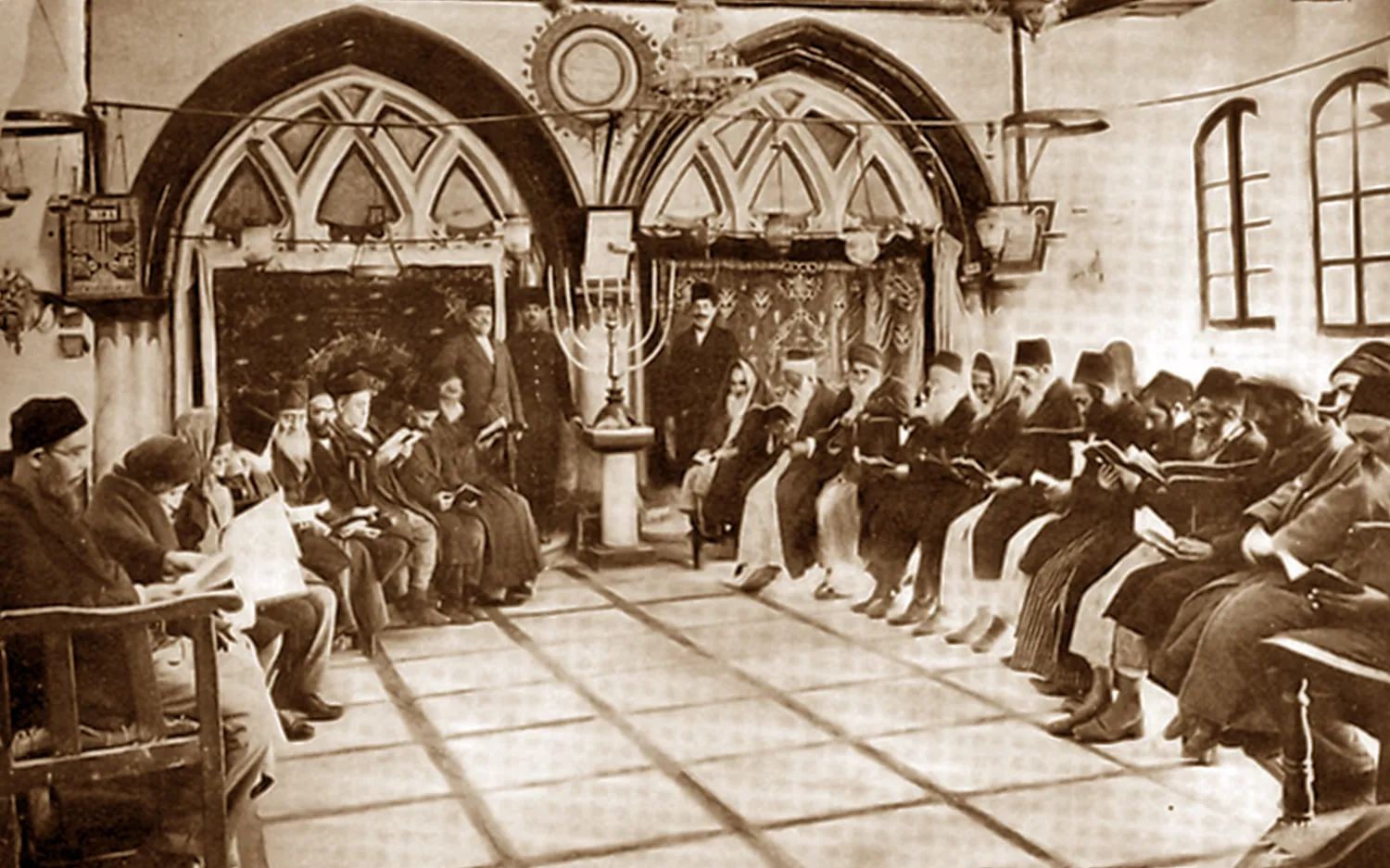
The Hakham Bachi of Jérusalem at the Yohanan Ben-Zakai synagogue / Wikimedia Commons
The destruction of the Second Temple in Jerusalem in 70 CE marked a turning point in Jewish history. During this crisis, the Jewish people faced enormous challenges, including the loss of their central place of worship and increased control by the Roman Empire. In response, a religious leader named Yohanan ben Zakkai played a crucial role in ensuring the survival of Jewish tradition and learning.
Yohanan ben Zakkai was a respected teacher, or rabbi, living in Jerusalem during the Roman siege. According to ancient sources such as the Talmud, Yohanan ben Zakkai recognized that the destruction of the Temple would threaten the future of Judaism. He believed that religious education and the study of Jewish law, called Torah, could help keep the community united even without the Temple. As the siege intensified, Yohanan ben Zakkai devised a bold plan. He arranged to be smuggled out of the besieged city in a coffin, a story preserved in Rabbinic literature. This risky act allowed him to meet with the Roman general Vespasian. Yohanan ben Zakkai requested permission to establish a new center for Jewish learning in the town of Yavne.
With Roman approval, Yohanan ben Zakkai and his followers founded an academy at Yavne. The academy became the new center for Jewish religious life, replacing the destroyed Temple. At Yavne, scholars discussed and debated Jewish laws, preserved sacred texts, and developed new forms of worship that did not require a physical temple. This innovation included the creation of synagogues and the practice of prayer as a substitute for animal sacrifices. Archaeological evidence from Yavne and written records show the importance of these changes. For example, the development of the Mishnah, an early collection of Jewish laws, began in this period.
The actions of Yohanan ben Zakkai had lasting effects. By focusing on learning and community, he helped Judaism adapt to a world without the Temple. This led to the rise of rabbinic Judaism, which shaped Jewish life for centuries. His leadership demonstrated how religious and cultural traditions can survive even after major disruptions. Many historians consider Yohanan ben Zakkai’s decisions as a key factor in the continuity of Jewish identity. Today, the methods and institutions he helped create remain central to Jewish practice around the world.
The story of Yohanan ben Zakkai connects to broader themes of resilience and adaptation in ancient civilizations. It shows how people respond to crisis, maintain traditions, and create new ways of life in changing historical circumstances.
Interesting Fact: According to tradition, Yohanan ben Zakkai was the first to greet Vespasian as "emperor," a move that may have helped earn Roman support for the academy at Yavne.
When was the Second Temple destroyed?
70 CE500 BCE30 CE600 CE
Who was Yohanan ben Zakkai?
A Roman generalA Jewish religious leaderA Greek philosopherA king
What town became the new center of learning?
BabylonJerusalemYavneRome
Why did Yohanan ben Zakkai escape Jerusalem?
To meet with VespasianTo destroy the TempleTo become emperorTo join the Romans
What effect did the academy at Yavne have?
Ended Jewish learningPreserved Jewish traditionDestroyed the MishnahStarted Roman rule
How did Jewish worship change after 70 CE?
Used synagogues and prayerNo change happenedBuilt a new templeStopped all worship
The Mishnah began at Yavne. True or false?
TrueFalse
What does 'rabbi' mean?
A Roman soldierA Jewish teacherA place of worshipA Jewish law
Perfect For:
👩🏫 Teachers
• Reading comprehension practice
• Auto-graded assessments
• Literacy skill development
👨👩👧👦 Parents
• Reading practice at home
• Comprehension improvement
• Educational reading time
🏠 Homeschoolers
• Reading curriculum support
• Independent reading practice
• Progress monitoring
Reading Features:
📖
Reading Passage
Engaging fiction or nonfiction text
❓
Comprehension Quiz
Auto-graded questions
📊
Instant Feedback
Immediate results and scoring
📄
Printable Version
Download for offline reading
🔊
Read Aloud
Voice-over with word highlighting
Reviews & Ratings
No reviews yet. Be the first to share your experience!
Related Content
Ancient Civilizations and the Environment
This engaging history reading passage explores how ancient civilizations such as Mesopotamia, Egypt, and the Maya adapte...
Gender Roles in Ancient Civilizations
This engaging history reading passage explores the roles of men and women in various ancient civilizations, including Me...
Writing Prompts Ancient Civilizations
Step into the shoes of an archaeologist with this engaging worksheet focused on ancient civilizations. Students will be ...
W.5.2.A-2W.5.1.CW.5.1.D
Power and Authority in Ancient Civilizations
This passage explores the roles of men in positions of power within ancient civilizations, focusing on their authority i...
Evidence in Ancient History
This engaging history reading passage investigates how archaeologists and historians discover clues about how ancient pe...
Ancient Monarchy
This reading passage explores the concept of monarchy in ancient civilizations, focusing on the origins, structure, and ...
Ancient Theocracy
This engaging history reading passage explores the concept of theocracy in ancient civilizations, where priests and reli...
Ancient Mathematics
This passage explores the essential role of mathematics in ancient civilizations, including Mesopotamia, Egypt, Greece, ...
Ancient Canaan
This educational passage explores the land of Canaan, the historical homeland of the ancient Israelites. Students will l...
Ancient Money Barter
This passage explores the fascinating evolution from barter to the earliest coins in ancient civilizations, focusing on ...
Ancient Science and Medicine
This comprehensive reading passage explores the development of science and medicine in ancient civilizations, including ...
Ancient Literature
This passage explores the importance of ancient stories and poems from civilizations such as Greece, India, and Israel. ...
Ancient Agriculture Farming
This passage explores the transformative impact of farming on ancient societies, examining how the Neolithic Revolution ...
Ancient Writing Systems
This engaging history reading passage explores the origins and evolution of ancient writing systems, including cuneiform...
Geography of Ancient Israel
This passage explores the rich geography of Ancient Israel, focusing on how landforms, climate, and natural resources sh...
Slavery Across Civilizations
This detailed history reading passage explores the role and impact of slavery across several ancient civilizations, incl...
Social Classes in Ancient Societies
This passage explores the concept of social hierarchies in ancient civilizations, focusing on why societies such as Meso...
Social structures in Ancient World
This passage explores the organization and significance of family life in ancient societies, focusing on how extended fa...
Polytheism and Monotheism in Ancient Times
This passage explores the religious beliefs of ancient civilizations, focusing on the differences and similarities betwe...
Women in Ancient Societies
This reading passage explores the complex roles of women in the ancient world, focusing on civilizations such as Mesopot...