Reading Passage

Zoroastrianism in Ancient Persia

Interactive passage with audio narration, comprehension questions, and printable PDF.

No ratings yet
Grades 6–8ReadingElaSocial-studiesHistoryEnglish · SpanishInteractive · Printable
Aligned toCA HSS 6.2.3CCSS.RI.6.3CCSS.RI.6.4CCSS.W.6.2

What's included

Reading passage
Audio narration
Comprehension quiz
Writing activity
Glossary & flashcards
Differentiated version
Spanish translation

Part of this bundle

Zoroastrianism in Ancient Persia preview and details

About this printable Zoroastrianism in Ancient Persia reading passage (Grades 6-8)

This engaging history reading passage introduces students to Zoroastrianism, the ancient Persian state religion that shaped ideas about good and evil. Students will explore how Zoroaster’s teachings influenced the Persian Empire, the role of Ahura Mazda, and the importance of moral choices in daily life. The passage provides evidence from archaeological and primary sources, discusses continuity and change, and connects religious beliefs to geography and social structure. Activities include a glossary, multiple-choice quiz, writing prompts, graphic organizers, and a timeline. Additional features include a read aloud audio, Spanish translation, and a differentiated version for accessibility. This resource is aligned with CA HSS 6.2.3 and CCSS RI.6.3, supporting skills in historical analysis and informational text comprehension.
Written by Workybooks TeamPublished by Workybooks
Preview

Sample passage and quiz from Zoroastrianism in Ancient Persia

Reading passage and comprehension quiz preview

Zoroastrianism in Ancient Persia
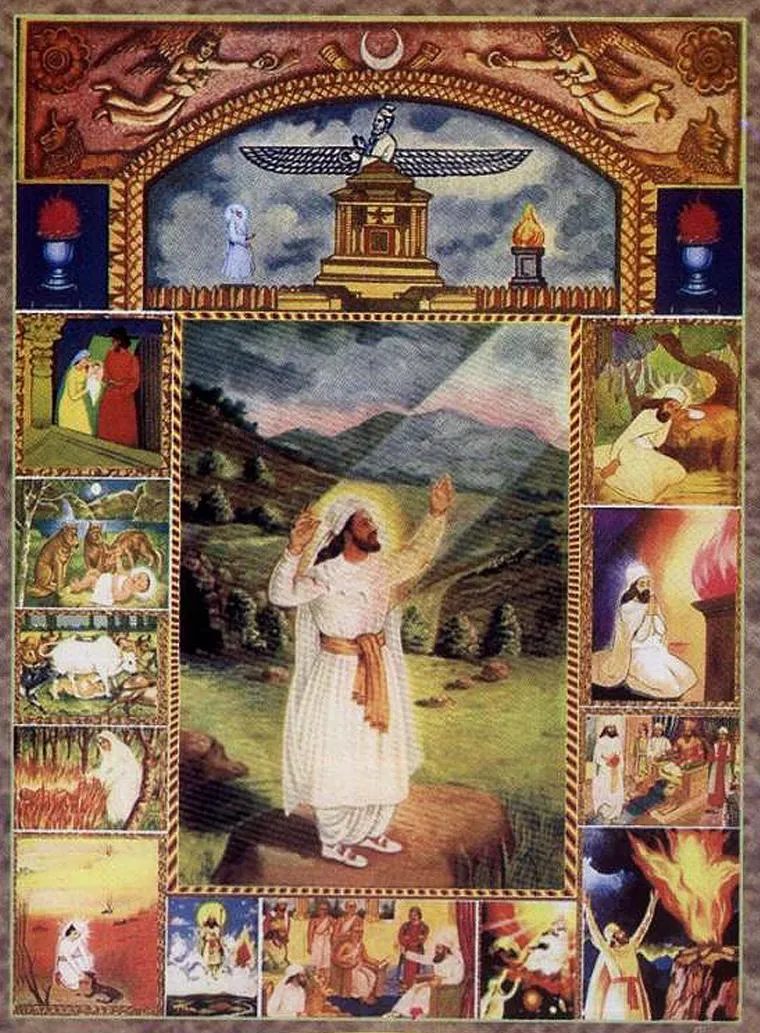
Zoroaster 1

"Zoroaster 1" by 19th century in Mumbai according to 青木健The original uploader was Ariapars at German Wikipedia. / Wikimedia Commons 

Zoroastrianism is one of the world’s oldest known religions and was the official faith of the ancient Persian Empire. Founded by the prophet Zoroaster (also called Zarathustra) around 1200 BCE in what is now Iran, Zoroastrianism taught that the universe is a battleground between the forces of good and evil. Its teachings shaped the culture, laws, and daily life of the Persian people for centuries.

The core belief of Zoroastrianism is the struggle between Ahura Mazda, the wise and benevolent god, and Angra Mainyu, the spirit of destruction and evil. Zoroaster taught that every person has the power of free will to choose between good thoughts, good words, and good deeds, or to follow the path of evil. Inscriptions from Darius the Great’s palace at Persepolis (built around 515 BCE) mention Ahura Mazda as the source of the king’s right to rule, showing how religion and government were closely connected.

Archaeological evidence, such as the fire temples scattered across ancient Persia, reveals that fire was a sacred symbol in Zoroastrian worship. Fire represented purity and truth, and ceremonies often involved keeping a sacred flame burning at all times. The Avesta, the holy book of Zoroastrianism, contains hymns and teachings that guide followers in making moral choices. For example, one ancient hymn urges believers to reject lies and violence, which illustrates the religion’s focus on ethical behavior.

Over time, Zoroastrianism became central to the state identity of the Persian Empire, especially under rulers like Cyrus the Great and Darius I. The religion influenced social hierarchy, with priests known as magi holding important roles in society. Zoroastrian ideas about judgment after death, heaven and hell, and the final defeat of evil influenced other world religions, including Judaism, Christianity, and Islam. Despite invasions by Greeks and later Arabs, some Persian communities continued to practice Zoroastrian traditions, showing both change and continuity in the region’s religious life.

Zoroastrianism’s teachings about moral choice, the importance of truth, and respect for nature have left a lasting legacy. By connecting beliefs about good and evil to daily actions, Zoroastrianism helped shape the values of ancient Persia and influenced the broader development of world religions.

This study of Zoroastrianism highlights how ideas about good and evil, personal responsibility, and belief systems are central to understanding ancient civilizations and their lasting impact.

Interesting Fact: Many Zoroastrian temples still keep a sacred fire burning today, continuing a tradition that began over 2,500 years ago.

Comprehension quiz (8 questions)

1. Who founded Zoroastrianism?

Zoroaster
Darius I
Cyrus the Great
Angra Mainyu

2. Where did Zoroastrianism begin?

Persia
Greece
Egypt
India

3. What was a sacred symbol in worship?

Fire
Water
Gold
Wind

4. Why were fire temples important?

Fire meant purity and truth
For cooking food
To store treasure
For animal sacrifices

5. How did Zoroastrianism influence daily life?

Guided moral choices
Banned all trade
Created new languages
Ended all wars

6. Who were the magi?

Priests in Zoroastrianism
Soldiers of Persia
Greek philosophers
Merchants

7. Zoroastrianism is still practiced today. True or false?

True
False

8. What is the Avesta?

Holy book
King’s palace
Fire temple
Persian city
Who it's for

Perfect for the way you teach

Teachers
  • Build comprehension skills
  • Auto-graded quiz
  • Differentiated reading
Parents
  • Read together at home
  • Improve fluency
  • Quiet reading time
Homeschoolers
  • Reading curriculum support
  • Independent practice
  • Track Lexile growth
Topics

Reviews & Ratings

No reviews yet. Be the first to share your experience!

More reading you might love

19 more
Passage
Monarchy in the Ancient World - reading educational content
Grades 6–8

Monarchy in the Ancient World

ancient history · CA HSS 6.2.3

$1.50
Passage
Akhenaten the Heretic Pharaoh - reading educational content
Grades 5–8

Akhenaten the Heretic Pharaoh

ancient history · CA HSS 6.2.3

$1.50
Passage
Trade in Ancient Mesopotamia - reading educational content
Grades 5–8

Trade in Ancient Mesopotamia

ancient history · CA HSS 6.2.3

$1.50
Passage
Nubia's Gold and Trade Routes - reading educational content
Grades 5–8

Nubia's Gold and Trade Routes

ancient history · CA HSS 6.2.3

$1.50
Passage
Hatshepsut the Female Pharaoh - reading educational content
Grades 5–8

Hatshepsut the Female Pharaoh

ancient history · CA HSS 6.2.3

$1.50
Passage
Tutankhamun the Boy King - reading educational content
Grades 5–8

Tutankhamun the Boy King

ancient history · CA HSS 6.2.3

$1.50
Passage
Code of Hammurabi - reading educational content
Grades 5–8

Code of Hammurabi

ancient history · CA HSS 6.2.3

$1.50
Passage
Comparing Hinduism and Buddhism - reading educational content
Grades 5–8

Comparing Hinduism and Buddhism

ancient history · CA HSS 6.2.3

$1.50
Passage
West Africa in 300 CE - reading educational content
Grades 5–8

West Africa in 300 CE

ancient history · CA HSS 6.2.3

$1.50
Passage
Apollo 11 Moon Rocks - reading educational content
Grades 5–8

Apollo 11 Moon Rocks

world history · CA HSS 6.2.3

$1.50
Passage
Aristophanes Greek Comedy Writer - reading educational content
Grades 6–8

Aristophanes Greek Comedy Writer

ancient history · 6.4.1

$1.50
Passage
Vyasa and Hindu Texts - reading educational content
Grades 6–8

Vyasa and Hindu Texts

ancient history · CA HSS 6.1.2

$1.50
Passage
Confucius and His Teachings - reading educational content
Grades 6–8

Confucius and His Teachings

ancient history · CA HSS 6.6.7

$1.50
Passage
Lao Tzu and Daoism - reading educational content
Grades 6–8

Lao Tzu and Daoism

ancient history · CA HSS 6.6.3

$1.50
Passage
Dead Sea Scrolls Discovery - reading educational content
Grades 6–8

Dead Sea Scrolls Discovery

ancient history · CA HSS 6.1

$1.50
Passage
Democracy in Ancient Athens - reading educational content
Grades 6–8

Democracy in Ancient Athens

ancient history · CA HSS 6.4

$1.50
Passage
Pueblo Pottery - reading educational content
Grades 5–8

Pueblo Pottery

us history · CA.HSS.6.1.1

$1.50
Passage
Stone Age Settlements - reading educational content
Grades 6–8

Stone Age Settlements

ancient history · CA HSS 6.1

$1.50
Passage
King David of Israel - reading educational content
Grades 6–8

King David of Israel

ancient history · CA HSS 6.2

$1.50
Copyright © 2026 Workybooks. Made with ♥ in California.