Tutankhamun the Boy King
Interactive passage with audio narration, comprehension questions, and printable PDF.
By completing this purchase you agree to our Terms of Use and Privacy Policy. Your subscription renews automatically until you cancel. You can cancel anytime from your account settings. All sales are final and non-refundable. Digital content is available for download in your account immediately upon purchase.
What's included
Tutankhamun the Boy King preview and details
About this printable Tutankhamun the Boy King reading passage (Grades 5-8)
Sample passage and quiz from Tutankhamun the Boy King
Reading passage and comprehension quiz preview
Tutankhamun the Boy King
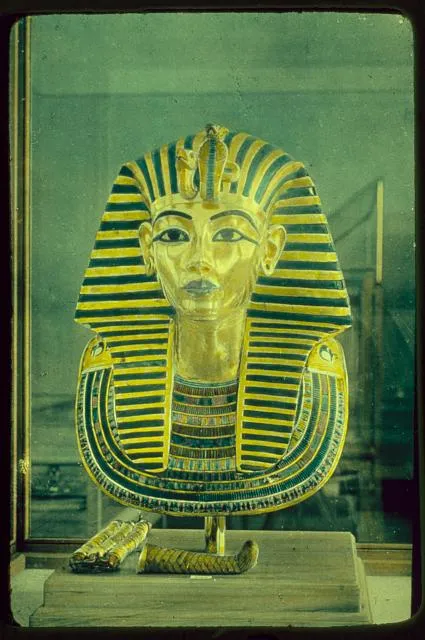
Source: Library of Congress - Matson Photo Service
Tutankhamun, often called the "Boy King," ruled Ancient Egypt more than 3,300 years ago during the New Kingdom period. He became pharaoh at about nine years old, inheriting the throne after the death of Akhenaten, his likely father. Despite his young age and brief rule from 1332 to 1323 BCE, Tutankhamun's tomb became one of the most significant archaeological discoveries in history.
Tutankhamun’s reign was marked by a return to the traditional Egyptian polytheistic religion, after his predecessor Akhenaten had promoted the worship of a single god, Aten. The restoration of old religious practices helped to stabilize Egyptian society and strengthen the authority of temple priests. Although Tutankhamun did not lead major military campaigns or build grand monuments like other pharaohs, ancient inscriptions and wall paintings show him performing traditional rituals and participating in religious ceremonies. This focus on tradition was likely influenced by his advisors, especially the powerful vizier Ay and general Horemheb, who guided his decisions due to his youth.
The true significance of Tutankhamun emerged thousands of years after his death. In 1922, British archaeologist Howard Carter discovered Tutankhamun’s nearly intact tomb in the Valley of the Kings, near Luxor. The tomb was filled with over 5,000 artifacts, including the famous gold mask, chariots, jewelry, and statues. The presence of these treasures provided historians and archaeologists with valuable clues about ancient Egyptian burial practices, beliefs about the afterlife, and the social hierarchy of the time. For example, the walls of the burial chamber were decorated with hieroglyphics describing spells for the pharaoh's journey into the afterlife, demonstrating the Egyptians' complex religious beliefs.
The discovery of Tutankhamun’s tomb was especially important because it had not been completely robbed by ancient thieves, unlike most other royal tombs. This allowed scholars to study authentic objects and learn about the technology, art, and daily life of the New Kingdom. The tomb’s location in the Valley of the Kings shows how the geography of Egypt, with its deserts and cliffs, helped protect royal burials from grave robbers. Additionally, the artifacts reveal the high level of craftsmanship in Egypt and the resources available to the royal family, reflecting the society’s structure and values.
Tutankhamun’s legacy continues to impact our understanding of ancient Egypt. His tomb’s treasures have traveled the world in museum exhibitions, sparking global interest in Egyptology and the mysteries of the past. Through archaeological evidence, historians have pieced together not only the story of one young king, but also the religious, political, and social dynamics of an entire civilization.
Studying Tutankhamun connects us to the broader themes of world history, such as the rise and fall of civilizations, the importance of leadership, and the ways in which geography shapes culture and historical memory.
Interesting Fact: The discovery of Tutankhamun’s tomb inspired the idea of the “Pharaoh’s Curse” because several people involved in the excavation died soon afterward, though historians believe these deaths were coincidental.
Comprehension quiz (8 questions)
1. Who discovered Tutankhamun's tomb?
2. When did Tutankhamun rule Egypt?
3. Where is Tutankhamun’s tomb located?
4. Why was the discovery of the tomb important?
5. How did Tutankhamun’s reign impact religion?
6. What helped protect Tutankhamun’s tomb?
7. Tutankhamun was much older than most pharaohs. True or false?
8. What does 'hieroglyphics' mean?
Perfect for the way you teach
- Build comprehension skills
- Auto-graded quiz
- Differentiated reading
- Read together at home
- Improve fluency
- Quiet reading time
- Reading curriculum support
- Independent practice
- Track Lexile growth