Pueblo Pottery
Interactive passage with audio narration, comprehension questions, and printable PDF.
By completing this purchase you agree to our Terms of Use and Privacy Policy. Your subscription renews automatically until you cancel. You can cancel anytime from your account settings. All sales are final and non-refundable. Digital content is available for download in your account immediately upon purchase.
What's included
Pueblo Pottery preview and details
About this printable Pueblo Pottery reading passage (Grades 5-8)
Sample passage and quiz from Pueblo Pottery
Reading passage and comprehension quiz preview
Pueblo Pottery
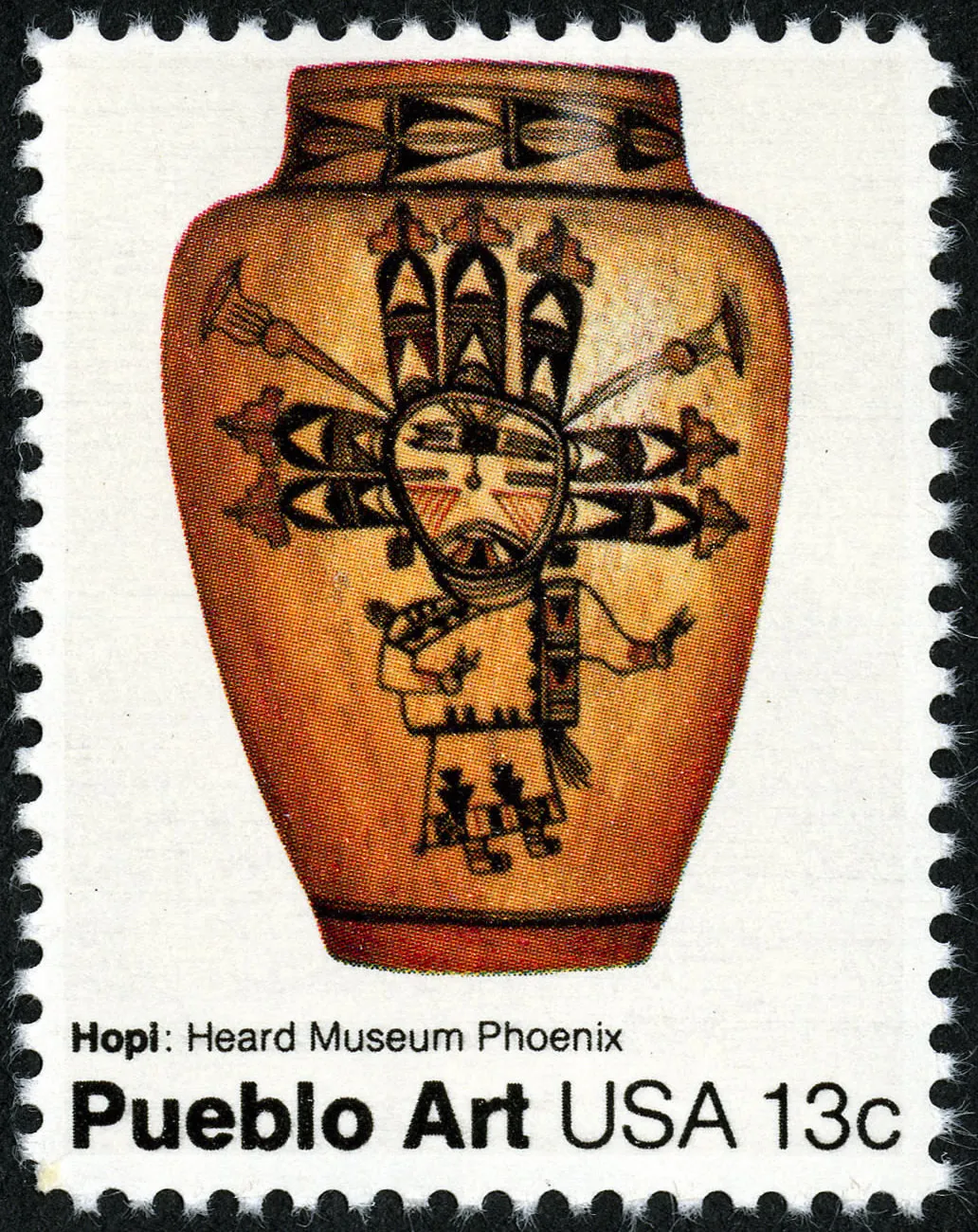
"Pueblo Pottery Hopi Pot 13c 1977 issue U.S. stamp" by Bureau of Engraving and Printing. Designed by Ford Ruthling. / Wikimedia Commons (Public domain).
The Pueblo peoples of the American Southwest are known for creating some of the most distinctive and long-lasting pottery traditions in North America. Archaeological evidence shows that pottery has been a central part of Pueblo life for over a thousand years, with the earliest forms dating back to around 700 CE. Pueblo pottery serves both functional and artistic purposes, reflecting the environment, beliefs, and social structures of different Pueblo communities.
Pueblo pottery is usually made using the coil-building method. In this technique, long coils of clay are stacked and smoothed to form the vessel's walls, rather than being shaped on a wheel. Potters use tools made from stones, gourds, or even corncobs to shape and polish the surface. The clay itself is often collected from local riverbeds or hillsides, and each Pueblo group selects specific clays and natural pigments that create unique colors and textures. After shaping, the pottery is painted with mineral or plant-based paints, often in geometric or symbolic designs. These designs can represent rain, animals, or important cultural stories. For example, black-on-white pottery from the Ancestral Puebloan site of Chaco Canyon (c. 900-1150 CE) features intricate patterns and is highly valued by archaeologists. Another example is the polychrome pottery of the Hopi people, which uses multiple colors and bird motifs.
Firing the pottery is another important step. Pueblo potters often build open-air kilns or use pit-firing methods. The temperature and type of fuel, such as wood or dung, affect the final color and hardness of the pottery. Pueblo women, who traditionally are the main potters, pass these firing techniques and design patterns down through generations. Oral histories and archaeological finds confirm that pottery was used for a variety of daily tasks, such as storing water, cooking, and carrying food, as well as for ceremonial purposes. Some pots, like the water jars from San Ildefonso Pueblo, became famous in the early 20th century when artists like Maria Martinez revived ancient black-on-black styles.
The continuity and change in Pueblo pottery tell us a lot about adaptation and identity. While the basic coil-building method has remained the same for centuries, new designs and forms have developed as Pueblo peoples interacted with neighboring groups and adapted to new needs. Pottery making also played a role in social hierarchy, with certain families or individuals recognized for their exceptional skill. Pottery was sometimes traded with distant communities, showing its value beyond the household.
Pueblo pottery is significant because it connects the past to the present, preserving cultural knowledge while allowing for creative expression. The study of pottery shards at sites like Mesa Verde helps archaeologists reconstruct ancient Pueblo life, trade, and migration patterns. Today, Pueblo artists continue to innovate within their traditions, keeping the art form alive and meaningful.
Interesting Fact: Some Pueblo pots are so well-made that they have survived for over 800 years, allowing modern scientists to study the clay, paint, and even fingerprints left by ancient potters.
This study of Pueblo pottery connects to larger themes like technological innovation, cultural continuity, and the relationship between people and their environments in world history.
Comprehension quiz (8 questions)
1. When did Pueblo pottery first appear?
2. Who is known for black-on-black pottery?
3. What is the coil-building method?
4. Why are different clays used by each Pueblo?
5. How did pottery show social hierarchy?
6. What was a main use of Pueblo pottery?
7. Pueblo pottery has always been made the same way. True or false?
8. What does 'geometric' mean in pottery designs?
Perfect for the way you teach
- Build comprehension skills
- Auto-graded quiz
- Differentiated reading
- Read together at home
- Improve fluency
- Quiet reading time
- Reading curriculum support
- Independent practice
- Track Lexile growth