Acids and Bases
Interactive passage with audio narration, comprehension questions, and printable PDF.
By completing this purchase you agree to our Terms of Use and Privacy Policy. Your subscription renews automatically until you cancel. You can cancel anytime from your account settings. All sales are final and non-refundable. Digital content is available for download in your account immediately upon purchase.
What's included
Acids and Bases preview and details
About this printable Acids and Bases science reading passage, NGSS-aligned (Grades 5-8)
Sample passage and quiz from Acids and Bases
Reading passage and comprehension quiz preview
Acids and Bases
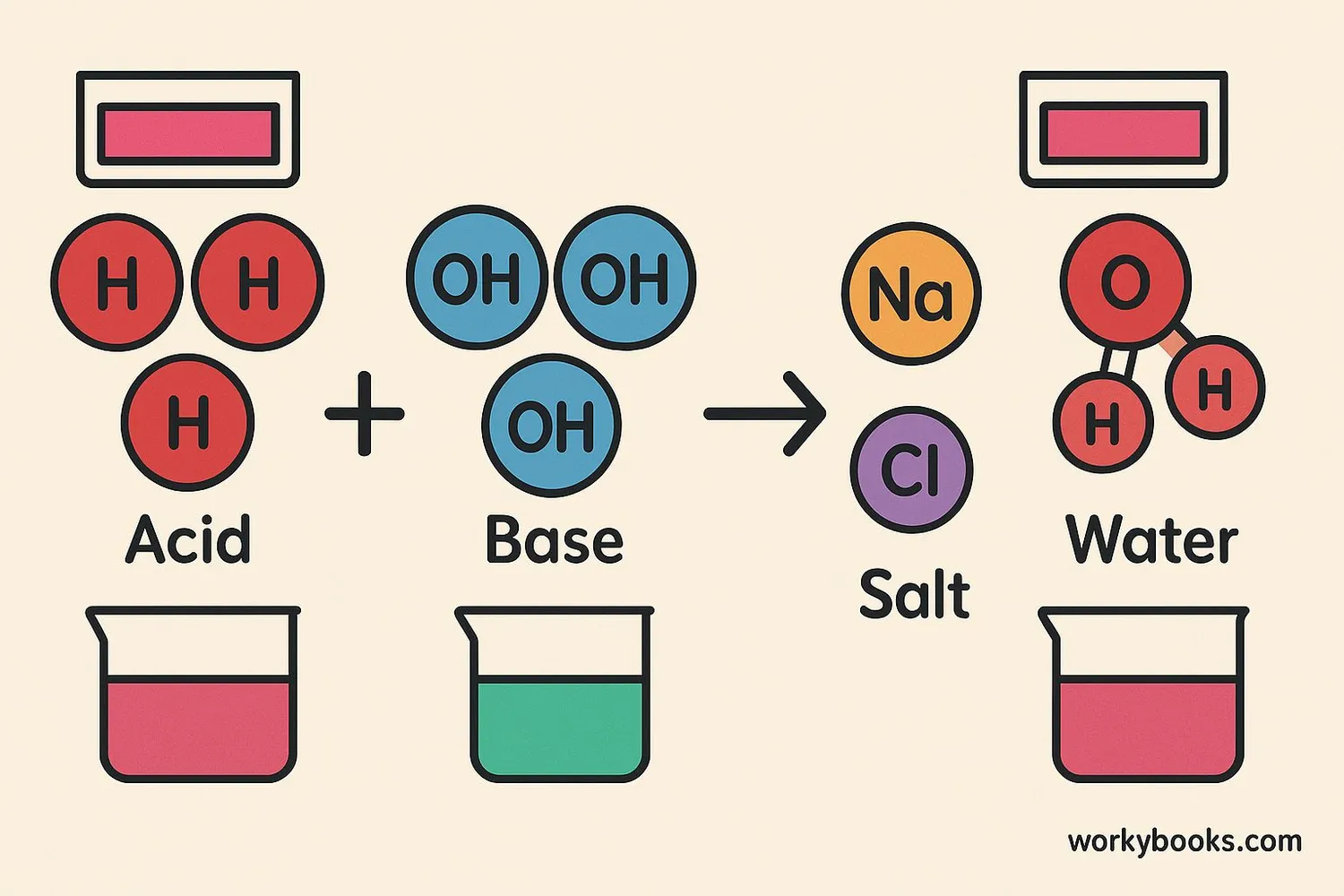
Acids and bases are fundamental types of substances that shape many chemical reactions around us. The sour taste of lemon juice, the cleaning power of soap, and the fizzing reaction between vinegar and baking soda all result from the properties of acids and bases. Scientists use these observations to investigate how substances interact at the molecular level, leading to a deeper understanding of chemistry and its applications in daily life and technology.
How Acids and Bases Work
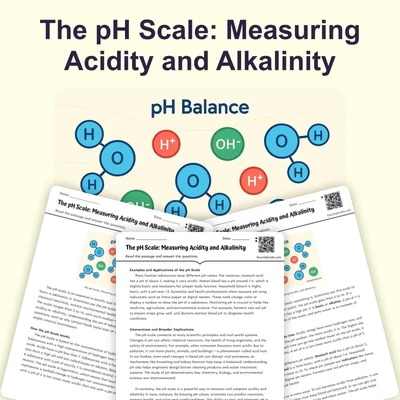
Acids are substances that release hydrogen ions (H⁺) when they dissolve in water. This property gives acids their characteristic sour taste and makes them react with certain metals to produce gas. For example, lemon juice and vinegar both contain acids; lemon juice contains citric acid, while vinegar contains acetic acid. Bases, on the other hand, are substances that release hydroxide ions (OH⁻) in water. Bases often taste bitter and feel slippery to the touch, like baking soda or soap. The difference in ion release is a key reason why acids and bases behave so differently and are used for various purposes, from cooking to cleaning.
Neutralization and Interactions
When an acid and a base are mixed together, a neutralization reaction occurs. In this process, the hydrogen ions from the acid combine with the hydroxide ions from the base to form water. The other parts of the acid and base form a salt. For example, when vinegar (acetic acid) is combined with baking soda (a base called sodium bicarbonate), they react to produce carbon dioxide gas, water, and sodium acetate (a type of salt). Neutralization reactions are important in many fields, such as medicine for treating acid reflux, agriculture for balancing soil pH, and environmental science for cleaning up spills.
Applications, Safety, and Broader Connections
Acids and bases are not just laboratory chemicals—they are essential in everyday products and technologies. Many foods, cleaners, and medicines involve acids or bases. However, strong acids and bases can be hazardous, causing burns or damage to materials, so scientists and consumers must follow safety guidelines, such as wearing gloves and goggles. The study of acids and bases contributes to the broader scientific principle that chemical properties determine how substances interact, change, and affect systems. Understanding these interactions helps society solve problems, from waste treatment to creating new materials.
Acids and bases are central to chemistry because they show how the movement of ions leads to observable changes. By studying their reactions, scientists uncover the rules that govern matter and its transformations.
Interesting Fact: Some plants, like red cabbage, contain natural indicators that change color depending on whether a substance is an acid or a base!
Comprehension quiz (10 questions)
1. What do acids release when they dissolve in water?
2. Which of the following is an example of a base?
3. What happens during a neutralization reaction?
4. According to the passage, why do acids and bases act differently?
5. What is an indicator, based on the passage?
6. Which statement best describes why safety is important when working with strong acids and bases?
7. If you wanted to decrease the acidity of soil, what kind of substance would you use?
8. If vinegar is mixed with baking soda, which gas is produced?
9. Acids taste bitter. (True/False)
10. Bases feel slippery to the touch. (True/False)
Perfect for the way you teach
- Build comprehension skills
- Auto-graded quiz
- Differentiated reading
- Read together at home
- Improve fluency
- Quiet reading time
- Reading curriculum support
- Independent practice
- Track Lexile growth