pH Scale
Interactive passage with audio narration, comprehension questions, and printable PDF.
By completing this purchase you agree to our Terms of Use and Privacy Policy. Your subscription renews automatically until you cancel. You can cancel anytime from your account settings. All sales are final and non-refundable. Digital content is available for download in your account immediately upon purchase.
What's included
pH Scale preview and details
About this printable pH Scale science reading passage, NGSS-aligned (Grades 5-8)
Sample passage and quiz from pH Scale
Reading passage and comprehension quiz preview
The pH Scale
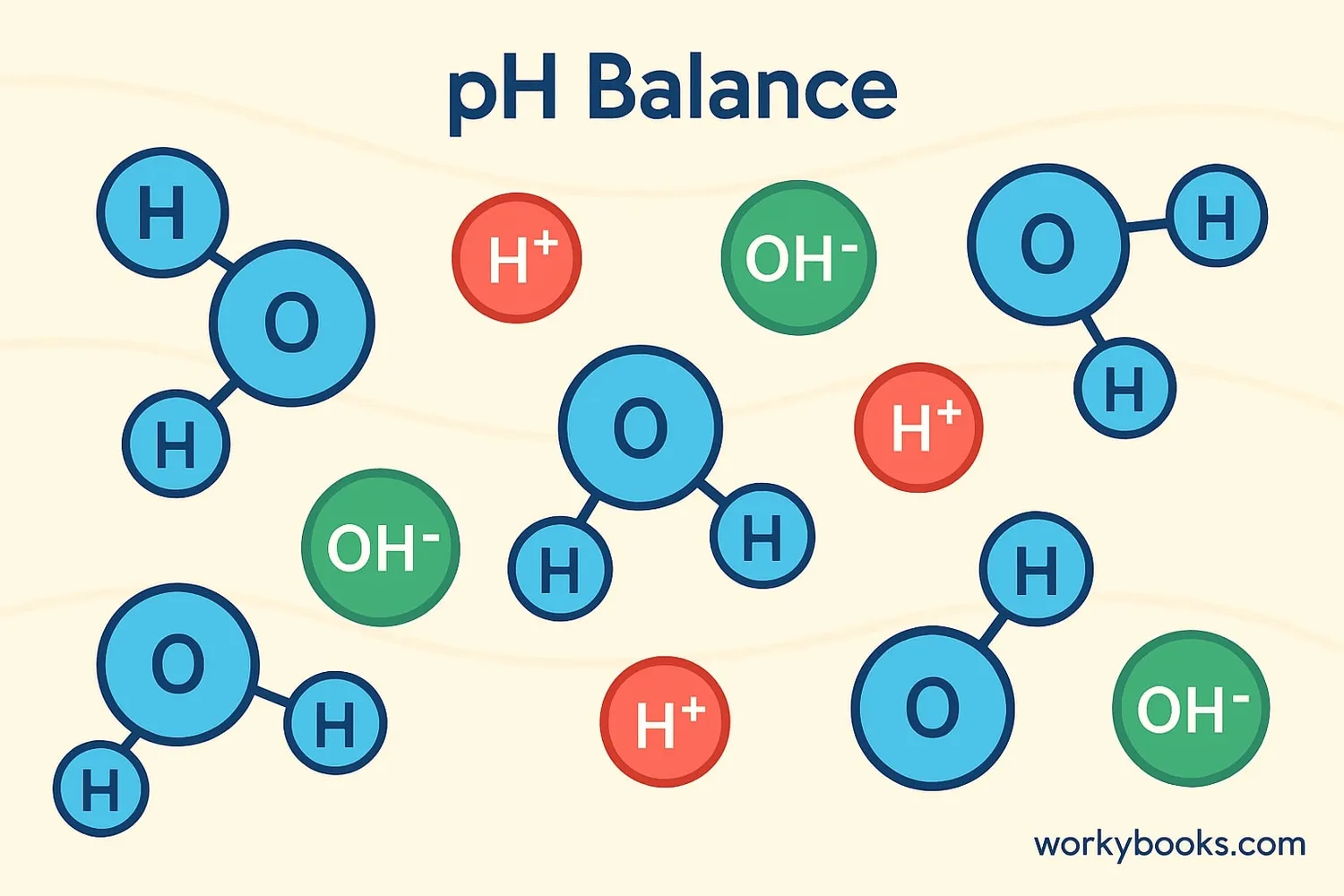
The pH scale is an essential scientific tool that allows us to measure how acidic or basic a substance is. Scientists use the pH scale to better understand and control chemical reactions, monitor environmental health, and study biological processes. The scale ranges from 0 to 14, with each number representing a different level of acidity or alkalinity. Understanding the pH of substances helps us answer important questions, such as why certain foods taste sour or why our bodies need to maintain a stable internal environment.
How the pH Scale Works
The pH scale is based on the concentration of hydrogen ions (H+) in a solution. Substances with a high concentration of hydrogen ions have a low pH and are called acids. Acids have a pH less than 7. Substances with a low concentration of hydrogen ions have a high pH and are called bases or alkaline. Bases have a pH greater than 7. A substance with a pH of exactly 7 is considered neutral. For example, pure water is neutral. The pH scale is logarithmic, which means that each step on the scale represents a tenfold change in hydrogen ion concentration. This means a substance with a pH of 4 is ten times more acidic than one with a pH of 5.
Examples and Applications of the pH Scale
Many familiar substances have different pH values. For instance, stomach acid has a pH of about 2, making it very acidic. Human blood has a pH around 7.4, which is slightly basic and necessary for proper body function. Household bleach is highly basic, with a pH near 13. Scientists and health professionals often measure pH using indicators, such as litmus paper or digital meters. These tools change color or display a number to show the pH of a substance. Monitoring pH is crucial in fields like medicine, agriculture, and environmental science. For example, farmers test soil pH to ensure crops grow well, and doctors monitor blood pH to diagnose health conditions.
Interactions and Broader Implications
The pH scale connects to many scientific principles and real-world systems. Changes in pH can affect chemical reactions, the health of living organisms, and the safety of environments. For example, when rainwater becomes more acidic due to pollution, it can harm plants, animals, and buildings—a phenomenon called acid rain. In our bodies, even small changes in blood pH can disrupt vital processes, so mechanisms like breathing and kidney function help keep it balanced. Understanding pH also helps engineers design better cleaning products and water treatment systems. The study of pH demonstrates how chemistry, biology, and environmental science are interconnected.
In summary, the pH scale is a powerful way to measure and compare acidity and alkalinity in many contexts. By knowing pH values, scientists can predict reactions, protect health, and solve real-world problems. The ability to test and interpret pH is a foundational skill in science that supports our understanding of both natural and human-made systems.
Interesting Fact: The word "pH" comes from the German term "potenz Hydrogen," which means "power of hydrogen."
Comprehension quiz (10 questions)
1. What does the pH scale measure?
2. Which pH value is considered neutral?
3. What is the pH of human blood?
4. What does it mean if a substance has a pH of 13?
5. What is an indicator in the context of pH?
6. What is the main difference between acids and bases as explained in the passage?
7. Why do doctors care about blood pH?
8. If rainwater becomes more acidic, what can happen?
9. True or False: The pH scale is logarithmic, so each number change means a tenfold change in hydrogen ion concentration.
10. True or False: Pure water is considered an acid.
Perfect for the way you teach
- Build comprehension skills
- Auto-graded quiz
- Differentiated reading
- Read together at home
- Improve fluency
- Quiet reading time
- Reading curriculum support
- Independent practice
- Track Lexile growth