Measurement and Units
Interactive passage with audio narration, comprehension questions, and printable PDF.
By completing this purchase you agree to our Terms of Use and Privacy Policy. Your subscription renews automatically until you cancel. You can cancel anytime from your account settings. All sales are final and non-refundable. Digital content is available for download in your account immediately upon purchase.
What's included
Measurement and Units preview and details
About this printable Measurement and Units science reading passage, NGSS-aligned (Grades 5-8)
Sample passage and quiz from Measurement and Units
Reading passage and comprehension quiz preview
Measurement and Units
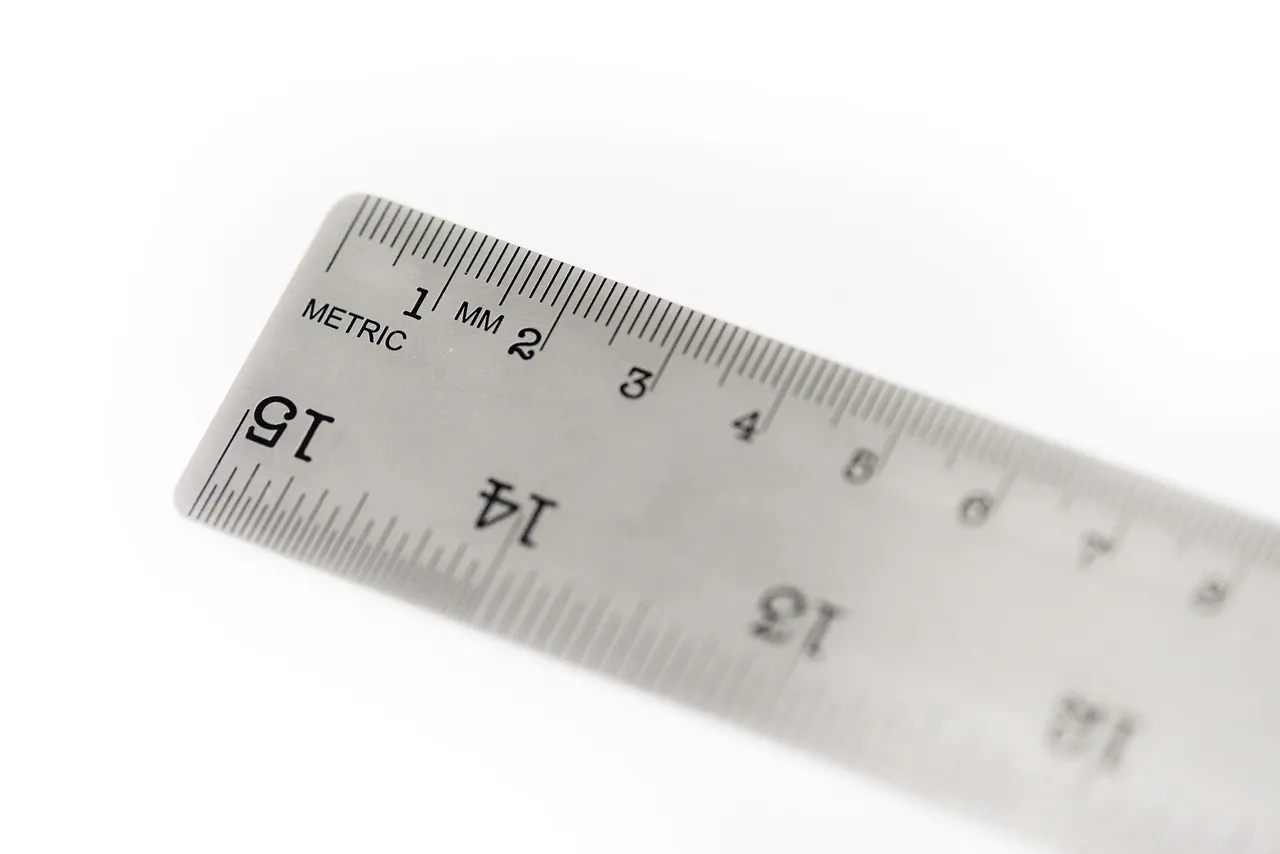
Measurement is a fundamental part of science, allowing us to describe and compare the physical world. Every scientific investigation depends on accurate and precise measurements to answer questions or solve problems. For example, when scientists study chemical reactions, they must measure the mass of substances in grams, the volume of liquids in liters or milliliters, and the length of objects in meters. Using the correct units and tools ensures that results can be shared and understood anywhere in the world.
The Metric System and SI Units
The metric system, also known as the International System of Units (SI units), is the standard in science because it is based on powers of ten. This makes calculations easier and helps avoid confusion. The basic unit for mass is the gram (g), for volume the liter (L), and for length the meter (m). Scientists use graduated cylinders to measure liquid volume, triple beam balances for mass, and rulers or meter sticks for length. For example, a small rock might have a mass of 52 grams, a water sample could fill 250 milliliters, and a stick might be 1.2 meters long.
Precision, Accuracy, and Significant Figures
Two key ideas in measurement are precision and accuracy. Precision means how close repeated measurements are to each other, while accuracy shows how close a measurement is to the true value. For instance, if three students measure the same object and all get 10.1 grams, their results are precise. If the true mass is 10.0 grams, their measurements are also accurate. However, if another group consistently measures 10.5 grams, their results are precise (each other) but not accurate (not close to true value). Scientists use significant figures to communicate how exact a measurement is. For example, recording a length as 2.36 meters (three significant figures) tells others about the tool’s precision and the reliability of the result.
Measurement in Practice and Why It Matters
Making careful measurements is essential in science and in daily life. For example, if a pharmacist measures medicine incorrectly, it can be harmful. In engineering, tiny errors in measurement can affect the safety of bridges or airplanes. Standard units and clear measurement techniques help people around the world share and compare results. They also allow scientists to repeat experiments and verify findings. Measurement connects to the larger principle of scientific inquiry: we must collect reliable, accurate data to make valid conclusions. Over time, advances in measurement have led to better technology and safer, healthier societies.
Interesting Fact: The meter was originally defined as one ten-millionth the distance from the equator to the North Pole along the Earth's surface.
Comprehension quiz (10 questions)
1. What is the main advantage of using the metric system in science?
2. Which tool would you use to measure the mass of a rock?
3. Why do scientists use significant figures?
4. What does 'accuracy' mean in measurement?
5. Which is the basic SI unit for volume?
6. What is the best definition of 'precision' as used in the passage?
7. If three students measure an object and all get 8.0 cm, but the real length is 10.0 cm, their results are:
8. Why is it important for scientists to use standard units?
9. True/False: The ruler is used to measure liquid volume.
10. True/False: Tiny errors in measurement can affect the safety of bridges.
Perfect for the way you teach
- Build comprehension skills
- Auto-graded quiz
- Differentiated reading
- Read together at home
- Improve fluency
- Quiet reading time
- Reading curriculum support
- Independent practice
- Track Lexile growth