How Density Identifies Substances
Interactive passage with audio narration, comprehension questions, and printable PDF.
By completing this purchase you agree to our Terms of Use and Privacy Policy. Your subscription renews automatically until you cancel. You can cancel anytime from your account settings. All sales are final and non-refundable. Digital content is available for download in your account immediately upon purchase.
What's included
How Density Identifies Substances preview and details
About this printable How Density Identifies Substances science reading passage, NGSS-aligned (Grades 5-8)
Sample passage and quiz from How Density Identifies Substances
Reading passage and comprehension quiz preview
How Density Identifies Substances
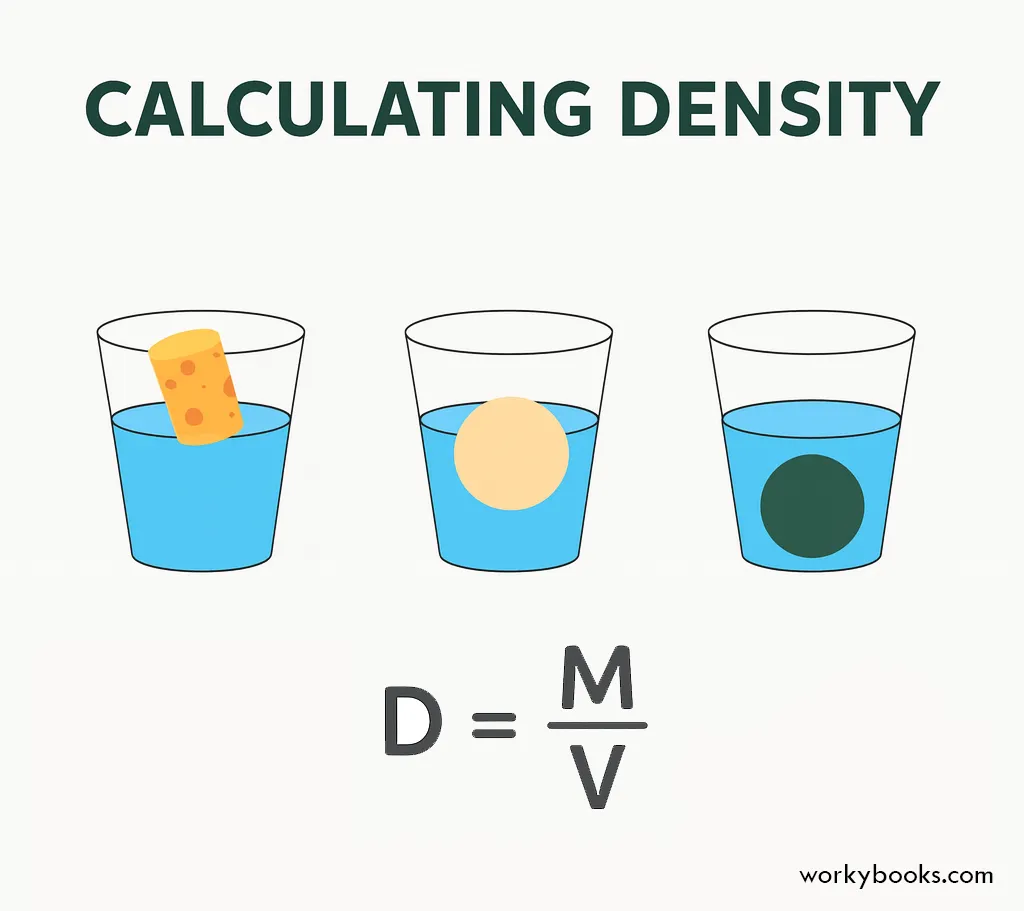
Density is a fundamental property that scientists use to identify unknown substances. The amount of mass packed into a certain volume determines the density of a material. For example, a gold coin and a fake coin may look very similar, but their densities can reveal which is real. This makes density a reliable 'fingerprint' for different materials. Understanding how to measure and use density is important in science, industry, and even law enforcement.
How Density Works: The Science Behind the Numbers
Density is calculated by dividing mass by volume, using the equation: Density = Mass ÷ Volume. The unit for density is often grams per cubic centimeter (g/cm³) or kilograms per liter (kg/L). If two objects have the same volume but different masses, the one with more mass has a higher density. For instance, lead has a density of about 11.34 g/cm³, while aluminum is only about 2.70 g/cm³. Scientists measure mass with a balance and volume by either measuring dimensions or using water displacement. When a substance is placed in water, the amount of water it moves equals its volume. This method is especially helpful for irregularly shaped objects.
Real-World Applications: From Coins to Crime Labs
Density plays a key role in many real-world situations. Jewelers use density to identify precious metals and detect fake gold or silver. In forensics, investigators may test the density of unknown powders or liquids to help solve crimes. For example, if a white powder is found at a scene, measuring its density can help determine if it matches a known drug or household substance. Industries also use density to ensure product quality and safety. For example, fuel companies check gasoline density to prevent contamination.
Complexities and Exceptions
While density is a useful identifying property, it is not always perfect. Some substances can have similar densities but be entirely different materials, so scientists often use density alongside other tests, such as melting point or chemical reactivity. Temperature can also affect density because most substances expand when heated, making their density decrease. This is why hot air balloons rise—warm air inside the balloon is less dense than the cooler air outside.
In summary, density is a powerful tool for identifying substances, providing valuable information in science, technology, and crime solving. By combining measurements with scientific reasoning, density helps us uncover the identity and properties of materials in our world.
Interesting Fact: The element osmium is the densest naturally occurring substance on Earth, with a density of about 22.59 g/cm³—almost twice as dense as lead!
Comprehension quiz (10 questions)
1. What is density?
2. Why is density called a 'fingerprint' property?
3. What is the equation for density?
4. Which of the following is a unit for density?
5. What does 'water displacement' help scientists measure?
6. In the passage, which profession uses density to check for fake gold?
7. According to the passage, why do hot air balloons rise?
8. Why might density alone not be enough to identify a substance?
9. True or False: Temperature does not affect density.
10. True or False: Osmium is less dense than lead.
Perfect for the way you teach
- Build comprehension skills
- Auto-graded quiz
- Differentiated reading
- Read together at home
- Improve fluency
- Quiet reading time
- Reading curriculum support
- Independent practice
- Track Lexile growth