Alexander the Great
Interactive passage with audio narration, comprehension questions, and printable PDF.
By completing this purchase you agree to our Terms of Use and Privacy Policy. Your subscription renews automatically until you cancel. You can cancel anytime from your account settings. All sales are final and non-refundable. Digital content is available for download in your account immediately upon purchase.
What's included
Part of this bundle

Alexander the Great preview and details
About this printable Alexander the Great reading passage (Grades 5-8)
Sample passage and quiz from Alexander the Great
Reading passage and comprehension quiz preview
Alexander the Great
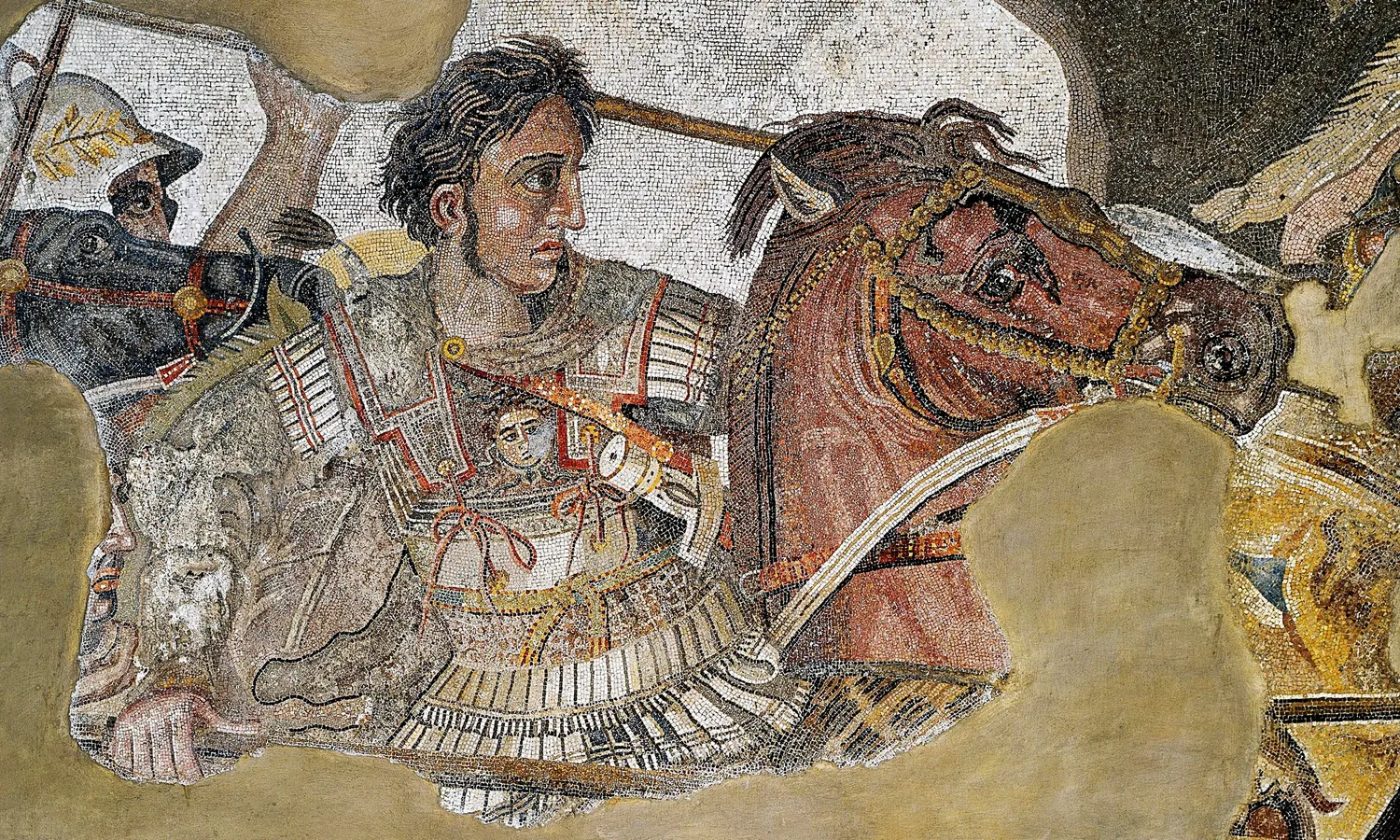
"Alexander the Great mosaic"
Source: Wikimedia Commons
Alexander the Great became king of Macedonia in 336 BCE and soon began one of the most remarkable military campaigns in history. Born in the ancient Greek kingdom of Macedonia, Alexander was tutored by the philosopher Aristotle, who taught him about science, philosophy, and Greek culture. By the age of twenty, Alexander inherited his father’s throne and quickly set out to expand his territory. His ambition and tactical skill allowed him to build a vast empire that stretched from Greece to Egypt and as far east as India.
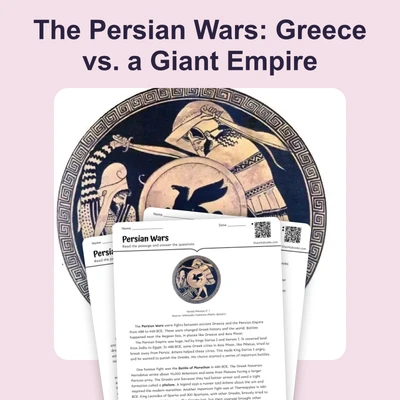
Alexander’s first major challenge was uniting the Greek city-states, many of which were fiercely independent. After his father, King Philip II, was assassinated, Alexander suppressed revolts and established control over Greece. In 334 BCE, he led an army across the Hellespont into Asia Minor (modern Turkey) and defeated the Persian forces at the Battle of Granicus. This victory marked the start of his campaign against the powerful Persian empire. Using innovative military strategies and the famous Macedonian phalanx formation, Alexander continued to win battles, including the decisive Battle of Issus in 333 BCE and the siege of Tyre in 332 BCE. Ancient sources like Arrian describe how Alexander used siege towers and causeways to conquer the island city of Tyre, showing his creativity and determination as a commander.
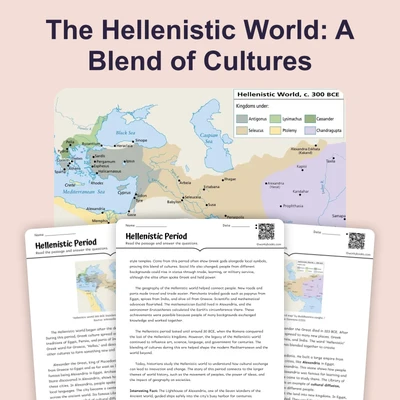
After defeating King Darius III of Persia at the Battle of Gaugamela in 331 BCE, Alexander became ruler of the largest empire the world had seen. He entered Babylon, a center of ancient civilization, and was welcomed as a liberator. Alexander adopted some Persian customs and encouraged his soldiers to marry local women, blending Greek and Eastern cultures. This policy led to the creation of the Hellenistic world, where Greek language, art, and ideas mixed with those of Egypt, Persia, and India. Alexander founded many cities named Alexandria, the most famous in Egypt, which became centers for trade and learning. Archaeologists have discovered remains of these cities, providing evidence of their importance and multicultural character.
Alexander’s empire did not last long after his death in 323 BCE at the age of 32. His generals, known as the Diadochi, divided the empire into separate kingdoms. However, Alexander’s conquests had a lasting impact. The spread of Greek culture, known as Hellenization, influenced language, art, science, and government across three continents. The blending of cultures created new opportunities for learning and innovation. Although some historians debate whether Alexander was a hero or a ruthless conqueror, his legacy as a cultural bridge between East and West remains significant.
Alexander’s story connects to broader themes in world history, such as the rise and fall of empires, the movement of peoples and ideas, and the ways individuals shape the course of history. His life demonstrates how leadership, ambition, and cultural exchange can change the world.
Interesting Fact: Alexander never lost a battle during his twelve years of campaigns, making him one of history’s most successful military leaders.
Comprehension quiz (8 questions)
1. Who was Alexander's famous teacher?
2. Which battle did Alexander win first in Asia?
3. What city became a famous center in Egypt?
4. Why did Alexander encourage cultural blending?
5. What was the effect of Hellenization?
6. How did Alexander conquer Tyre?
7. Alexander never lost a battle. True or false?
8. What does 'city-state' mean?
Perfect for the way you teach
- Build comprehension skills
- Auto-graded quiz
- Differentiated reading
- Read together at home
- Improve fluency
- Quiet reading time
- Reading curriculum support
- Independent practice
- Track Lexile growth