Ancient City of Ur
Interactive passage with audio narration, comprehension questions, and printable PDF.
By completing this purchase you agree to our Terms of Use and Privacy Policy. Your subscription renews automatically until you cancel. You can cancel anytime from your account settings. All sales are final and non-refundable. Digital content is available for download in your account immediately upon purchase.
What's included
Part of this bundle

Ancient City of Ur preview and details
About this printable Ancient City of Ur reading passage (Grades 5-8)
Sample passage and quiz from Ancient City of Ur
Reading passage and comprehension quiz preview
Ancient City of Ur
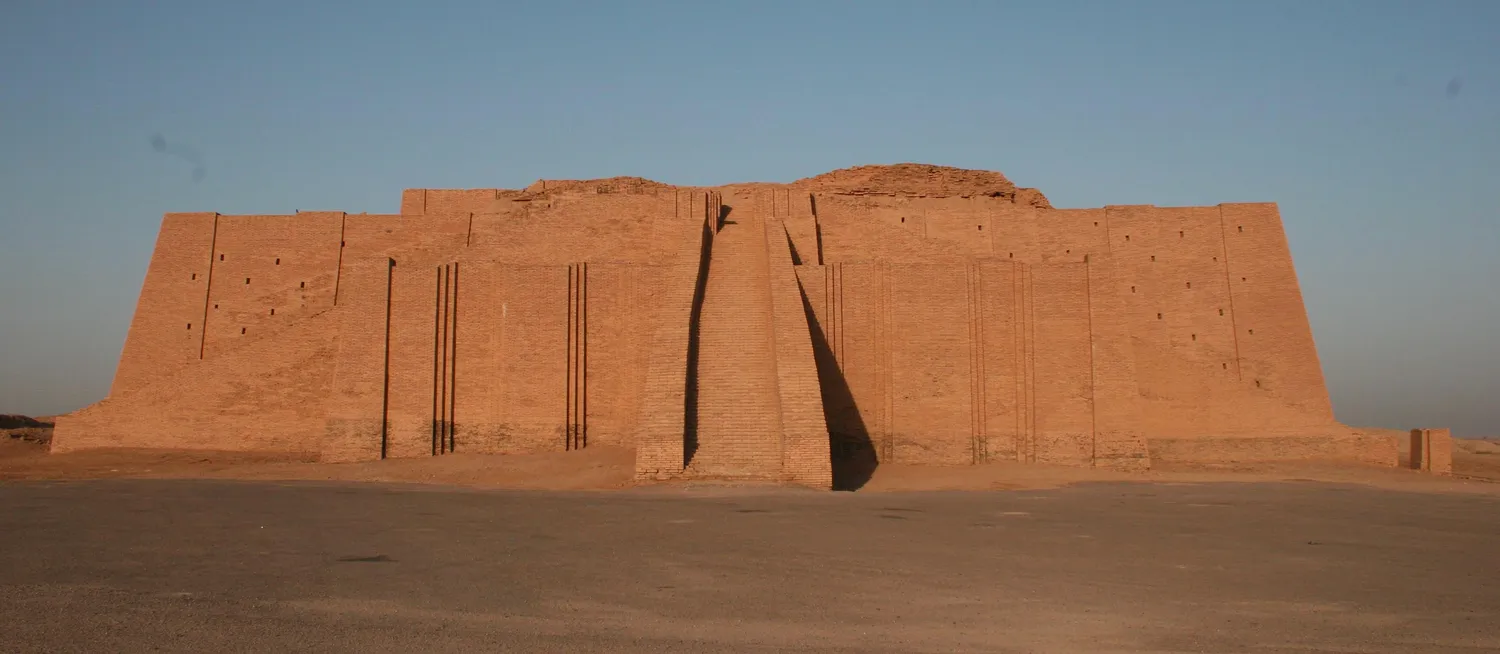
"Ziggarat of Ur. Tla2006 at English
Source: Wikimedia Commons
The ancient city of Ur was one of the most influential city-states in Sumer, located in southern Mesopotamia near the Euphrates River. Evidence suggests that Ur reached its peak around 2100 BCE, when it became a center of trade, religion, and government. Archaeologists have uncovered remains of Ur’s impressive buildings, providing insight into ancient Sumerian life.
At the heart of Ur stood the massive ziggurat, a stepped temple dedicated to the moon god Nanna. This structure, built with mud-bricks, towered high above the city and served as a religious and social center. Priests conducted rituals here, and citizens gathered for festivals. The ziggurat was surrounded by administrative buildings, markets, and homes made from sun-dried bricks. Streets were narrow and winding, reflecting the city’s organic growth over centuries.
The people of Ur developed a complex social hierarchy. The ruling class included kings, priests, and wealthy merchants. Most citizens were artisans, traders, farmers, or laborers. Slaves—often prisoners of war—occupied the lowest social ranks. Daily life in Ur was shaped by its environment. Because the region’s climate was dry, Sumerians built an advanced irrigation system to bring water from the Euphrates River to their fields, allowing them to grow crops such as barley and dates. This agricultural surplus supported population growth and economic activity.
Ur was also known for its advances in writing and record-keeping. Sumerians developed cuneiform, one of the world’s earliest writing systems, pressed into clay tablets with a reed stylus. Archaeologists have discovered thousands of these tablets in Ur, containing information about trade, laws, and daily transactions. The famous Royal Tombs of Ur, excavated by Sir Leonard Woolley in the 1920s, revealed treasures such as gold jewelry, musical instruments, and elaborate headdresses, showing the wealth and artistry of Sumerian society.
Ur’s location near the Persian Gulf made it a hub for long-distance trade. Merchants exchanged goods like wool, grain, and pottery for resources not found locally, such as copper and precious stones. Over time, shifts in the Euphrates River’s course and changing trade routes led to Ur’s decline. By 500 BCE, the city was largely abandoned, but its legacy continued through later civilizations of Mesopotamia.
Studying Ur helps historians understand how geography, technology, and social organization shaped one of the world’s earliest urban societies. Its ruins provide evidence of religious beliefs, economic systems, and daily life in ancient Mesopotamia, connecting to broader themes of cultural development and human innovation.
Interesting Fact: The Ziggurat of Ur has been partially restored and still stands in modern-day Iraq, offering a glimpse into the grandeur of Sumerian architecture.
Comprehension quiz (8 questions)
1. Where was Ur located?
2. Who was the ziggurat dedicated to?
3. What writing system did Sumerians invent?
4. Why did Sumerians build irrigation systems?
5. What did the Royal Tombs reveal?
6. How did Ur’s location help it?
7. Ur was abandoned by 500 BCE. True or false?
8. What is a ziggurat?
Perfect for the way you teach
- Build comprehension skills
- Auto-graded quiz
- Differentiated reading
- Read together at home
- Improve fluency
- Quiet reading time
- Reading curriculum support
- Independent practice
- Track Lexile growth