This engaging history reading passage explores the dramatic rise of Qin Shi Huang, the First Emperor of China, and the origins of the Great Wall. Students will learn about the unification of China, the emperor's bold reforms, and the human cost of building one of the world's most famous structures. The passage integrates evidence from ancient records and archaeological discoveries, addresses the impact on daily life and geography, and highlights the significance of the Qin Dynasty's achievements. Aligned to CA HSS 6.6 and CCSS RI.6.1, this resource supports analytical reading and writing skills, and includes a read aloud audio and a Spanish translation. Activities include a multiple-choice quiz, explanatory writing prompts, and graphic organizers to deepen understanding of cause and effect and historical evidence. Ideal for developing critical history skills and vocabulary in middle school classrooms.
Written by Workybooks TeamPublished by Workybooks
Preview
Sample passage and quiz content
CONTENT PREVIEW
Expand content preview
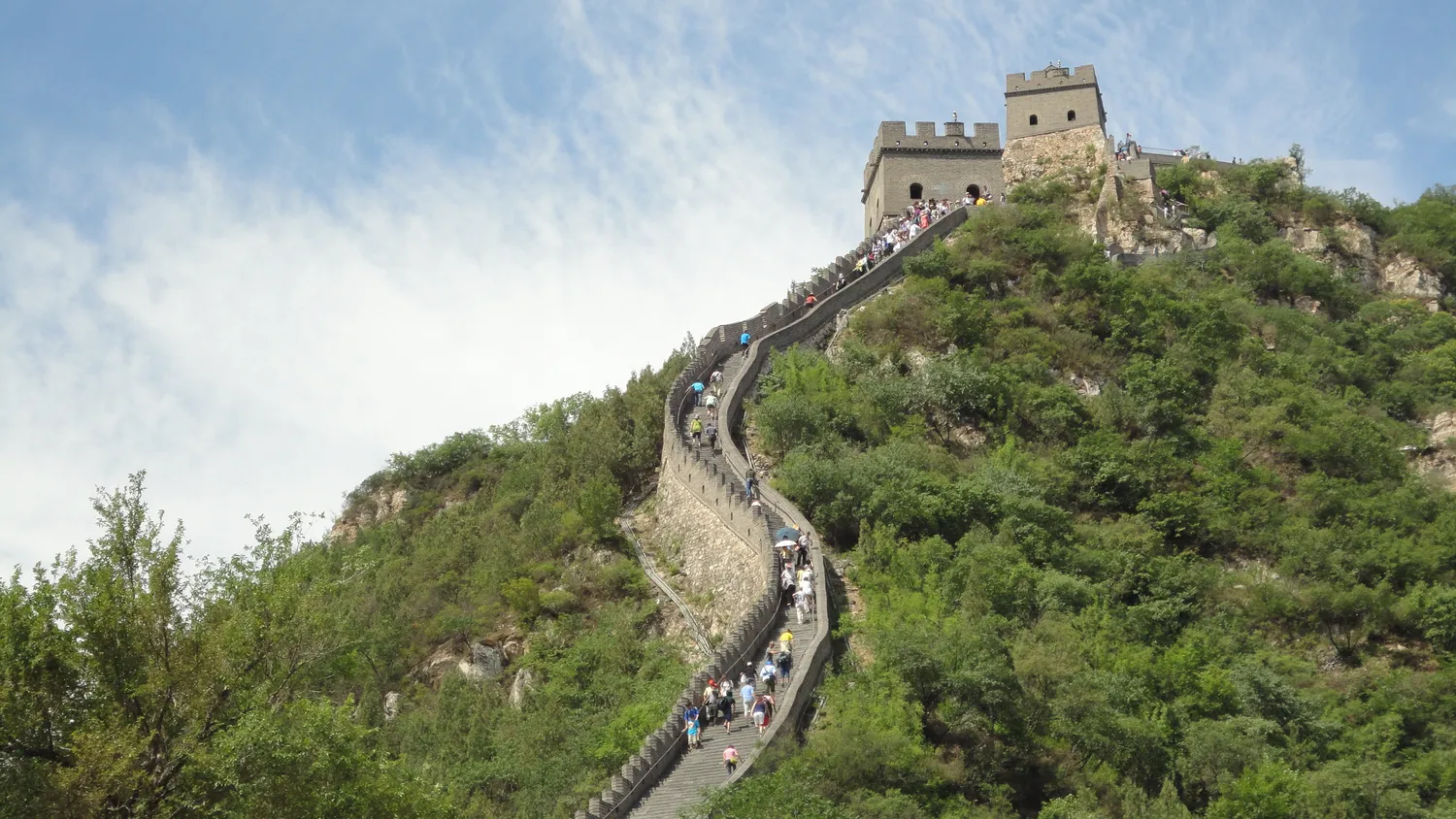
Qin Shi Huang ordered the construction of a massive wall to defend its northern border. Wikimedia Commons
Qin Shi Huang, the First Emperor of China, changed the course of Chinese history in 221 BCE when he unified warring states into a single powerful empire. His rule marked the beginning of the Qin Dynasty, which introduced new laws, systems, and monumental construction projects. One of his most famous achievements is the creation of the Great Wall of China, a massive defense structure that still stands today.
Before Qin Shi Huang's rise, China was divided into several rival kingdoms. Constant warfare threatened stability, trade, and daily life. Qin Shi Huang conquered these states using advanced military tactics and new weapons like crossbows. Once unified, he set out to strengthen his control. He standardized weights, measures, currency, and writing, making communication and trade easier across his vast territory. These changes helped create a stronger, more centralized government.
One of the greatest challenges the new empire faced was defending its northern border from nomadic groups such as the Xiongnu. To solve this problem, Qin Shi Huang ordered the construction of a massive wall. Workers, including soldiers, peasants, and even prisoners, were forced to build the wall under harsh conditions. Ancient records like the "Records of the Grand Historian" by Sima Qian describe the suffering and determination involved in this task. Archaeologists have found remains of tamped earth walls and watchtowers that date back to the Qin Dynasty, confirming the scale of the project.
The Great Wall was not a single continuous wall at first but a series of connected barriers, built mainly with earth and stone. Over time, later dynasties like the Han and Ming rebuilt and expanded the wall, using bricks and stronger materials. The wall served not only as a military defense but also as a symbol of the emperor’s power and the unity of the Chinese people. While the construction was costly and dangerous—many workers lost their lives—it helped protect China and allowed culture and trade to flourish within the empire.
Qin Shi Huang’s reign was short but left a lasting impact. His harsh policies and massive projects shaped the future of China, influencing later emperors and dynasties. The Great Wall remains a powerful reminder of the challenges and achievements of ancient China. The story of its creation connects directly to themes of leadership, innovation, and the relationship between people and their environment.
Interesting Fact: Did You Know? Qin Shi Huang also built a vast mausoleum guarded by thousands of life-sized terracotta soldiers, discovered by farmers in 1974 near Xi’an.
Who was the first emperor of China?
Qin Shi HuangHan WudiConfuciusGenghis Khan
What was a main reason for building the wall?
To defend against nomadsTo improve tradeFor religious reasonsTo divide kingdoms
What did Qin Shi Huang standardize?
Currency and writingOnly religionOnly languageOnly farming
Who built most of the wall?
Soldiers and workersOnly emperorsMerchantsArtists
What is a mausoleum?
A large tombA palaceA cityA market
Why did the Great Wall become a symbol?
Showed unity and powerFor farmingFor sportsAs a school
Qin Shi Huang ruled for many decades. True or false?
TrueFalse
What does 'standardized' mean in this passage?
Made the same everywhereMade of stoneWritten in secretUsed for farming
Who it's for
Perfect for the way you teach
Teachers
Build comprehension skills
Auto-graded quiz
Differentiated reading
Parents
Read together at home
Improve fluency
Quiet reading time
Homeschoolers
Reading curriculum support
Independent practice
Track Lexile growth
Topics
Ancient ChinaGreat WallQin Shi Huangemperordynastyunified Chinahistory readingSpanish translation
Reviews & Ratings
No reviews yet. Be the first to share your experience!
More reading you might love
19 more
Life in Ancient China
This comprehensive history reading passage explores daily life and social structure in Ancient China, focusing on the ro...
CA HSS 6.6RH.6-8.1RH.6-8.2RH.6-8.4
Bronze in Ancient China
This passage explores the significance of bronze in Ancient China, focusing on its use in rituals, weapons, and expressi...
CA HSS 6.6RH.6-8.1RH.6-8.2RH.6-8.4
Han Dynasty Suspension Bridges
This passage explores the invention and impact of suspension bridges during the Han Dynasty in Ancient China, covering h...
CA HSS 6.6CCSS RH.6-8.1CCSS RH.6-8.4CCSS RH.6-8.7
Han Dynasty Wheelbarrow
This passage explores the invention and historical significance of the wheelbarrow during the Han dynasty in ancient Chi...
CA HSS 6.6CCSS RH.6-8.1RH.6-8.2RH.6-8.4
Empires Across the Ancient World
This history reading passage explores the rise, structure, and significance of ancient empires such as Rome, Persia, Han...
CA HSS 6.66.7CCSS.RH.6-8.1CCSS.RH.6-8.2
Shang Dynasty
This comprehensive history reading passage explores the Shang Dynasty, recognized as China's first historical dynasty. S...
CA HSS 6.6RI.6.1W.6.2SL.6.1
Geography of Ancient China
This passage examines the geographic advantages and challenges faced by Ancient China, exploring how natural features li...
CA HSS 6.6RH.6-8.2RH.6-8.4WHST.6-8.2
Zhou Dynasty and Mandate
This history reading passage explores the Zhou Dynasty and the Mandate of Heaven, important concepts in Ancient China. S...
CA HSS 6.6RH.6-8.1RH.6-8.2RH.6-8.4
Core Beliefs of Daoism
This passage introduces students to Daoism, one of the major philosophies of ancient China, focusing on its origins, tea...
CA HSS 6.6CCSS.RI.6.1CCSS.RI.6.4
Types of Plate Boundaries
This science passage explores how geologists use rock formations, fossil distributions, and seafloor structures to ident...
MS-ESS2-3RI.6.1RI.7.4RI.8.2
How Are Metamorphic Rocks Formed?
This science passage explains how metamorphic rocks form through metamorphism, detailing the effects of heat (150°C-1,00...
MS-ESS2-3RI.6.1RI.7.4RI.8.2
How Are Igneous Rocks Formed?
This science passage explains the complete formation process of igneous rocks, covering both intrusive (granite) and ext...
MS-ESS2-3RI.6.1RI.7.4RI.8.2
Intrusive Igneous Rocks: Formation and Features
This passage explains the formation of intrusive igneous rocks through slow cooling of magma beneath Earth's surface. It...
MS-ESS2-3RI.6.1RI.7.4RI.8.2
Type of Mountain Ranges Formed at Convergent Plate Boundaries
This passage explains how Earth's tallest mountain ranges form at convergent plate boundaries. It details two main forma...
MS-ESS2-3RI.6.1RI.7.4RI.8.2
Ancient City of Ur
This detailed history reading passage invites students to explore the ancient Sumerian city-state of Ur, one of the most...
HSS 6.2.3RI.6.1RI.7.4RI.8.3
Ashoka and the Mauryan Empire
This engaging history reading passage explores the legacy of Emperor Ashoka and the rise and transformation of the Maury...
CA HSS 6.5RI.6.1RI.6.3RI.6.4
Legacy of Ancient Civilizations
This history reading passage explores how geography played a crucial role in shaping the development, connection, and di...
CA HSS 6.2RI.6.1RI.6.3
Who Were the Neanderthals
This engaging history reading passage explores the fascinating world of the Neanderthals, our ancient relatives who live...
CA HSS 6.1TEKS 6.2RI.6.1RI.6.4
Sargon of Akkad
This engaging history reading passage explores the life and legacy of Sargon of Akkad, the founder of the world's first ...