Ashoka and the Mauryan Empire
Interactive passage with audio narration, comprehension questions, and printable PDF.
By completing this purchase you agree to our Terms of Use and Privacy Policy. Your subscription renews automatically until you cancel. You can cancel anytime from your account settings. All sales are final and non-refundable. Digital content is available for download in your account immediately upon purchase.
What's included
Part of this bundle

Ashoka and the Mauryan Empire preview and details
About this printable Ashoka and the Mauryan Empire reading passage (Grades 5-8)
Sample passage and quiz from Ashoka and the Mauryan Empire
Reading passage and comprehension quiz preview
Ashoka and the Mauryan Empire
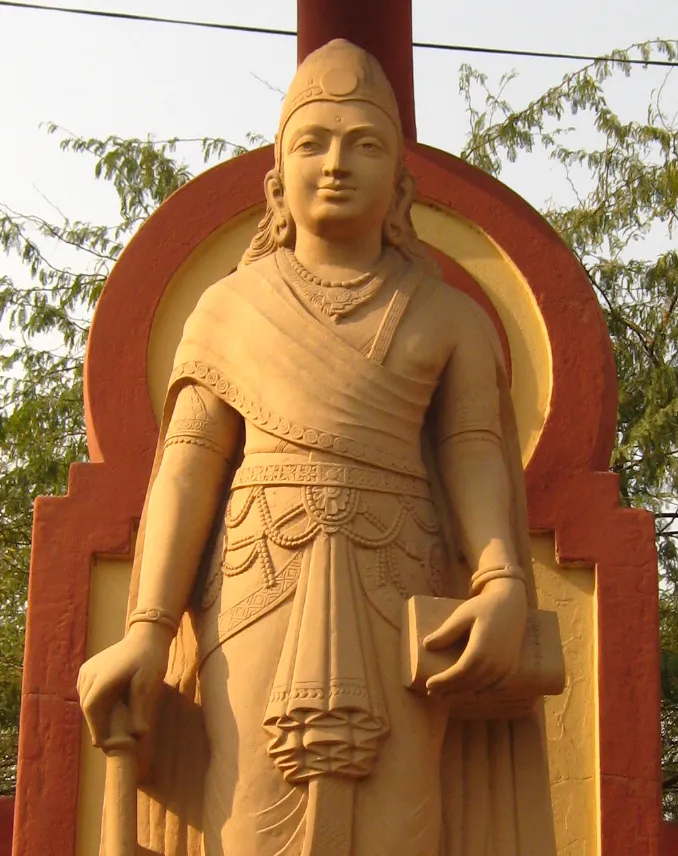
"Chandragupt maurya Birla mandir आशीष भटनागर at Hindi Source: Wikimedia Commons (Public domain).
The Mauryan Empire was one of the largest and most powerful empires in ancient India, lasting from approximately 322 BCE to 185 BCE. This empire reached its height under Emperor Ashoka, who ruled from about 268 BCE to 232 BCE. Ashoka is remembered as a ruler who made dramatic changes, transforming from a fierce conqueror to a leader known for his commitment to peace and the teachings of Buddhism.
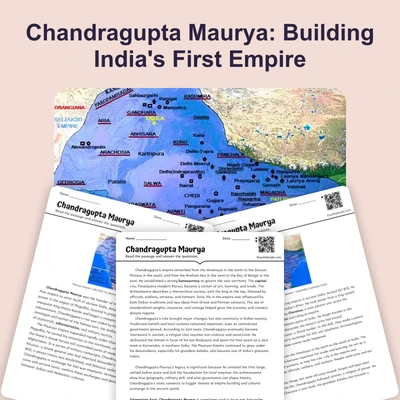
The Mauryan Empire was first established by Chandragupta Maurya in the city of Pataliputra, now known as Patna. Chandragupta, with the help of his advisor Chanakya, overthrew the Nanda Dynasty and unified much of northern India. The empire expanded rapidly, using a centralized system of administration to control its vast territories. Archaeological discoveries, such as the ruins at Pataliputra and ancient texts like the Arthashastra, provide valuable evidence of this system. The Mauryan government collected taxes, maintained roads, and supported trade across Asia.
When Ashoka became emperor, he continued the expansion of the empire. One of the most significant events was the conquest of Kalinga around 261 BCE. Ancient sources describe the Kalinga War as extremely bloody, causing the deaths of more than 100,000 people. After witnessing the suffering caused by this conflict, Ashoka experienced deep regret. According to his own edicts—inscriptions carved on pillars and rocks—Ashoka publicly expressed his remorse and declared his intention to rule through dharma, or moral law. Archaeologists have found these edicts throughout India and modern-day Pakistan, Nepal, and Afghanistan. They reveal how Ashoka used his power to spread the values of nonviolence, compassion, and religious tolerance.
Under Ashoka’s rule, the Mauryan Empire shifted in important ways. Ashoka promoted Buddhism by building stupas, supporting monasteries, and sending missionaries as far as Sri Lanka and Central Asia. He encouraged respect for all religions and tried to protect animals and the environment. The government became more focused on the well-being of its people, including social welfare programs and public works like wells and hospitals. Despite these changes, the Mauryan system of administration and social hierarchy remained strong, with officials and advisors helping to maintain order across diverse regions.
Ashoka’s reign marked a turning point in Indian history. His efforts to combine strong governance with ethical principles influenced later rulers and left a lasting impact on Indian culture. Today, symbols from Ashoka’s reign, such as the Lion Capital, are national emblems of India. The Mauryan Empire eventually declined after Ashoka’s death, but his ideas about government, religion, and society continue to be studied and respected.
This story connects to broader themes of world history, such as how leaders shape societies, how beliefs influence policy, and how empires change over time.
Interesting Fact: Ashoka sent Buddhist missionaries as far as Greece and Egypt, making Buddhism one of the earliest world religions to spread outside its homeland.
Comprehension quiz (8 questions)
1. Who founded the Mauryan Empire?
2. What city was Mauryan capital?
3. Which war changed Ashoka’s rule?
4. Why did Ashoka feel regret after the Kalinga War?
5. What did Ashoka do to spread Buddhism?
6. What was the effect of Ashoka’s edicts?
7. Ashoka ruled after Chandragupta. True or false?
8. What is 'dharma'?
Perfect for the way you teach
- Build comprehension skills
- Auto-graded quiz
- Differentiated reading
- Read together at home
- Improve fluency
- Quiet reading time
- Reading curriculum support
- Independent practice
- Track Lexile growth