This history reading passage explores how geography played a crucial role in shaping the development, connection, and division of ancient civilizations. Students will learn how rivers, mountains, and deserts influenced where people settled, how they traded, and how they interacted with other groups. The passage uses evidence from ancient Egypt, Mesopotamia, and China to illustrate the importance of geographical features such as the Nile River, the Zagros Mountains, and the Sahara Desert. Aligned to CA HSS 6.2 and CCSS RI.6.1, this resource includes a glossary, multiple-choice quiz, writing activities, graphic organizers, and a timeline. It also provides read aloud audio and a Spanish translation for accessibility. By examining cause-and-effect relationships and connecting historical developments to geographic contexts, the passage helps students think like historians and understand the lasting significance of geography in world history.
Written by Workybooks TeamPublished by Workybooks
Preview
Sample passage and quiz content
CONTENT PREVIEW
Expand content preview
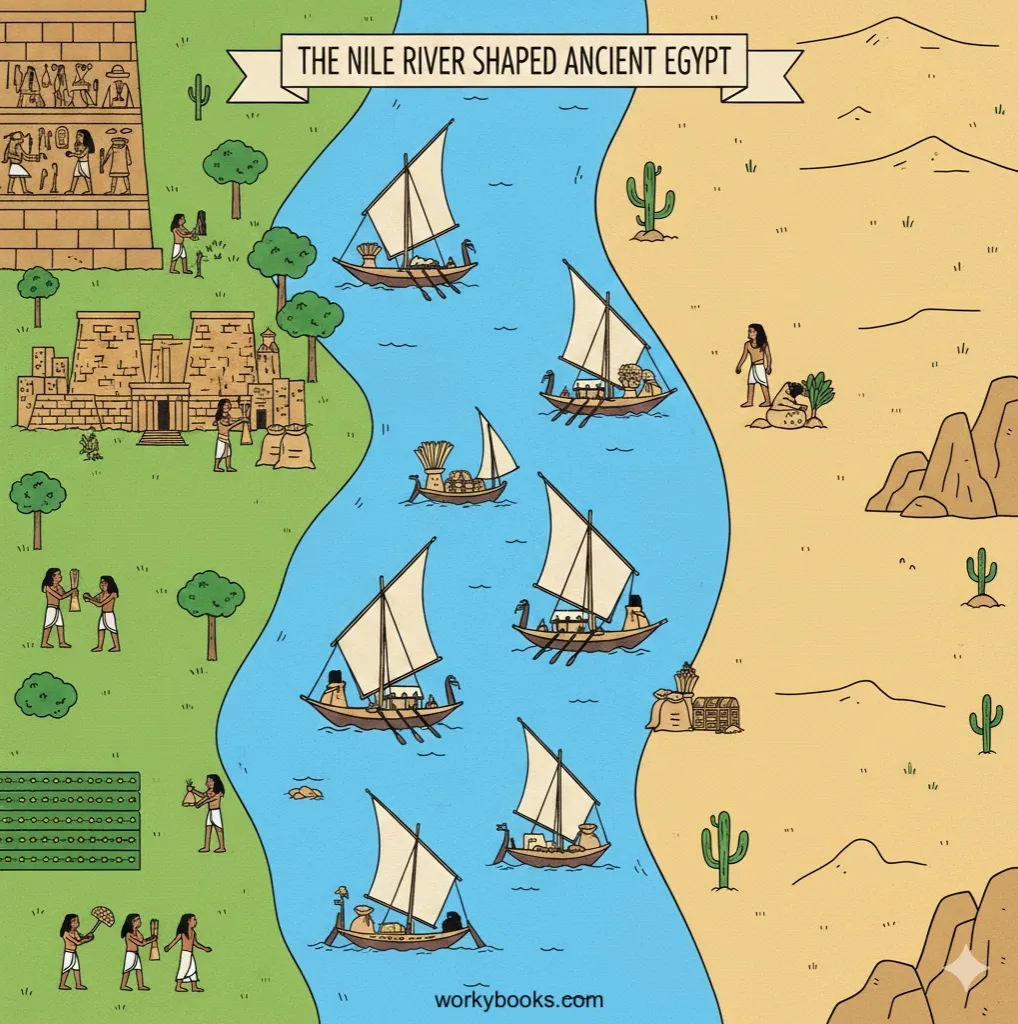
Powerful example of geography shaping civilization is the ancient Egyptians and the Nile River.
Geography has always shaped the rise and fall of civilizations. The location of rivers, mountains, and deserts influenced where people settled, how they lived, and how they interacted with others. In the ancient world, geography could either connect societies through trade and culture or divide them with barriers that limited contact.
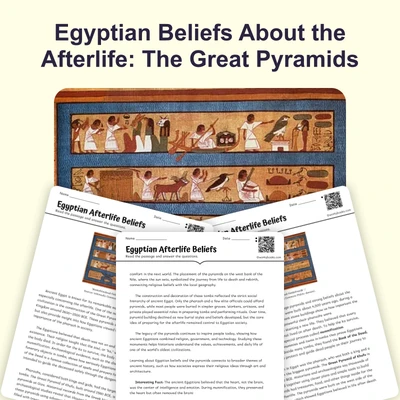
One powerful example of geography shaping civilization is the ancient Egyptians and the Nile River. The Nile provided a reliable source of water in the middle of the Sahara Desert. Its predictable floods made the land fertile, supporting agriculture and allowing cities like Thebes and Memphis to grow. The river also served as a natural highway for trade and communication. Egyptian boats traveled up and down the Nile, carrying goods such as grain, gold, and papyrus. Archaeological evidence, like ancient wall paintings, shows scenes of river trade and daily life along the Nile. However, deserts on both sides of the river protected Egypt from frequent invasion, helping the civilization remain unified for thousands of years.
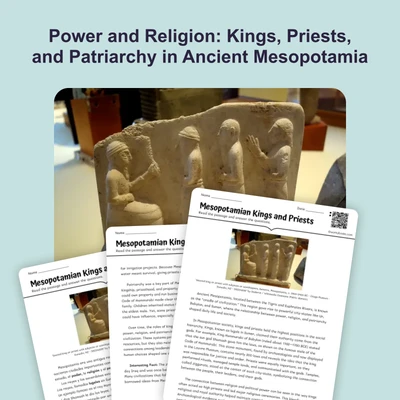
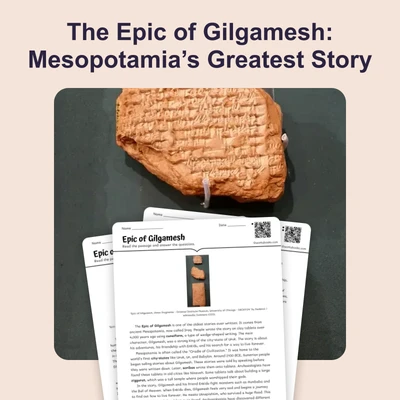
In contrast, the early Mesopotamian civilization developed between the Tigris and Euphrates rivers in present-day Iraq. These rivers helped create rich farmland, but unlike the Nile, their floods were unpredictable and sometimes destructive. Mesopotamian city-states like Ur and Babylon built canals and levees to control the water. Because there were few natural barriers such as mountains or deserts, Mesopotamia was open to migration and attack. Throughout its history, Sumerian, Akkadian, and Babylonian peoples competed for power. Archaeological texts, like the Code of Hammurabi, describe a complex society influenced by both connection and conflict.
Farther east, China’s early civilizations arose along the Yellow (Huang He) and Yangtze Rivers. The fertile plains allowed agriculture to thrive, but China was also surrounded by natural barriers: the Himalaya Mountains, the Gobi Desert, and the Pacific Ocean. These features limited invasion and contact with other civilizations for centuries, encouraging a unique culture to develop. Yet, the Silk Road trade route eventually connected China to the Middle East and Europe, showing that geography could both separate and link societies over time.
Geography’s impact on ancient civilizations was not only physical but also social. In Egypt and Mesopotamia, the need to manage rivers led to organized governments and social hierarchies, with rulers, priests, and farmers each having different roles. The environment shaped daily life, religion, and even technology, such as irrigation systems and boats.
Understanding how geography connected or divided ancient civilizations helps us see the importance of the environment in human history. It explains why some societies flourished, traded, or remained isolated. These patterns can still be seen in the modern world, reminding us that geography continues to shape our lives.
Interesting Fact: Did You Know? The Great Wall of China was built in part to protect against invasions along China’s northern geographic border.
Which river was vital to ancient Egypt?
NileAmazonYangtzeMississippi
Which two rivers shaped Mesopotamia?
Tigris and EuphratesNile and AmazonYellow and YangtzeIndus and Ganges
What natural barriers protected Egypt?
DesertsOceansForestsMountains
How did the Silk Road affect China?
Connected it to other regionsBlocked all tradeCaused floodsLed to city-states
Why did Mesopotamia face more invasions?
Few natural barriersStrong wallsHarsh desertsMountains protected it
What is a trade route?
Path for exchanging goodsWater for farmingAncient law codeMountain barrier
The Great Wall was built to keep out invaders.
TrueFalse
What does 'hierarchies' mean?
Ranking people in societyFlooding riversAncient farmingTrading goods
Who it's for
Perfect for the way you teach
Teachers
Build comprehension skills
Auto-graded quiz
Differentiated reading
Parents
Read together at home
Improve fluency
Quiet reading time
Homeschoolers
Reading curriculum support
Independent practice
Track Lexile growth
Topics
ancient civilizationsgeographytrade routesnatural barriersriversdesertsmountainshistory reading passage
Reviews & Ratings
No reviews yet. Be the first to share your experience!
More reading you might love
19 more
Farming in Ancient Mesopotamia
This engaging reading passage explores how the geography of Mesopotamia shaped its civilization through innovative irrig...
CA HSS 6.2RH.6-8.1RH.6-8.2RH.6-8.4
Mesopotamian Irrigation Systems
This reading passage explores the environmental challenges faced by ancient Mesopotamia, the 'land between the rivers.' ...
CA HSS 6.2RH.6-8.1RH.6-8.2TEKS 6.2A
Egypt's New Kingdom
This engaging history reading passage explores the rise of Ancient Egypt during the New Kingdom, when Egypt became a pow...
CA HSS 6.2RH.6-8.2WHST.6-8.2
Ancient Egyptian Afterlife
This engaging history reading passage explores ancient Egyptian beliefs about the afterlife and the construction of the ...
CA HSS 6.2RH.6-8.1RH.6-8.4
Comparing Ancient Religions and Beliefs
This passage explores the religious beliefs of ancient civilizations, focusing on the differences and similarities betwe...
CA HSS 6.2RH.6-8.1RH.6-8.4RH.6-8.9
Rosetta Stone Decoded
This engaging history reading passage explores the remarkable discovery of the Rosetta Stone and its impact on the study...
CA HSS 6.27.1CCSS.RI.6.1CCSS.RI.7.1
Ancient Taxes and Tribute
This reading passage explores the origins and practices of taxation in ancient civilizations, focusing on how early gove...
CA HSS 6.2CCSS.RI.6.1CCSS.RI.6.4CCSS.W.6.2
Ancient Coins and Barter
This passage explores the fascinating evolution from barter to the earliest coins in ancient civilizations, focusing on ...
CA HSS 6.2CCSS.ELA-LITERACY.RH.6-8.2CCSS.ELA-LITERACY.RH.6-8.4
Neolithic Tools
This passage explores the profound impact of new stone tools during the Neolithic period, focusing on how these innovati...
CA HSS 6.2CCSS RH.6-8.1CCSS RH.6-8.4
Social structures in Ancient World
This passage explores the organization and significance of family life in ancient societies, focusing on how extended fa...
CA HSS 6.2CCSS RH.6-8.1CCSS RH.6-8.4CCSS RH.6-8.7
Egyptian Social Classes
This engaging reading passage explores the social pyramid of Ancient Egyptian society, delving into how the roles and re...
CA HSS 6.2RI.6.1RI.6.2RI.6.4
King Solomon and the First Temple
This engaging history reading passage explores King Solomon and the construction of the First Temple in ancient Jerusale...
CA HSS 6.2CCSS.RI.6.1CCSS.RI.6.2CCSS.RI.7.1
King David of Israel
This engaging history passage explores the life and legacy of King David, focusing on his rise as a warrior king and his...
CA HSS 6.2CCSS.RI.6.1CCSS.RI.6.3CCSS.W.6.2
Mesopotamian Math and Astronomy
This engaging passage explores the scientific achievements of ancient Mesopotamia, the region between the Tigris and Eup...
CA HSS 6.2RH.6-8.2
City-States of the Ancient World
This history reading passage explores the development and significance of city-states in ancient civilizations, focusing...
CA HSS 6.2CCSS.RI.6.3CCSS.RI.6.4
Ancient Mathematics
This passage explores the essential role of mathematics in ancient civilizations, including Mesopotamia, Egypt, Greece, ...
CA HSS 6.2CCSS RH.6-8.1CCSS RH.6-8.4
Ancient Science and Medicine
This comprehensive reading passage explores the development of science and medicine in ancient civilizations, including ...
CA HSS 6.2CCSS RH.6-8.2CCSS RH.6-8.4CCSS RH.6-8.7
Ancient Writing Systems
This engaging history reading passage explores the origins and evolution of ancient writing systems, including cuneiform...
CA HSS 6.2CCSS RH.6-8.2CCSS RH.6-8.4CCSS RH.6-8.9
The Bronze Age Begins
This passage explores the transformative era of the Bronze Age, focusing on how the discovery and use of bronze revoluti...