Reading PassagePremium

Trade in Ancient India

Interactive passage with audio narration, comprehension questions, and printable PDF.

No ratings yet|
13
Grades 5–8ReadingElaSocial-studiesHistoryEnglish · SpanishInteractive · Printable
Aligned toCA HSS 6.5RH.6-8.1RH.6-8.2RH.6-8.4
Just this resource
$1.50
One-time purchase
Best value
Unlock everything
$49.99$24.99/yr
50% off until Sept 15 — 10,000+ resources
Renews at $49.99/year.
Unlock above to use these actions

What's included

Reading passage
Audio narration
Comprehension quiz
Writing activity
Glossary & flashcards
Differentiated version
Spanish translation

Part of this bundle

Trade in Ancient India preview and details

About this printable Trade in Ancient India reading passage (Grades 5-8)

This history reading passage explores Ancient India's trade networks and their impact on global connections. Students will learn how Indian merchants and traders exchanged goods, ideas, and technologies with regions such as Mesopotamia, Rome, China, and Southeast Asia. The text covers archaeological evidence from the Indus Valley, the role of the Silk Road, and the significance of maritime routes in shaping ancient economies and cultures. The passage includes a glossary, multiple-choice quiz, writing activities, graphic organizers, and a timeline. Also provided are a simplified version for struggling readers, a Spanish translation, and a read aloud audio option. This resource aligns with CA HSS 6.5 and CCSS RH.6-8.1, supporting students in analyzing historical causation, using evidence, and understanding global interdependence in the ancient world.
Written by Workybooks TeamPublished by Workybooks
Preview

Sample passage and quiz from Trade in Ancient India

Reading passage and comprehension quiz preview

Trade in Ancient India

Close-up of cinnamon sticks and star anise on a dark, textured surface, evoking warm, aromatic flavors.

Indian traders exported spices like pepper and cinnamon, as well as ivory, pearls, and silk. Ships from India's eastern ports sailed to Southeast Asia  by Pixabay / Pexels.

Ancient India developed some of the most extensive and influential trade networks in the ancient world. These networks connected the Indian subcontinent to regions as far as Mesopotamia, Egypt, Rome, Southeast Asia, and China. The ability to exchange goods, ideas, and technologies allowed Indian societies to prosper and shaped world history.

The roots of Indian commerce can be traced back to the Indus Valley Civilization, which flourished around 2600–1900 BCE. Archaeologists discovered seals from Mohenjo-daro and Harappa in Mesopotamia, showing evidence of direct trade with Sumer. Indus merchants exchanged cotton textiles, beads, and precious stones for silver, tin, and wool. The use of standardized weights and measures helped make transactions reliable. The Indus people also sailed along the Arabian Sea, reaching the Persian Gulf and distant cities.

Later, during the Mauryan Empire (c. 322–185 BCE), India’s trade networks expanded. The Mauryan government built roads, such as the Grand Trunk Road, to connect cities and promote safe trade. Indian traders exported spices like pepper and cinnamon, as well as ivory, pearls, and silk. Ships from India's eastern ports sailed to Southeast Asia, while western ports like Lothal sent goods to Arabia and Africa. The monsoon winds made long-distance maritime trade possible, as sailors learned to time their voyages with changing seasonal winds.

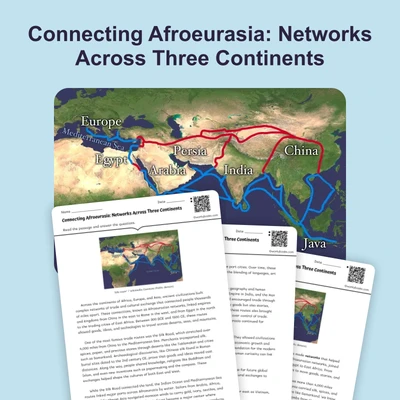
One of the most famous trade links was the Silk Road. Merchants from India traded with people in China and Central Asia, exchanging silk, spices, and gems for horses and silver. Buddhist monks traveled these routes, carrying religious texts and art. Roman coins discovered in southern India show that Roman traders also visited the subcontinent, eager for luxury goods. Port cities like Arikamedu became important centers for international exchange, blending Indian, Roman, and local cultures.

The impact of trade on Indian society was significant. Trade brought economic wealth, encouraged urban growth, and helped spread new ideas, art styles, and technologies. Indian goods and beliefs, such as Buddhism and Hinduism, traveled abroad, while foreign influences entered India. However, social hierarchies such as the caste system affected who could participate in trade, with certain groups controlling merchant activities. Over centuries, India’s trade networks adapted to changing empires and technologies, but the tradition of global exchange remained a key feature of its history.

These ancient trade networks teach us about cultural connections and the movement of people and goods across continents. Understanding India’s role in global trade helps us see the roots of modern globalization and the importance of geography in shaping human history.

Interesting Fact: The city of Lothal, in present-day Gujarat, is home to one of the world’s earliest known docks, showing advanced maritime technology in ancient India.

Comprehension quiz (8 questions)

1. Which civilization traded with Mesopotamia?

Indus Valley Civilization
Roman Empire
Han Dynasty
Egyptian Kingdom

2. What did Indian traders export?

Pepper and silk
Wheat and corn
Potatoes
Tea only

3. Which winds helped maritime trade?

Monsoon winds
Typhoon winds
Desert winds
Polar winds

4. Why were standardized weights important?

Made trade fair
For food storage
For farming only
To build ships

5. How did trade affect Indian society?

Brought wealth and new ideas
Stopped urban growth
Led to isolation
Made trade illegal

6. What was the Silk Road?

Trade route to China
A type of cloth
A port city
A shipyard

7. Roman coins were found in India. True or false?

True
False

8. What is a dock?

Ship loading area
Desert road
Market stall
Religious temple
Who it's for

Perfect for the way you teach

Teachers
  • Build comprehension skills
  • Auto-graded quiz
  • Differentiated reading
Parents
  • Read together at home
  • Improve fluency
  • Quiet reading time
Homeschoolers
  • Reading curriculum support
  • Independent practice
  • Track Lexile growth
Topics

Reviews & Ratings

No reviews yet. Be the first to share your experience!

More reading you might love

19 more
Passage
Ashoka and the Mauryan Empire - reading educational content
Grades 5–8

Ashoka and the Mauryan Empire

ancient history · CA HSS 6.5

$1.50
Passage
Caste System in Ancient India - reading educational content
Grades 5–8

Caste System in Ancient India

ancient history · CA HSS 6.5

$1.50
Passage
Core Beliefs of Hinduism - reading educational content
Grades 5–8

Core Beliefs of Hinduism

ancient history · CA HSS 6.5

$1.50
Passage
Geography of Ancient India - reading educational content
Grades 5–8

Geography of Ancient India

ancient history · CA HSS 6.5

$1.50
Passage
Vedas Sacred Hindu Texts - reading educational content
Grades 5–8

Vedas Sacred Hindu Texts

ancient history · CA HSS 6.5

$1.50
Passage
Achievements of Ancient India - reading educational content
Grades 5–8

Achievements of Ancient India

ancient history · CA HSS 6.5

$1.50
Passage
India Invents Zero - reading educational content
Grades 5–8

India Invents Zero

ancient history · CA HSS 6.5

$1.50
Passage
Chandragupta and the Mauryan Empire - reading educational content
Grades 6–8

Chandragupta and the Mauryan Empire

ancient history · CA HSS 6.5

Free
Passage
Afro-Eurasian Trade Networks - reading educational content
Grades 6–8

Afro-Eurasian Trade Networks

ancient history · CA HSS 6.5

$1.50
Passage
Gupta Empire - reading educational content
Grades 5–8

Gupta Empire

ancient history · CA HSS 6.5

$1.50
Passage
Africans and Filipinos in Early California - reading educational content
Grades 3–5

Africans and Filipinos in Early California

us history · HSS 4.2.1

$1.50
Passage
Bear Flag Revolt - reading educational content
Grades 3–5

Bear Flag Revolt

us history · HSS 4.3.5

$1.50
Passage
First California Constitution - reading educational content
Grades 3–5

First California Constitution

us history · HSS 4.3.5

$1.50
Passage
California Forty-Niners - reading educational content
Grades 3–5

California Forty-Niners

us history · HSS 4.4.2

$1.50
Passage
California Chinese Miners - reading educational content
Grades 3–5

California Chinese Miners

us history · HSS 4.4.3

$1.50
Passage
Effects of the Gold Rush - reading educational content
Grades 3–5

Effects of the Gold Rush

us history · HSS 4.4.4

$1.50
Passage
Golden Spike 1869 - reading educational content
Grades 3–5

Golden Spike 1869

us history · HSS 4.4.1

$1.50
Passage
Newcomers to California - reading educational content
Grades 3–5

Newcomers to California

us history · HSS 4.4.4

$1.50
Passage
1965 Immigration Act - reading educational content
Grades 3–5

1965 Immigration Act

us history · HSS 4.4.4

$1.50
Copyright © 2026 Workybooks. Made with ♥ in California.