This learning resource is available in interactive and printable formats. The interactive worksheet can be played online and assigned to students. The Printable PDF version can be downloaded and printed for completion by hand.
This NGSS-aligned passage introduces grades 6-8 students to the science of biomass and biofuels, explaining how organic materials from plants and animals are converted into renewable energy sources like ethanol and biodiesel. Students will learn the mechanisms involved in energy transformation, including burning, fermentation, and gasification, and explore real-world examples such as wood, crop residues, and algae. The passage highlights the connection between biomass energy and the carbon cycle, and discusses environmental debates around food vs. fuel, land use, and energy balance. With integrated audio support and accessible language, this resource is perfect for diverse classrooms and supports science standards MS-PS3-4, MS-ESS3-3, and MS-ESS3-4. The resource includes a glossary, multiple-choice quiz, writing activities, Spanish translations, and graphic organizers to reinforce key concepts and critical thinking about renewable energy and sustainability.
CONTENT PREVIEW
Expand content preview
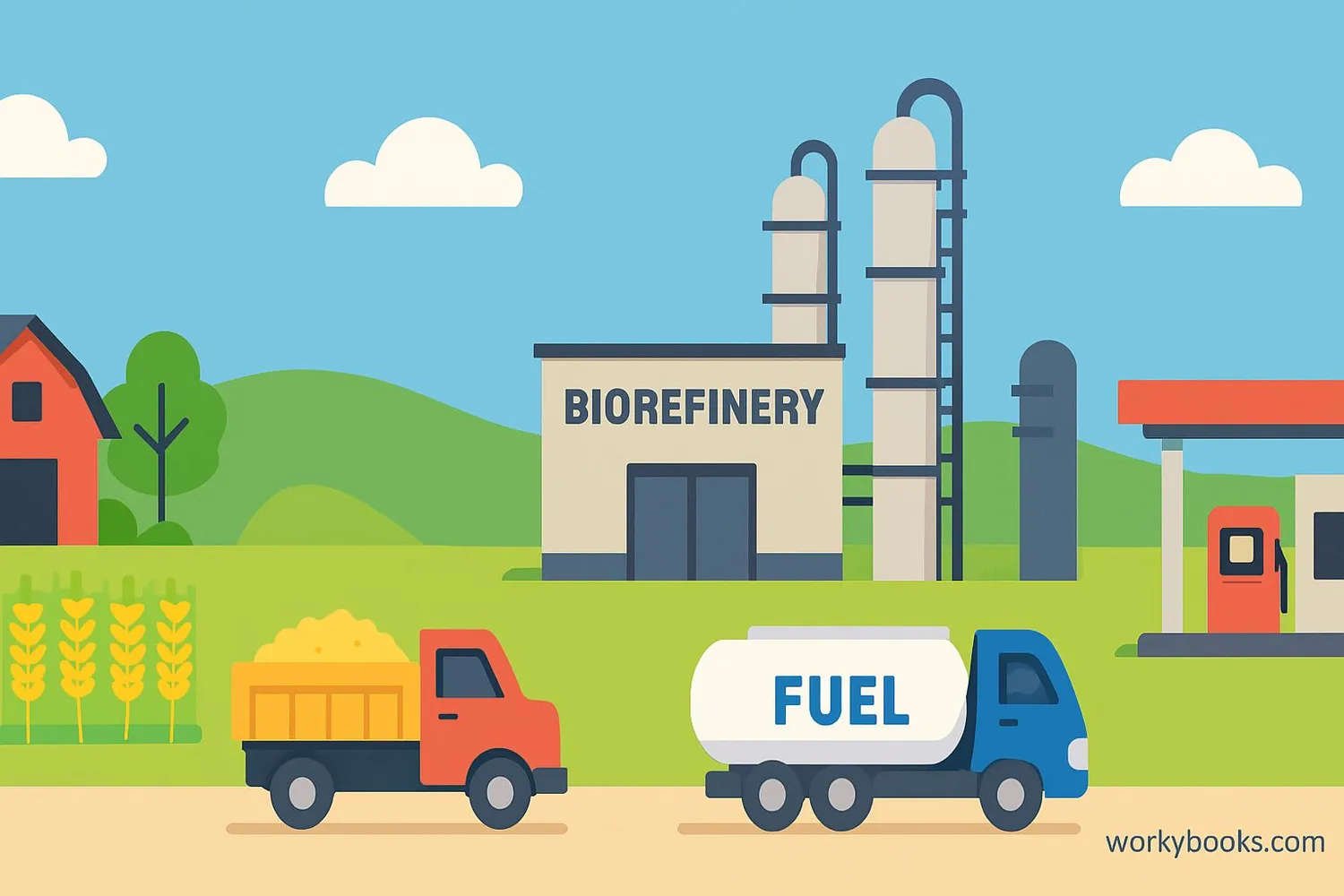
The biofuel production process from crops to fuel
Biomass is one of the oldest sources of energy used by humans. Today, it plays an important role in creating renewable fuels and addressing climate change. Biomass refers to organic material from plants and animals, such as wood, crop residues, animal waste, or even algae. Scientists and engineers are exploring ways to use biomass to produce energy, reduce fossil fuel use, and help close the carbon cycle.
How Biomass Energy Works
Biomass energy is produced by converting organic matter into usable forms of energy. When plant material or animal waste is burned, it releases stored chemical energy as heat, which can generate electricity or provide warmth. Alternatively, biomass can be processed to create biofuels such as ethanol and biodiesel. Ethanol is typically made by fermenting sugars in crops like corn or sugarcane. Biodiesel, on the other hand, is produced from vegetable oils or animal fats through a process called transesterification. Another method, gasification, converts biomass into a gas that can be burned for energy. Each method involves breaking down complex molecules into simpler forms, releasing energy that can be harnessed for modern needs.
Types and Examples of Biomass and Biofuels
Common types of biomass include wood, crop residues (like straw or corn stalks), animal manure, and fast-growing plants such as switchgrass or algae. Each type has unique advantages and challenges. For example, wood is widely available but can release more air pollution when burned. Algae grow rapidly and can produce large amounts of oil for biodiesel, but require specific growing conditions. Ethanol production in the United States uses about 40% of the annual corn crop, highlighting the scale of biofuel industries. Globally, biofuels provide about 10% of the world's renewable energy supply, showing their growing impact.
Biomass, the Carbon Cycle, and Debates
Biomass energy is considered renewable because plants absorb carbon dioxide as they grow and release it when burned or converted to fuel, forming a closed carbon loop. However, there are ongoing debates about the effects of large-scale biofuel production. Critics worry that using food crops for fuel may increase food prices and cause land use changes, such as cutting down forests for new farmland. Scientists also analyze the net energy balance—comparing the energy required to grow, harvest, and process biomass to the energy produced. Research continues to improve efficiency and minimize negative impacts, aiming for sustainable energy solutions.
Biomass and biofuels demonstrate how science and technology can work together to address energy needs and environmental challenges. They highlight the importance of understanding cycles and systems in nature, as well as the complex decisions scientists and society must make about our energy future.
Interesting Fact: Some algae species can double their weight in just 24 hours, making them one of the fastest-growing sources of biomass for biofuel production!
What is biomass most accurately described as?
Organic material from plants and animals used for energyMinerals found deep undergroundA type of fossil fuelElectricity from wind turbines
Which of the following is NOT a common type of biomass?
WoodCrop residuesAnimal wasteNatural gas
Ethanol is produced by fermenting sugars from which crops?
Corn and sugarcaneWheat and barleySoybeans and peanutsPotatoes and carrots
What is the main advantage of using algae for biofuel production?
Algae are slow-growing and take up little spaceAlgae contain minerals needed for batteriesAlgae can grow rapidly and produce large amounts of oilAlgae are a source of fossil fuels
What does 'net energy balance' mean in the context of biofuels?
The amount of water needed to produce biofuelsThe difference between energy used to make the fuel and energy the fuel providesThe cost of transporting biofuelsThe total amount of carbon dioxide in the air
What is one major debate about using food crops to make biofuels?
It may increase food prices and cause land use changesIt makes water cleanerIt increases the growth rate of algaeIt creates more fossil fuels
Why is biomass considered renewable?
Because it comes from materials that can be replaced by natural processesBecause it never releases carbon dioxideBecause it is found only in ancient rocksBecause it is always available in unlimited amounts
True or False: Gasification is a process that turns biomass into a gas that can be used for energy.
TrueFalse
True or False: Burning biomass never releases any carbon dioxide into the atmosphere.
TrueFalse
Which statement best describes the role of science in improving biomass energy?
Science helps make biomass energy more efficient and sustainableScience makes fossil fuels more popularScience only studies wind and solar powerScience increases the amount of carbon in the air
Perfect For:
👩🏫 Teachers
• Reading comprehension practice
• Auto-graded assessments
• Literacy skill development
👨👩👧👦 Parents
• Reading practice at home
• Comprehension improvement
• Educational reading time
🏠 Homeschoolers
• Reading curriculum support
• Independent reading practice
• Progress monitoring
Reading Features:
📖
Reading Passage
Engaging fiction or nonfiction text
❓
Comprehension Quiz
Auto-graded questions
📊
Instant Feedback
Immediate results and scoring
📄
Printable Version
Download for offline reading
🔊
Read Aloud
Voice-over with word highlighting
Reviews & Ratings
No reviews yet. Be the first to share your experience!
Related Content
Natural Disaster: Volcanic Eruptions
Volcanoes can erupt with lava and ash, changing the landscape. While dangerous, they also create fertile land and new la...
RI.3.1RI.4.4RI.4.2RI.5.2
Natural Disaster: Tornadoes
Tornadoes are dangerous spinning columns of air. Knowing the signs and having safety plans can help protect you from the...
RI.3.1RI.4.4RI.4.2RI.5.2
What Is an Endothermic Reaction?
This engaging science passage introduces middle school readers to the concept of endothermic reactions, aligned with NGS...
MS-PS3-44-PS3-34-PS3-2
What Is an Exothermic Reaction?
This science passage introduces students to the idea of exothermic reactions—chemical changes that release heat or light...
MS-PS3-44-PS3-34-PS3-2
Is Freezing Endothermic or Exothermic?
This clear and accessible passage helps students understand why freezing is an exothermic process, even though frozen ob...
MS-PS3-44-PS3-34-PS3-2
What Is Thermal Contraction?
This middle school science passage introduces the concept of thermal contraction, aligned with NGSS standard MS-PS1-4. I...
MS-PS3-44-PS3-34-PS3-2
What Is Gravitational Energy?
This engaging science passage for middle school students explores the concept of gravitational energy, a form of potenti...
MS-PS3-44-PS3-34-PS3-2
What Is Kinetic Energy?
This NGSS-aligned reading passage introduces 6th–8th grade students to the concept of kinetic energy—energy that an obje...
MS-PS3-44-PS3-34-PS3-2
Understanding Mechanical Energy
This science passage is crafted for 6th–8th grade students and focuses on mechanical energy—specifically the combination...
MS-PS3-44-PS3-34-PS3-2
Chemical Energy
This informational science passage on chemical energy is designed for middle school students and aligns with the NGSS st...
MS-PS3-44-PS3-34-PS3-2
Sublimation: The Solid-to-Gas Magic
This engaging NGSS-aligned reading passage explores the science of sublimation, a unique phase change where a solid turn...
MS-PS3-44-PS3-34-PS3-2
Human Impacts: Pollution
This middle school science reading passage, aligned with NGSS standards MS-LS2-4 and MS-ESS3-3, examines the mechanisms ...
MS-LS2-4MS-ESS3-3
Human Impacts: Habitat Destruction
This grade 6-8 science passage explores human impacts on ecosystems, focusing on habitat destruction as the leading caus...
MS-LS2-4MS-LS2-5MS-ESS3-3
Ecosystem Services
This engaging middle school science passage introduces students to the concept of ecosystem services, the vital benefits...
MS-LS2-5MS-ESS3-3
Conservation Strategies
This comprehensive passage introduces students in grades 6-8 to the major strategies used in conservation biology, such ...
MS-LS2-5MS-ESS3-4
Environmental Problems and Solutions
This passage for grades 6-8 introduces major environmental problems such as habitat loss, pollution, climate change, inv...
MS-LS2-4MS-ESS3-3MS-ESS3-4
Sustainability and Individual Action
This reading passage for grades 6-8 introduces the concept of sustainability, defined as meeting current needs without c...
MS-ESS3-4
Restoration Ecology
This passage introduces middle school students to the vital field of restoration ecology, aligning with NGSS standards M...
MS-LS2-4MS-ESS3-4
Climate Change: Solutions and Mitigation
This passage explores scientific solutions and mitigation strategies for climate change, designed for middle school scie...
MS-ESS3-4MS-ESS3-5
Scientific Theories
This reading passage for grades 6-8 introduces students to the concept of scientific theories, emphasizing that these ar...
MS-PS1-1MS-PS1-4MS-PS3-4SCIENCE AND ENGINEERING PRACTICES