Natural Disaster: Volcanic Eruptions
Interactive passage with audio narration, comprehension questions, and printable PDF.
What's included
Natural Disaster: Volcanic Eruptions preview and details
About this printable Natural Disaster: Volcanic Eruptions science reading passage, NGSS-aligned (Grades 4-5)
Sample passage and quiz from Natural Disaster: Volcanic Eruptions
Reading passage and comprehension quiz preview
Volcanic Eruptions
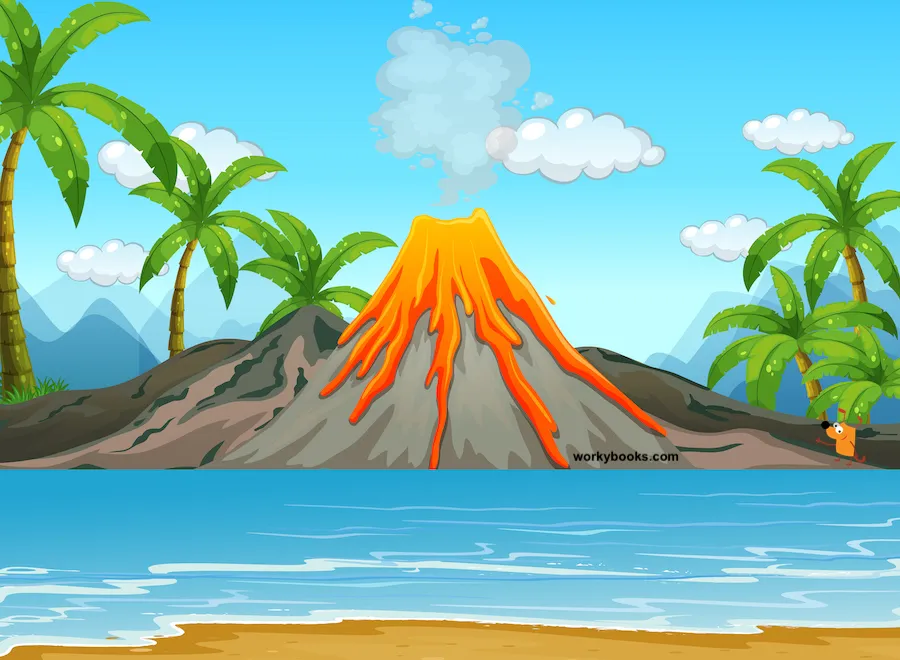
Volcanoes are mountains that can erupt with hot lava, ash, and gases. They form when hot, melted rock called magma pushes up from deep inside the Earth. When a volcano erupts, it can be both amazing and dangerous. Lava flows can burn everything in their path, while ash clouds can darken the sky and make it hard to breathe.
Some volcanoes erupt often, while others stay quiet for hundreds or thousands of years. Scientists called volcanologists study volcanoes to predict when they might erupt. They use special tools to measure earthquakes, ground movement, and gases coming from the volcano.A seismograph is a tool that detects and records seismic waves, which are vibrations caused by earthquakes
Volcanic eruptions can change the land around them. They can create new islands, build up mountains, and even make the soil rich for farming. While eruptions can be destructive, they also help shape our planet and create new landscapes.
People who live near volcanoes need to be prepared. They should have emergency plans and know when to leave if an eruption is likely. Despite the dangers, many people choose to live near volcanoes because the soil is good for growing crops.
Fun fact: The loudest sound ever recorded in history came from a volcanic eruption! In 1883, the eruption of the Krakatoa volcano in Indonesia was so powerful that the sound could be heard over 3,000 miles away.
Comprehension quiz (6 questions)
1. What is magma?
2. What do volcanologists study?
3. How can volcanic eruptions change the land?
4. Why do some people choose to live near volcanoes?
5. What is one thing people living near volcanoes should have?
6. What tool might scientists use to predict volcanic eruptions?
Common Core standards for Natural Disaster: Volcanic Eruptions
Ask and answer questions to demonstrate understanding of a text, referring explicitly to the text as the basis for the answers.
Determine the main idea of a text and explain how it is supported by key details; summarize the text.
Determine the meaning of general academic and domain-specific words or phrases in a text relevant to a grade 4 topic or subject area.
Determine two or more main ideas of a text and explain how they are supported by key details; summarize the text.
Perfect for the way you teach
- Build comprehension skills
- Auto-graded quiz
- Differentiated reading
- Read together at home
- Improve fluency
- Quiet reading time
- Reading curriculum support
- Independent practice
- Track Lexile growth