

Californios Culture — Reading Comprehension
Premium Resource
Grades
- 3
- 4
- 5
Standards
- D2.HIS.2.3-5
- D2.HIS.3.3-5
- D2.HIS.14.3-5
- RI.4.3
- RI.4.4
- W.4.2
PRINT+DIGITAL RESOURCE
This learning resource is available in interactive and printable formats. The interactive worksheet can be played online and assigned to students. The Printable PDF version can be downloaded and printed for completion by hand.
About This Reader
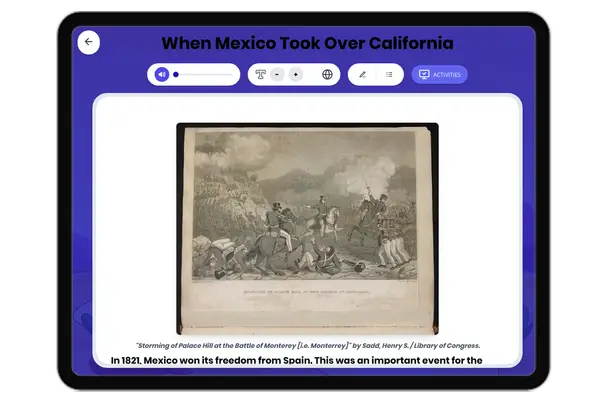
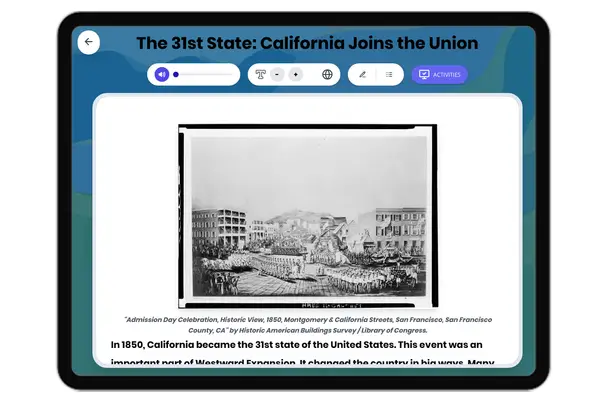
This history reading passage explores the story of the Californios—Spanish and Mexican settlers who shaped California before it became a U.S. state. Students will learn about the Californios’ daily lives, their large ranchos, and the changes they faced during the Mexican-American War and California’s journey to statehood in 1850. The passage includes a glossary of important terms, a timeline, a multiple-choice quiz, and writing prompts to deepen understanding. Activities support key C3 Framework and Common Core standards for history and literacy. Audio read-aloud and a Spanish translation are included for accessibility. This resource is ideal for building background knowledge about Westward Expansion and the diverse cultures that built the American West.
Perfect For:
👩🏫 Teachers
- • Reading comprehension practice
- • Auto-graded assessments
- • Literacy skill development
👨👩👧👦 Parents
- • Reading practice at home
- • Comprehension improvement
- • Educational reading time
🏠 Homeschoolers
- • Reading curriculum support
- • Independent reading practice
- • Progress monitoring
Reading Features:
📖
Reading Passage
Engaging fiction or nonfiction text
❓
Comprehension Quiz
Auto-graded questions
📊
Instant Feedback
Immediate results and scoring
📄
Printable Version
Download for offline reading
🔊
Read Aloud
Voice-over with word highlighting