Rationing and Life on the Home Front — Reading Comprehension
Rate this
Premium Resource
Present
Present in classroom. No work saved
Assign
Classroom with student accounts, Track progress
Quick Play
No student accounts, assign with a link
Grades
3
4
5
Standards
D2.HIS.2.3-5
D2.HIS.14.3-5
RI.4.3
RI.4.4
RI.4.10
PRINT+DIGITAL RESOURCE
This learning resource is available in interactive and printable formats. The interactive worksheet can be played online and assigned to students. The Printable PDF version can be downloaded and printed for completion by hand.
This history reading passage explores rationing and life on the home front during World War II, focusing on how American families worked together to support the war effort. Students will learn about rationing, victory gardens, and the ways people made sacrifices for their country. The passage follows a clear chronological structure, using grade-appropriate vocabulary highlighted in a glossary. Activities include a multiple-choice quiz and writing prompts that align with the C3 Framework and Common Core State Standards (CCSS). The passage is accompanied by a relevant public domain image, a timeline of major events, and a Spanish translation. This resource is designed to build foundational U.S. history knowledge, improve literacy skills, and foster understanding of cause-and-effect relationships in history. With read aloud audio and interactive activities, it is ideal for classroom or independent study.
CONTENT PREVIEW
Expand content preview
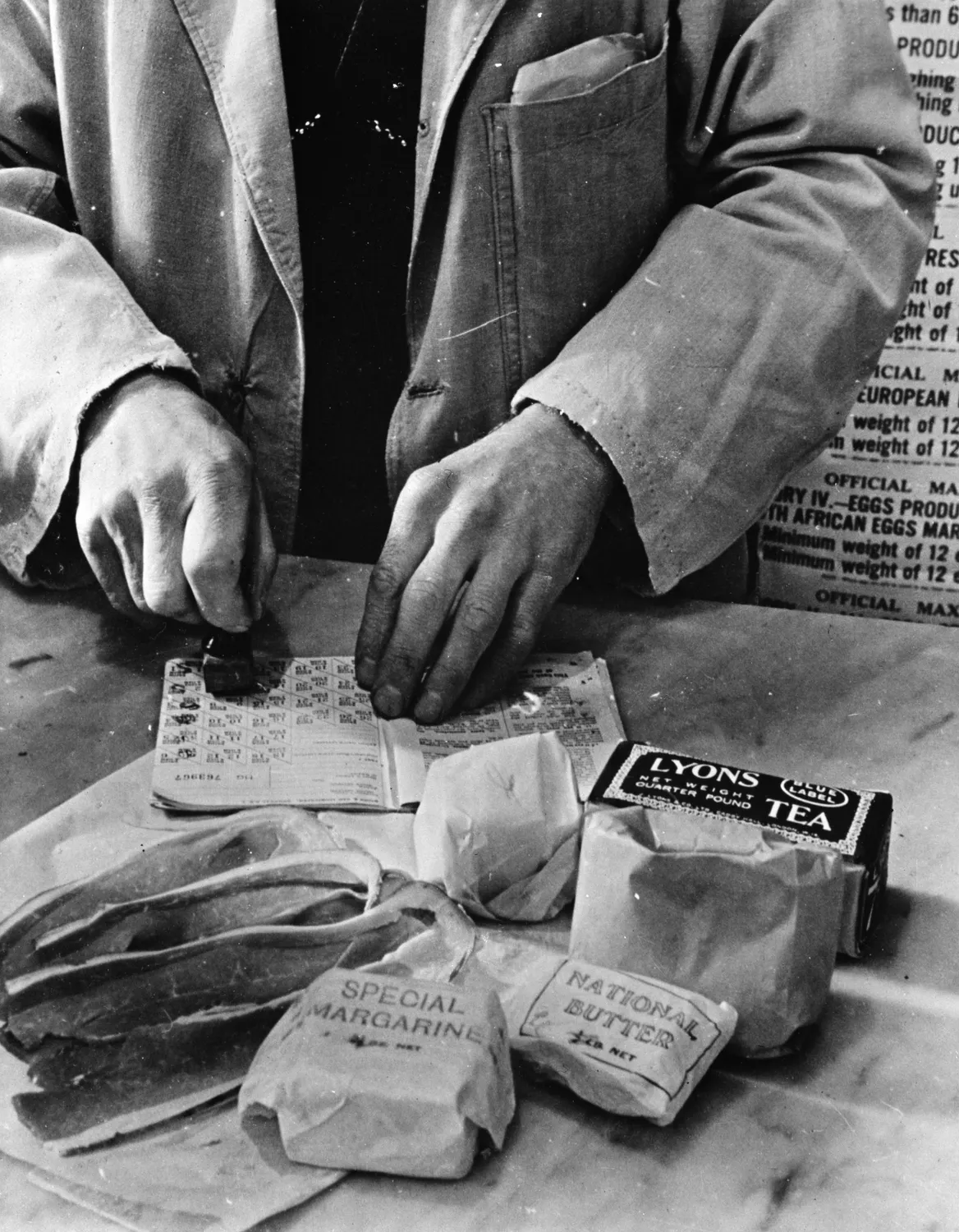
WWII Food Rationing. Source: Wikimedia Commons - United States Office of War Information, Overseas Picture Division
During World War II, people in the United States worked together to help win the war, even though many never left home. While soldiers fought overseas, Americans at home supported them in many important ways. This teamwork on the home front was a major reason for the Allied victory.
One big change was rationing. Since so much food and supplies were sent to soldiers, there was less for people at home. The government gave families special books called ration books. These books had coupons that allowed people to buy only a certain amount of things like sugar, meat, and gasoline. This helped make sure everyone had enough, and soldiers had what they needed.
Americans also grew their own food in victory gardens. People planted gardens in their yards, schoolyards, and even city parks. By growing vegetables like carrots, beans, and tomatoes, families could eat more fresh food and save canned goods for soldiers. Even children helped with planting and picking crops.
Factories across the country changed what they made. Instead of making cars or toys, factories started making tanks, airplanes, and uniforms for the military. Many women worked in these factories for the first time. One famous worker was "Rosie the Riveter," who became a symbol of women’s strength and hard work. People of all ages collected scrap metal, rubber, and paper to be recycled into war supplies.
Helping out at home made people feel proud and united. Children collected milkweed pods for life jackets and joined scrap drives. Neighbors shared what they had. Posters and radio shows encouraged everyone to do their part.
This teamwork showed how every American could make a difference, even without fighting on the battlefield. By saving, sharing, and working hard, people on the home front helped soldiers win the war.
Interesting Fact: More than 20 million victory gardens were planted during World War II, producing almost 40% of all vegetables grown in the country!
What did ration books allow families to do?
Buy only a set amountTravel for freeGet extra foodGrow more gardens
Who became a symbol of women’s work?
Rosie the RiveterBetsy RossEleanor RooseveltMary Todd Lincoln
What did factories make instead of cars?
Tanks and airplanesBooksToysFurniture
Why did people plant victory gardens?
To get more fresh foodFor fun onlyTo win prizesTo avoid work
How did children help the war effort?
Collected materialsBecame soldiersBuilt tanksWorked as doctors
What was one effect of rationing?
People shared suppliesLess teamworkMore travelMore waste
All factories stayed the same during WWII. True or false?
TrueFalse
What is a victory garden?
A home vegetable gardenA battlefieldA toy storeA type of ration book
Perfect For:
👩🏫 Teachers
• Reading comprehension practice
• Auto-graded assessments
• Literacy skill development
👨👩👧👦 Parents
• Reading practice at home
• Comprehension improvement
• Educational reading time
🏠 Homeschoolers
• Reading curriculum support
• Independent reading practice
• Progress monitoring
Reading Features:
📖
Reading Passage
Engaging fiction or nonfiction text
❓
Comprehension Quiz
Auto-graded questions
📊
Instant Feedback
Immediate results and scoring
📄
Printable Version
Download for offline reading
🔊
Read Aloud
Voice-over with word highlighting
Reviews & Ratings
No reviews yet. Be the first to share your experience!
Related Content
Colonial Trade with England and Africa
This history reading passage explores colonial trade between the American colonies, England, and Africa, focusing on the...
D2.HIS.2.3-5D2.HIS.14.3-5RI.4.3RI.4.4
John Adams: Second President
This engaging U.S. history reading passage introduces students to John Adams, the second President of the United States....
D2.HIS.2.3-5D2.HIS.14.3-5RI.4.3RI.4.4
Building Washington D.C., Our Capital
This history reading passage explores the building of Washington D.C., the capital of the United States. Students will l...
D2.HIS.1-3.3-5D2.HIS.14.3-5RI.4.3RI.4.4
Dolley Madison Saves Washington's Portrait
This engaging history reading passage tells the inspiring story of Dolley Madison and her brave actions during the War o...
D2.HIS.2.3-5D2.HIS.14.3-5RI.4.3RI.4.4
Boomtowns Spring Up Out West
This engaging passage explores the exciting rise of boomtowns in the American West during the 1800s, focusing on the Gol...
D2.HIS.2.3-5D2.HIS.14.3-5RI.4.3RI.4.4
Franklin D. Roosevelt and the New Deal
This engaging history reading passage explores the life and leadership of Franklin D. Roosevelt and his creation of the ...
D2.HIS.2.3-5D2.HIS.14.3-5RI.4.3RI.4.4
D-Day and the End of World War II
This engaging reading passage explores the key events of D-Day and how it helped bring World War II to a close. Students...
D2.HIS.2.3-5D2.HIS.14.3-5RI.4.3RI.4.4
Martin Luther King Jr. and "I Have a Dream"
This engaging history reading passage introduces students to the life and legacy of Martin Luther King Jr., focusing on ...
D2.HIS.2.3-5D2.HIS.14.3-5RI.4.1RI.4.3.
Ruby Bridges and the Little Rock Nine
This engaging history reading passage explores the stories of Ruby Bridges and the Little Rock Nine, two important group...
D2.HIS.2.3-5D2.HIS.14.3-5RI.4.3RI.4.4
Cesar Chavez and Farm Workers' Rights
This engaging history reading passage explores the life and impact of Cesar Chavez, a key leader in the fight for farm w...
D2.HIS.2.3-5D2.HIS.14.3-5RI.4.3RI.4.4
When Mexico Took Over California
This engaging U.S. history reading passage explores the period when Mexico took over California during the era of Westwa...
D2.HIS.2.3-5D2.HIS.3.3-5D2.HIS.14.3-5RI.4.3
Californios Culture
This history reading passage explores the story of the Californios—Spanish and Mexican settlers who shaped California be...
D2.HIS.2.3-5D2.HIS.3.3-5D2.HIS.14.3-5RI.4.3
The 31st State: California Joins the Union
This engaging U.S. history reading passage explores California's journey to becoming the 31st state in 1850. Students le...
D2.HIS.3.3-5D2.HIS.14.3-5RI.4.3RI.4.4
Routes to the Gold Fields
This engaging history reading passage explores the three main routes people took to reach the California gold fields dur...
D2.HIS.2.3-5D2.HIS.14.3-5RI.4.3RI.4.4
The Golden Spike: Connecting California to the Nation
This engaging U.S. history reading passage teaches students about the Golden Spike and how the first transcontinental ra...
D2.HIS.1.3-5D2.HIS.2.3-5D2.HIS.14.3-5RI.4.3
California Women Win the Vote in 1911
This engaging history reading passage explores how women in California fought and won the right to vote in 1911. Aligned...
D2.HIS.2.3-5D2.HIS.14.3-5RI.4.3RI.4.4
The 1965 Immigration Act
Discover the story of the 1965 Immigration Act with this engaging U.S. history reading passage. Perfect for building rea...
D2.HIS.4.3-5D2.HIS.14.3-5RI.5.3RI.5.4
Protecting California's Environment
This engaging U.S. history reading passage explores the story of how California has worked to protect its unique environ...
D2.HIS.2.3-5D2.HIS.14.3-5RI.4.3RI.4.4
Religious Freedom in the Middle Colonies
This engaging U.S. History reading passage explores the theme of religious freedom in the Middle Colonies during colonia...