Protecting California's Environment
Interactive passage with audio narration, comprehension questions, and printable PDF.
By completing this purchase you agree to our Terms of Use and Privacy Policy. Your subscription renews automatically until you cancel. You can cancel anytime from your account settings. All sales are final and non-refundable. Digital content is available for download in your account immediately upon purchase.
What's included
Part of this bundle

Protecting California's Environment preview and details
About this printable Protecting California's Environment reading passage (Grades 3-5)
Sample passage and quiz from Protecting California's Environment
Reading passage and comprehension quiz preview
Protecting California's Environment
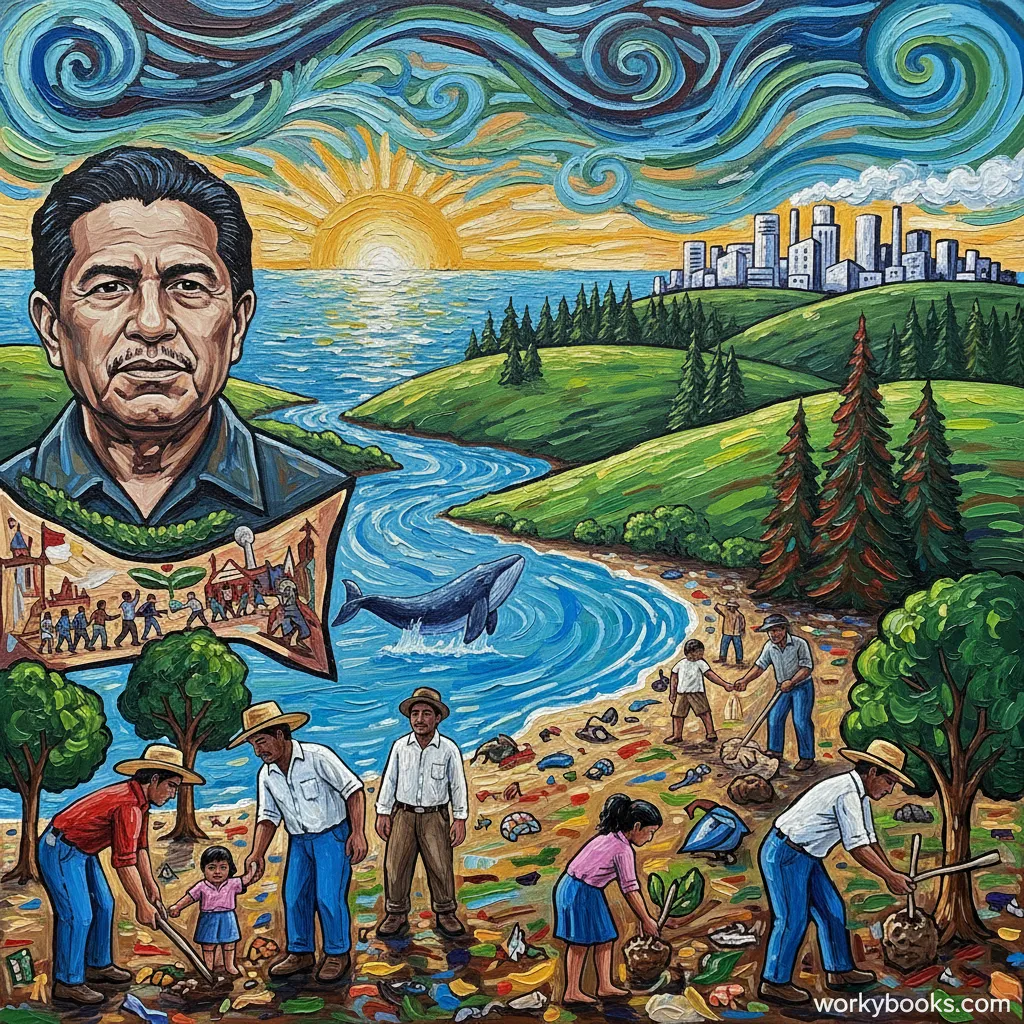
California is known for its beautiful landscapes and rich natural resources. Over time, people have learned that these lands need protection. As more people moved to California, cities grew, and factories were built. This growth helped the economy but caused pollution and hurt the environment.
In the early 1900s, some Californians noticed that forests, rivers, and animals were in danger. They wanted to conserve nature so future generations could enjoy it. People began to create state parks to protect special places like the redwood forests and Yosemite Valley. These parks made sure that plants and animals had safe homes.
By the 1960s, pollution from cars and factories became a big problem. The air in cities like Los Angeles was often dirty. California leaders created environmental laws to clean the air and water. They set rules for factories and cars to limit the smoke and chemicals they could release. These actions helped make the air healthier for people and wildlife.
California also worked to protect endangered species. Animals like the California condor and plants that were disappearing needed special help. The state passed laws to protect these species. People built reserves and worked to save their habitats. These efforts have helped some animals and plants recover.
Today, California is a leader in sustainability. This word means using resources in a way that does not harm the future. People recycle, use less water, and find clean energy like wind and solar power. Schools and communities teach children the importance of taking care of the earth.
California’s story shows that people can solve problems when they work together. Laws, parks, and new ideas have helped protect the land, air, and water. Thanks to these efforts, many people and animals can enjoy California’s natural beauty now and in the future.
Interesting Fact: California created the first state park in the United States—Yosemite Grant—in 1864, which inspired the national parks system.
Comprehension quiz (8 questions)
1. What did California create in 1864?
2. Why did people make state parks?
3. Which animal needed special help?
4. What was a result of pollution laws?
5. How did California help endangered animals?
6. Why is sustainability important?
7. California has the oldest state park. True or false?
8. What does conserve mean?
Common Core standards for Protecting California's Environment
Explain events, procedures, ideas, or concepts in a historical, scientific, or technical text, including what happened and why, based on specific information in the text.
Determine the meaning of general academic and domain-specific words or phrases in a text relevant to a grade 4 topic or subject area.
Write informative/explanatory texts to examine a topic and convey ideas and information clearly.
Perfect for the way you teach
- Build comprehension skills
- Auto-graded quiz
- Differentiated reading
- Read together at home
- Improve fluency
- Quiet reading time
- Reading curriculum support
- Independent practice
- Track Lexile growth