D-Day and the End of World War II — Reading Comprehension
Rate this
Premium Resource
Present
Present in classroom. No work saved
Assign
Classroom with student accounts, Track progress
Quick Play
No student accounts, assign with a link
Grades
3
4
5
Standards
D2.HIS.2.3-5
D2.HIS.14.3-5
RI.4.3
RI.4.4
PRINT+DIGITAL RESOURCE
This learning resource is available in interactive and printable formats. The interactive worksheet can be played online and assigned to students. The Printable PDF version can be downloaded and printed for completion by hand.
This engaging reading passage explores the key events of D-Day and how it helped bring World War II to a close. Students will learn about the bravery of Allied soldiers, the planning behind the Normandy landings, and how these actions led to the defeat of Nazi Germany. The passage uses clear, chronological storytelling, highlights important vocabulary words, and emphasizes cause-and-effect relationships. It is designed to meet the C3 Framework and Common Core ELA standards, making it useful for both social studies and literacy instruction. Included are a multiple-choice quiz, writing activities, a timeline of major events, a glossary of key terms, and a full Spanish translation. This resource also features a public domain image, read aloud audio, and engaging activities to help students connect with this important moment in history.
CONTENT PREVIEW
Expand content preview
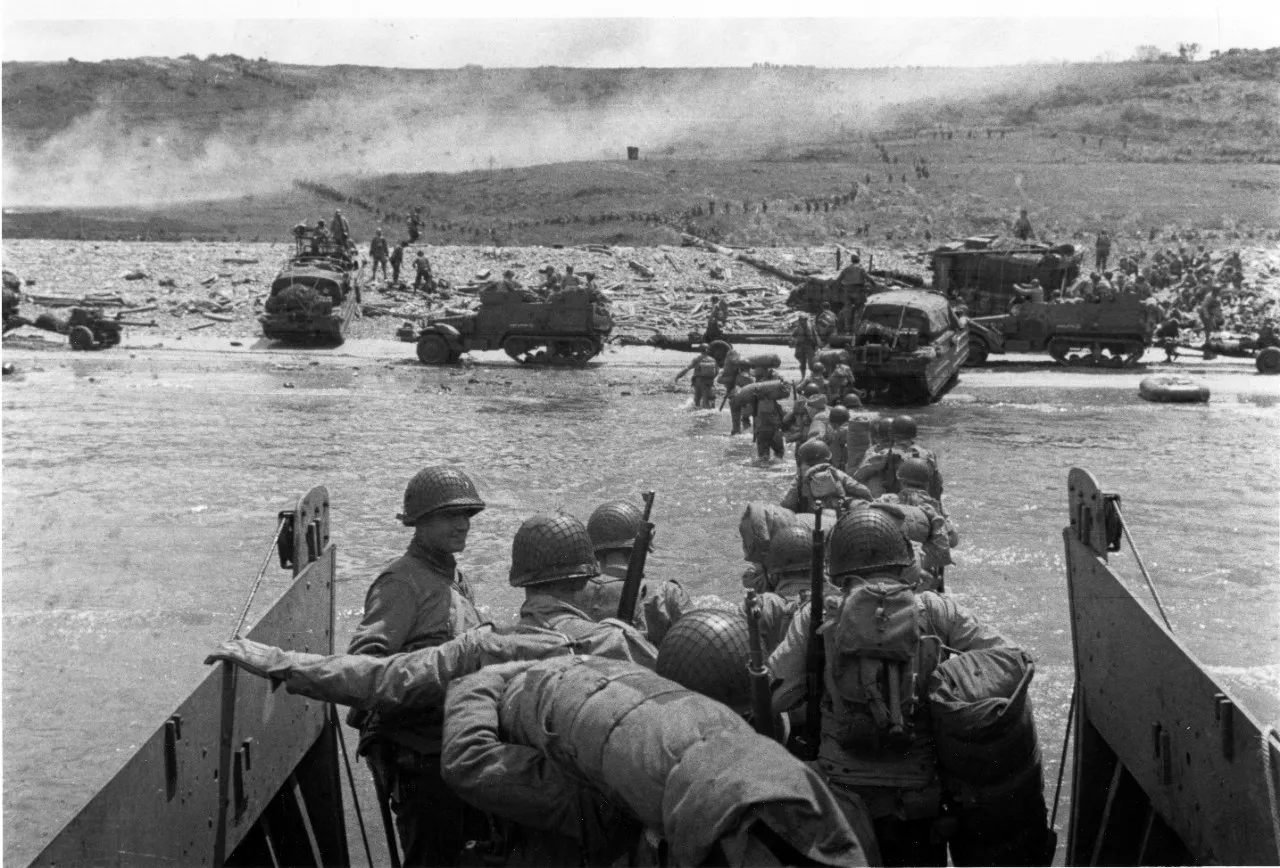
Troops wade ashore at Omaha Beach from a LCVP landing craft.jpg Source: Wikimedia Commons - US Army Signal Corps Collection in the U.S. National Archives
On June 6, 1944, the largest seaborne invasion in history took place. This event is called D-Day. Allied forces, including soldiers from the United States, Great Britain, and Canada, landed on the beaches of Normandy, France. Their goal was to begin freeing Europe from Nazi control during World War II.
The Nazis had built strong defenses along the French coast. The Allies spent months planning a secret attack. They chose Normandy because it was less defended than other places. The code name for the operation was Operation Overlord.
Before dawn, thousands of planes and ships crossed the English Channel. Paratroopers jumped behind enemy lines at night to take control of roads and bridges. Early in the morning, Allied ships fired at the beaches to weaken Nazi defenses. Then, more than 156,000 Allied soldiers landed on five beaches: Utah, Omaha, Gold, Juno, and Sword.
The fighting was fierce and dangerous. Many soldiers had to run across the sand while facing heavy gunfire. The weather was rough, and the sea was stormy. Despite these challenges, the Allies kept moving forward. Their bravery and teamwork helped them break through the Nazi defenses.
By the end of D-Day, the Allies had gained a foothold in France. This victory was very important. It allowed more troops, tanks, and supplies to arrive in Europe. Over the next weeks, the Allies pushed further inland. They fought hard to free towns and cities from Nazi control.
D-Day was a turning point in World War II. It showed the power of unity and courage. The success of the Normandy invasion gave hope to people all over the world. It helped lead to the defeat of Nazi Germany less than a year later.
Interesting Fact: Some special tanks used on D-Day could swim through water and clear obstacles on the beaches!
When did D-Day happen?
June 6, 1944July 4, 1776December 7, 1941May 8, 1945
Where did the Allies land?
ItalyNormandy, FranceGermanyJapan
Which countries joined the U.S. on D-Day?
Germany and ItalyGreat Britain and CanadaJapan and RussiaMexico and Spain
Why was Normandy chosen for the invasion?
It was less defendedIt was closest to EnglandIt was a famous cityIt had many ports
What was Operation Overlord?
The code name for D-DayA type of tankA Nazi defenseA famous bridge
How did the Allies help win D-Day?
By teamwork and braveryBy hidingBy using only planesBy leaving quickly
D-Day was a turning point in WWII.
TrueFalse
What is a paratrooper?
A soldier jumping from planesA ship captainA tank driverA beach guard
Perfect For:
👩🏫 Teachers
• Reading comprehension practice
• Auto-graded assessments
• Literacy skill development
👨👩👧👦 Parents
• Reading practice at home
• Comprehension improvement
• Educational reading time
🏠 Homeschoolers
• Reading curriculum support
• Independent reading practice
• Progress monitoring
Reading Features:
📖
Reading Passage
Engaging fiction or nonfiction text
❓
Comprehension Quiz
Auto-graded questions
📊
Instant Feedback
Immediate results and scoring
📄
Printable Version
Download for offline reading
🔊
Read Aloud
Voice-over with word highlighting
Reviews & Ratings
No reviews yet. Be the first to share your experience!
Related Content
Colonial Trade with England and Africa
This history reading passage explores colonial trade between the American colonies, England, and Africa, focusing on the...
D2.HIS.2.3-5D2.HIS.14.3-5RI.4.3RI.4.4
John Adams: Second President
This engaging U.S. history reading passage introduces students to John Adams, the second President of the United States....
D2.HIS.2.3-5D2.HIS.14.3-5RI.4.3RI.4.4
Building Washington D.C., Our Capital
This history reading passage explores the building of Washington D.C., the capital of the United States. Students will l...
D2.HIS.1-3.3-5D2.HIS.14.3-5RI.4.3RI.4.4
Dolley Madison Saves Washington's Portrait
This engaging history reading passage tells the inspiring story of Dolley Madison and her brave actions during the War o...
D2.HIS.2.3-5D2.HIS.14.3-5RI.4.3RI.4.4
Boomtowns Spring Up Out West
This engaging passage explores the exciting rise of boomtowns in the American West during the 1800s, focusing on the Gol...
D2.HIS.2.3-5D2.HIS.14.3-5RI.4.3RI.4.4
Franklin D. Roosevelt and the New Deal
This engaging history reading passage explores the life and leadership of Franklin D. Roosevelt and his creation of the ...
D2.HIS.2.3-5D2.HIS.14.3-5RI.4.3RI.4.4
Rationing and Life on the Home Front
This history reading passage explores rationing and life on the home front during World War II, focusing on how American...
D2.HIS.2.3-5D2.HIS.14.3-5RI.4.3RI.4.4
Martin Luther King Jr. and "I Have a Dream"
This engaging history reading passage introduces students to the life and legacy of Martin Luther King Jr., focusing on ...
D2.HIS.2.3-5D2.HIS.14.3-5RI.4.1RI.4.3.
Ruby Bridges and the Little Rock Nine
This engaging history reading passage explores the stories of Ruby Bridges and the Little Rock Nine, two important group...
D2.HIS.2.3-5D2.HIS.14.3-5RI.4.3RI.4.4
Cesar Chavez and Farm Workers' Rights
This engaging history reading passage explores the life and impact of Cesar Chavez, a key leader in the fight for farm w...
D2.HIS.2.3-5D2.HIS.14.3-5RI.4.3RI.4.4
When Mexico Took Over California
This engaging U.S. history reading passage explores the period when Mexico took over California during the era of Westwa...
D2.HIS.2.3-5D2.HIS.3.3-5D2.HIS.14.3-5RI.4.3
Californios Culture
This history reading passage explores the story of the Californios—Spanish and Mexican settlers who shaped California be...
D2.HIS.2.3-5D2.HIS.3.3-5D2.HIS.14.3-5RI.4.3
The 31st State: California Joins the Union
This engaging U.S. history reading passage explores California's journey to becoming the 31st state in 1850. Students le...
D2.HIS.3.3-5D2.HIS.14.3-5RI.4.3RI.4.4
Routes to the Gold Fields
This engaging history reading passage explores the three main routes people took to reach the California gold fields dur...
D2.HIS.2.3-5D2.HIS.14.3-5RI.4.3RI.4.4
The Golden Spike: Connecting California to the Nation
This engaging U.S. history reading passage teaches students about the Golden Spike and how the first transcontinental ra...
D2.HIS.1.3-5D2.HIS.2.3-5D2.HIS.14.3-5RI.4.3
California Women Win the Vote in 1911
This engaging history reading passage explores how women in California fought and won the right to vote in 1911. Aligned...
D2.HIS.2.3-5D2.HIS.14.3-5RI.4.3RI.4.4
The 1965 Immigration Act
Discover the story of the 1965 Immigration Act with this engaging U.S. history reading passage. Perfect for building rea...
D2.HIS.4.3-5D2.HIS.14.3-5RI.5.3RI.5.4
Protecting California's Environment
This engaging U.S. history reading passage explores the story of how California has worked to protect its unique environ...
D2.HIS.2.3-5D2.HIS.14.3-5RI.4.3RI.4.4
Religious Freedom in the Middle Colonies
This engaging U.S. History reading passage explores the theme of religious freedom in the Middle Colonies during colonia...