This learning resource is available in interactive and printable formats. The interactive worksheet can be played online and assigned to students. The Printable PDF version can be downloaded and printed for completion by hand.
This comprehensive passage explores the structure and function of the cell membrane, aligning with NGSS standard MS-LS1-2 for grades 6-8. Students will learn about the phospholipid bilayer, hydrophilic heads, hydrophobic tails, and the fluid mosaic model, which illustrates the membrane's flexibility and embedded proteins. The passage details the roles of channel, receptor, and marker proteins, as well as cholesterol's importance in maintaining membrane fluidity. Real-world examples and cause-and-effect chains highlight how the cell membrane's selective permeability is crucial for cell survival and health, connecting this system to larger biological principles. Includes glossary, differentiated reading, Spanish translations, multiple choice and writing activities, and graphic organizers to support all learners. Audio integration is available for accessibility.
CONTENT PREVIEW
Expand content preview
Cell membranes are critical to life because they create boundaries and control what moves in and out of cells. In every living organism, the cell membrane preserves the environment inside the cell so that essential processes can occur. The main concept behind the cell membrane’s function is selective permeability: only certain substances can cross the barrier, which keeps the cell balanced and protected. Understanding how the cell membrane achieves this requires examining its structure and the roles of its different parts.
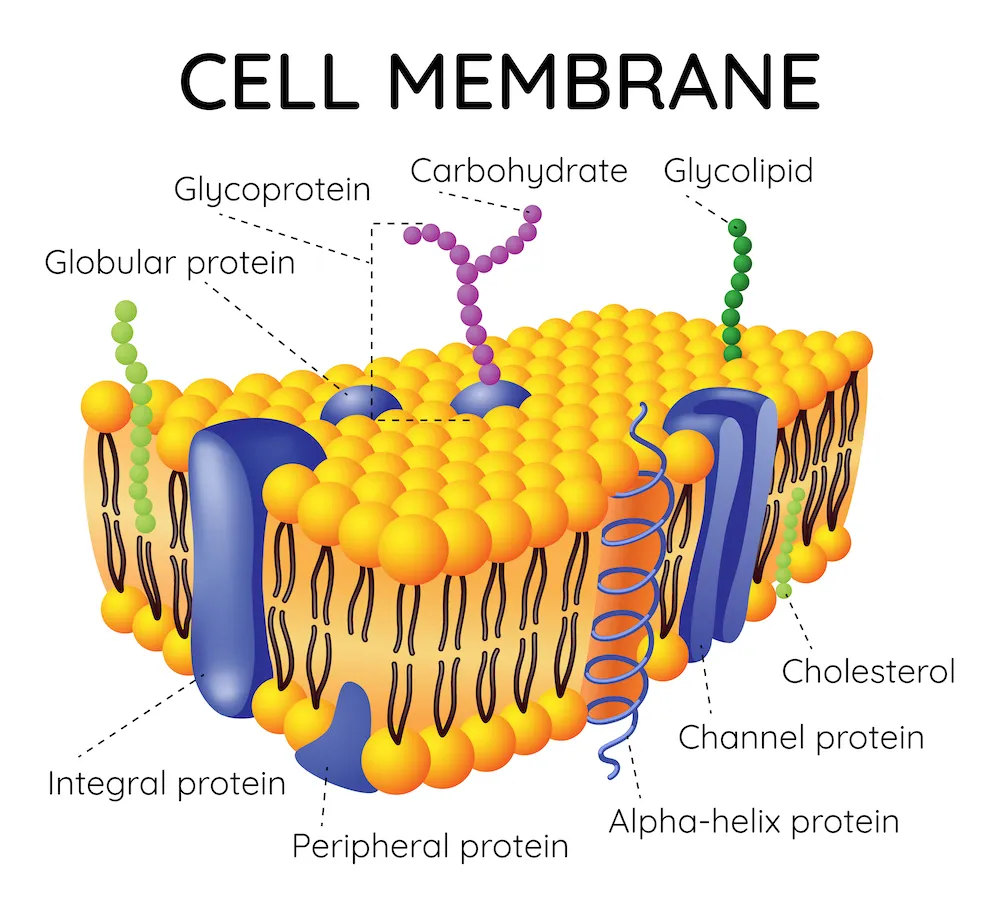
Phospholipid Bilayer: Structure and Mechanism At the core of the cell membrane is the phospholipid bilayer. Each phospholipid molecule has a hydrophilic (water-loving) head and two hydrophobic (water-fearing) tails. The hydrophilic heads face outward towards the watery environments inside and outside the cell, while the hydrophobic tails point inward, away from water. This arrangement forms a double layer that acts as a barrier to most substances. Only small, nonpolar molecules like oxygen and carbon dioxide can pass through easily. Larger or charged molecules, such as glucose or sodium ions, require help from proteins embedded in the membrane.
The Fluid Mosaic Model: Flexibility and Complexity The cell membrane is not a rigid wall but a flexible structure, described by the fluid mosaic model. In this model, the phospholipids and proteins move sideways within the layer, much like boats floating in a sea. Scattered throughout the bilayer are different types of membrane proteins. Channel proteins create passageways for specific molecules, while receptor proteins receive chemical signals from outside the cell, and marker proteins help identify the cell to others. Cholesterol molecules are also present, making up about 20% of the membrane in animal cells. Cholesterol keeps the membrane fluid at various temperatures and prevents it from becoming too stiff or too leaky.
Interactions and Real-World Applications The cell membrane’s structure allows it to respond to changes in the environment. For instance, when temperatures drop, cholesterol prevents the membrane from freezing. When the cell needs to send a signal, receptor proteins pick up hormones or neurotransmitters. In biotechnology, scientists use knowledge of cell membranes to design targeted medicines that enter only certain cells or to develop artificial membranes for filtering water. Malfunctions in membrane proteins can cause diseases, such as cystic fibrosis, where a faulty channel protein disrupts salt balance in cells.
The cell membrane demonstrates how biological systems rely on both structure and interaction to function. Its selective permeability is essential for maintaining homeostasis, which is the stable internal condition cells need to survive. By understanding the cell membrane, scientists can better address health, environmental, and technological challenges.
Interesting Fact: Some viruses, like influenza, trick cell membranes by mimicking marker proteins, allowing them to enter cells undetected.
What is the main function of the cell membrane?
To control what enters and exits the cellTo produce energy for the cellTo store genetic informationTo break down waste products
Which part of the phospholipid is attracted to water?
The membrane lets only some substances pass throughAll substances can pass through the membrane easilyThe membrane is made of sugarThe membrane is always solid
Which molecules make up the main structure of the cell membrane?
PhospholipidsNucleic acidsCarbohydratesGlucose
What is the role of cholesterol in the cell membrane?
To keep the membrane fluid and flexibleTo store energyTo make proteinsTo break down molecules
Which of the following best describes the fluid mosaic model?
The membrane is a flexible layer with moving molecules and proteinsThe membrane is a solid, unmoving wallThe membrane is made only of lipidsThe membrane is found only in plant cells
Channel proteins in the membrane are important because they:
Allow specific molecules to cross the membraneStore genetic informationMake the membrane rigidBreak down food
If a membrane protein is faulty, what can happen?
Diseases like cystic fibrosis can occurThe cell becomes a plant cellOxygen cannot enter the cellThe membrane disappears
True or False: The cell membrane is made of a single layer of phospholipids.
TrueFalse
True or False: Marker proteins help identify the cell to others.
TrueFalse
Perfect For:
👩🏫 Teachers
• Reading comprehension practice
• Auto-graded assessments
• Literacy skill development
👨👩👧👦 Parents
• Reading practice at home
• Comprehension improvement
• Educational reading time
🏠 Homeschoolers
• Reading curriculum support
• Independent reading practice
• Progress monitoring
Reading Features:
📖
Reading Passage
Engaging fiction or nonfiction text
❓
Comprehension Quiz
Auto-graded questions
📊
Instant Feedback
Immediate results and scoring
📄
Printable Version
Download for offline reading
🔊
Read Aloud
Voice-over with word highlighting
Reviews & Ratings
No reviews yet. Be the first to share your experience!
Related Content
Antonie van Leeuwenhoek and the Discovery of Animalcules
This NGSS-aligned science passage explores the groundbreaking work of Antonie van Leeuwenhoek, a pioneer in microscopic ...
MS-LS1-1MS-LS1-2
Robert Hooke and the Naming of 'Cells'
This NGSS-aligned reading passage introduces middle school students to Robert Hooke's discovery and naming of 'cells' in...
MS-LS1-1MS-LS1-2
Rudolf Virchow and His Contribution to Cell Theory
This NGSS-aligned science reading passage introduces students to Rudolf Virchow, a key historical figure in cell biology...
MS-LS1-1MS-LS1-2
Matthias Schleiden and the Discovery That Plants Are Made of Cells
This NGSS-aligned science passage explains how Matthias Schleiden, a German scientist in the 1830s, discovered that all ...
MS-LS1-1MS-LS1-2
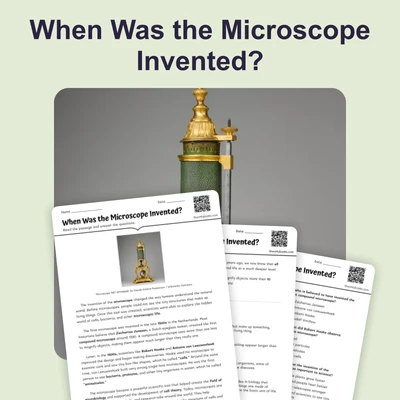
When Was the Microscope Invented?
This NGSS-aligned reading passage introduces students to the invention of the microscope, an essential scientific tool. ...
MS-LS1-1MS-LS1-2
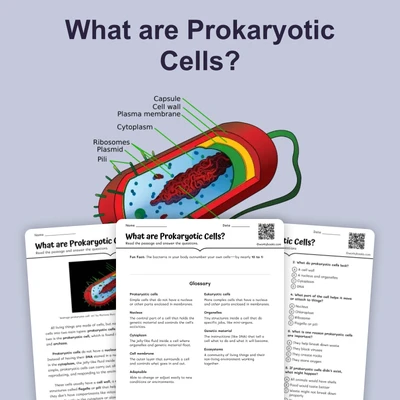
What are Prokaryotic Cells?
This NGSS-aligned science reading passage explains prokaryotic cells, the simplest type of cells found in single-celled ...
MS-LS1-1MS-LS1-2
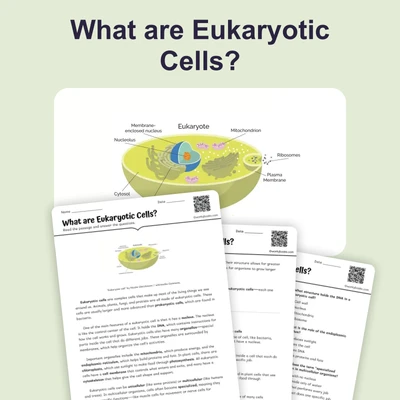
What are Eukaryotic Cells?
This NGSS-aligned reading passage introduces middle school students to eukaryotic cells, which are complex cells found i...
MS-LS1-1MS-LS1-2
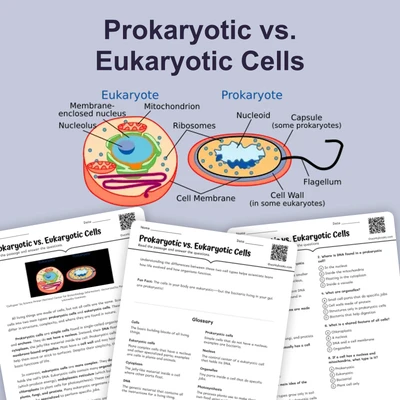
Prokaryotic vs. Eukaryotic Cells
This NGSS-aligned reading passage helps middle school students compare prokaryotic and eukaryotic cells. Supporting stan...
MS-LS1-1MS-LS1-2
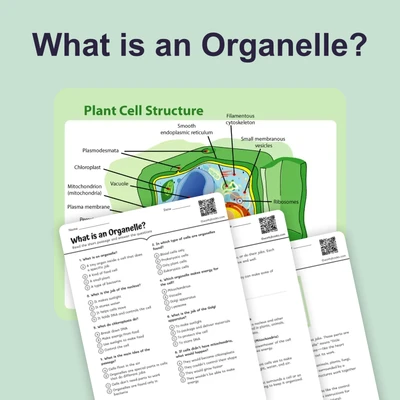
What is an Organelle?
This NGSS-aligned reading passage introduces middle school students to the concept of organelles. Supporting MS-LS1-
MS-LS1-1MS-LS1-2
Chromoplast: Nature's Color Palette
This passage details chromoplast functions in pigment production, ecological signaling, and nutrition. Aligned with NGSS...
MS-LS1-1MS-LS1-2MS-LS1-6LS1.C
Parts of the Cell
This informational science passage, aligned with NGSS standard MS-LS1-1, introduces students to the parts of the cell an...
MS-LS1-1MS-LS1-2
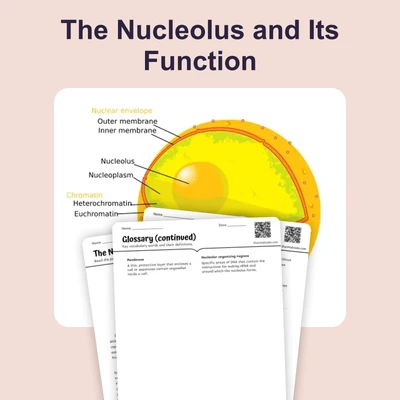
The Nucleolus and Its Function
This NGSS-aligned reading passage focuses on the nucleolus, a key structure inside the cell’s nucleus responsible for ma...
MS-LS1-1MS-LS1-2
What Is Vapor Pressure?
This NGSS-aligned science passage explains the concept of vapor pressure in an age-appropriate, engaging way for middle ...
MS-PS1-4MS-LS1-2
Cell Membrane Transport
This middle school science reading passage explores how cell membranes regulate the movement of substances in and out of...
MS-LS1-2
Cell Structure and Function
This middle school science passage introduces the fundamental concept that cells are the basic unit of life, aligned wit...
MS-LS1-1MS-LS1-2
Osmosis and Cell Function
This informational reading passage for grades 6-8 provides a comprehensive look at osmosis and its critical role in cell...
MS-LS1-2
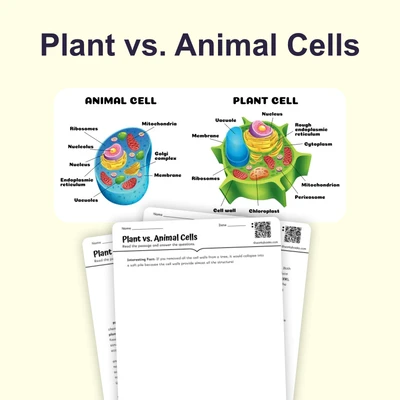
Plant vs. Animal Cells
This comprehensive science passage introduces students in grades 6-8 to the similarities and differences between plant a...
MS-LS1-2
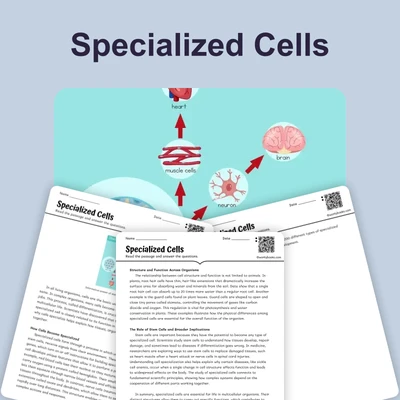
Specialized Cells
This passage introduces middle school students to the concept of specialized cells and explains how their unique structu...
MS-LS1-1MS-LS1-2
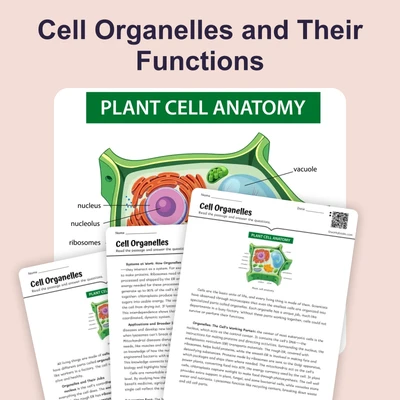
Cell Organelles
This comprehensive science passage for grades 6-8 explores the structure and function of major cell organelles within eu...