Cell Organelles
Interactive passage with audio narration, comprehension questions, and printable PDF.
By completing this purchase you agree to our Terms of Use and Privacy Policy. Your subscription renews automatically until you cancel. You can cancel anytime from your account settings. All sales are final and non-refundable. Digital content is available for download in your account immediately upon purchase.
What's included
Cell Organelles preview and details
About this printable Cell Organelles science reading passage, NGSS-aligned (Grades 5-8)
Sample passage and quiz from Cell Organelles
Reading passage and comprehension quiz preview
Cell Organelles
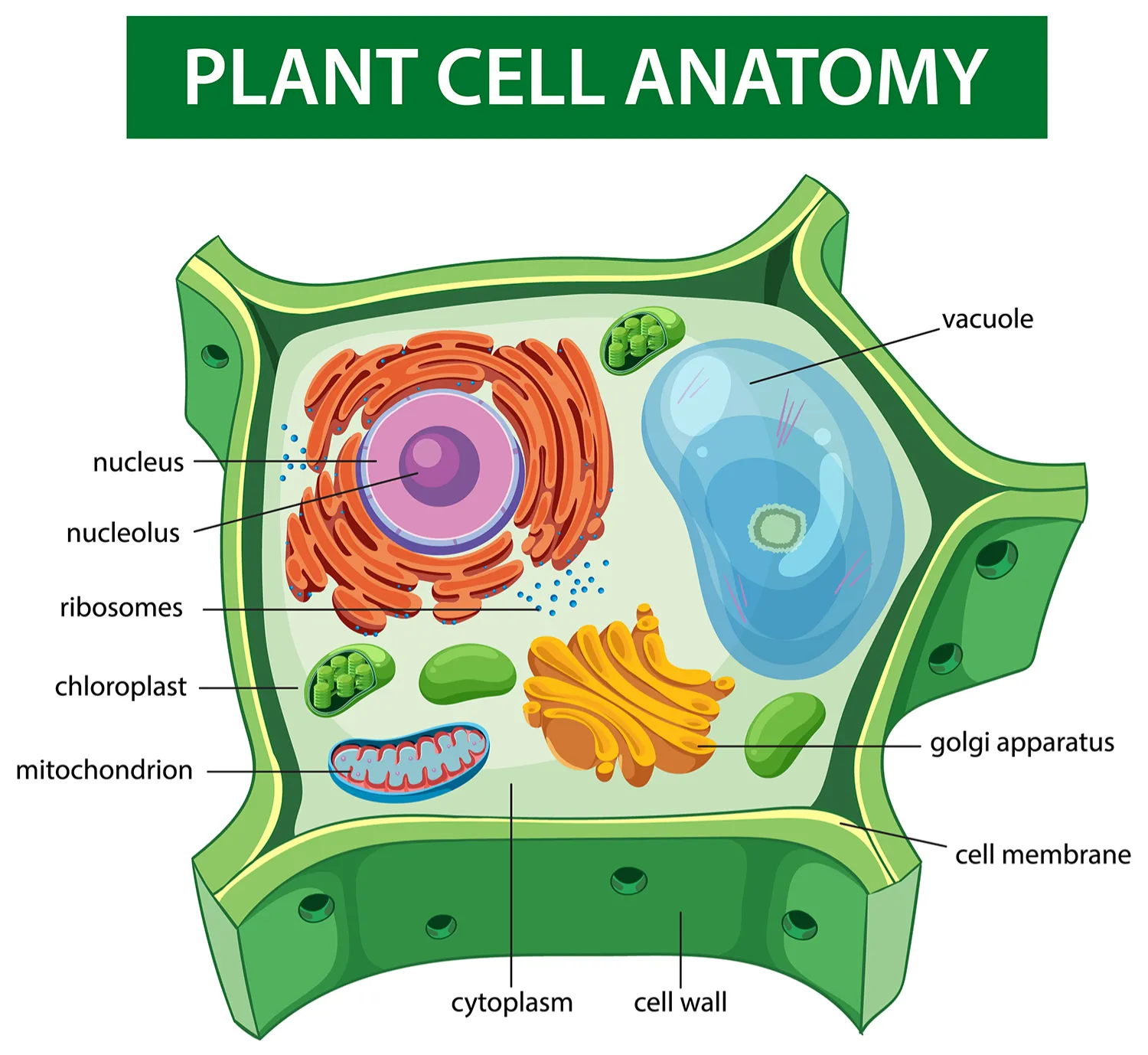
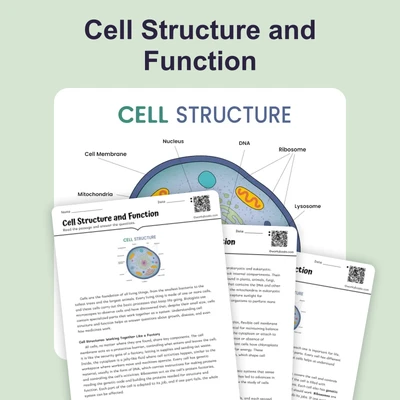
Cells are the basic units of life, and every living thing is made of them. Scientists have observed through microscopes that even the smallest cells are organized into specialized parts called organelles. Each organelle has a unique job, much like departments in a busy factory. Without these parts working together, cells could not survive or perform their functions.
Organelles: The Cell’s Working Parts
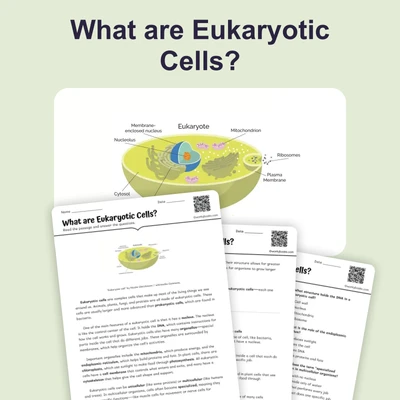
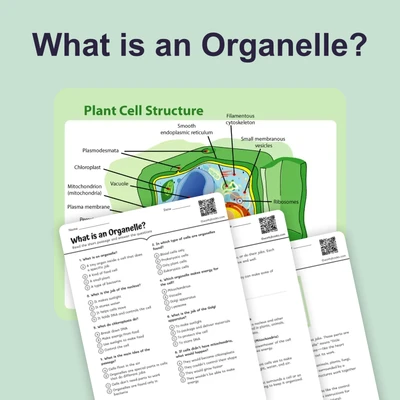
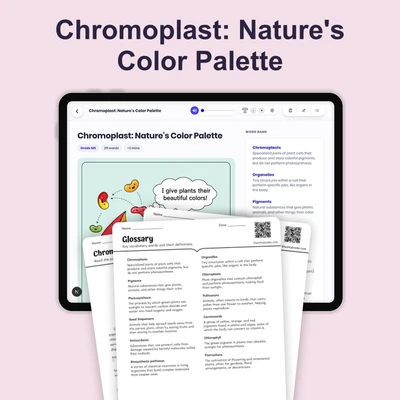
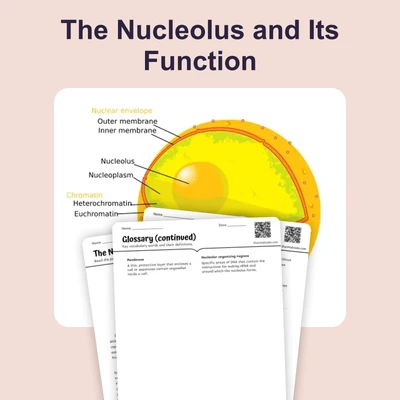
At the center of most eukaryotic cells is the nucleus, which acts as the control center. It contains the cell’s DNA—the instructions for making proteins and directing activities. Surrounding the nucleus, the endoplasmic reticulum (ER) transports materials. The rough ER, covered with ribosomes, helps build proteins, while the smooth ER is involved in making fats and detoxifying substances. Proteins made by ribosomes are sent to the Golgi apparatus, which packages and ships them where needed. The mitochondria act as the cell’s power plants, converting food into ATP, the energy currency used by the cell. In plant cells, chloroplasts capture sunlight to make food through photosynthesis. The cell wall provides extra support in plant, fungal, and some bacterial cells, while vacuoles store water and nutrients. Lysosomes function like recycling centers, breaking down waste and old cell parts.
Systems at Work: How Organelles Interact
The cell’s organelles do not work alone—they interact as a system. For example, the DNA in the nucleus contains the code to make proteins. Ribosomes read this code and build proteins, which are then processed and shipped by the ER and Golgi apparatus. Mitochondria provide the energy needed for these processes. In a typical animal cell, mitochondria can generate up to 90% of the cell’s ATP. In plants, chloroplasts and mitochondria work together: chloroplasts produce sugars from sunlight, and mitochondria convert those sugars into usable energy. The vacuole stores extra water and nutrients, preventing the cell from drying out. If lysosomes fail, waste can build up and damage the cell. This interdependence shows that a cell is more than just a collection of parts; it is a coordinated, dynamic system.
Applications and Broader Impact
Understanding cell organelles helps explain diseases and develop new technologies. For example, some genetic disorders occur when lysosomes can’t break down certain substances, leading to cell malfunction. Mitochondrial diseases disrupt energy production and affect organs with high energy needs, like muscles and the brain. Advances in medicine, such as gene therapy, rely on knowledge of how the nucleus and other organelles function. Scientists even use engineered bacteria with specialized organelles to produce medicines like insulin. This knowledge connects to the larger principle that structure determines function in biology and highlights how cells are foundational to all life.
Cells are remarkable examples of organization and cooperation at a microscopic level. By studying how their organelles work together, scientists gain insights that benefit medicine, agriculture, and technology. The complex interactions within a single cell reflect the systems thinking that is central to modern science.
Interesting Fact: The human body contains over 30 trillion cells, and each one can have hundreds or thousands of mitochondria, depending on its energy needs!
Comprehension quiz (10 questions)
1. What is the main function of the nucleus in a eukaryotic cell?
2. Which organelle is responsible for producing ATP, the energy currency of the cell?
3. What does the cell wall provide to plant, fungal, and some bacterial cells?
4. In the passage, what analogy is used to explain how organelles work together?
5. What is the role of ribosomes in the cell?
6. Which word best describes the function of lysosomes?
7. What might happen if mitochondria in a cell do not function properly?
8. Why are chloroplasts important for plant cells, based on the passage?
9. True or False: All cells have chloroplasts.
10. True or False: The Golgi apparatus packages and ships proteins to where they are needed.
Perfect for the way you teach
- Build comprehension skills
- Auto-graded quiz
- Differentiated reading
- Read together at home
- Improve fluency
- Quiet reading time
- Reading curriculum support
- Independent practice
- Track Lexile growth