

KnovaKNOVA — A free reading app with curriculum-aligned passages on History & Science for Grades 3-8

Cell Organelles and Their Functions — Reading Comprehension

Premium Resource
Grades
  • 5
  • 6
  • 7
  • 8
Standards
  • MS-LS1-2
SHARE

About This Reader

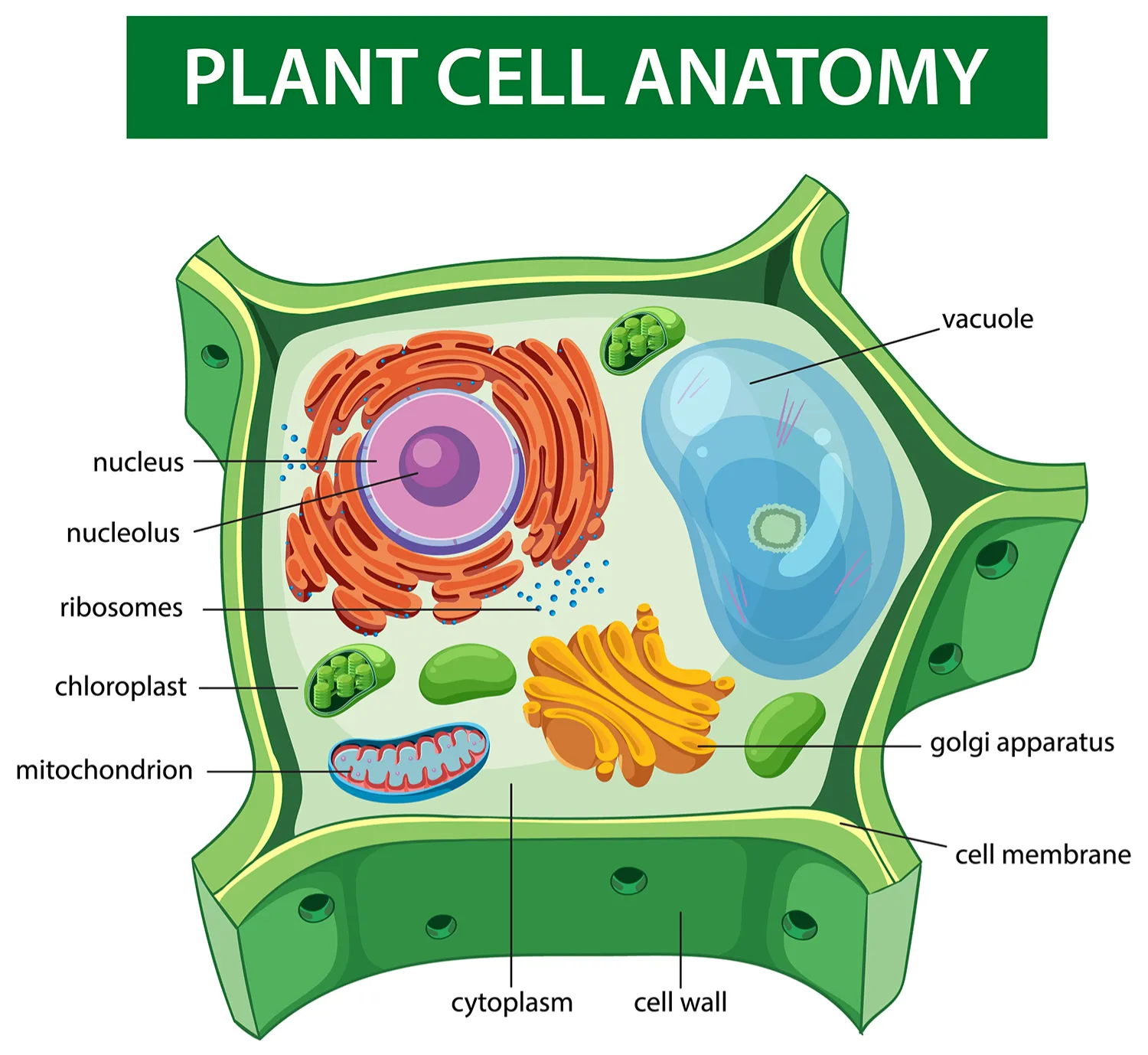
This comprehensive science passage for grades 6-8 explores the structure and function of major cell organelles within eukaryotic cells, including the nucleus, mitochondria, ribosomes, endoplasmic reticulum, Golgi apparatus, lysosomes, vacuoles, chloroplasts, and cell walls. By using an engaging factory analogy, students learn how these organelles work together as a complex system to sustain life, and how disruptions can affect cell health. The passage aligns with NGSS standard MS-LS1-2 and integrates scientific reasoning, cause-and-effect relationships, and examples from plant and animal cells. Supporting activities include quizzes, writing prompts, and graphic organizers, as well as glossaries and Spanish translations. Audio integration features support accessibility and comprehension for all learners.
Perfect For:

👩‍🏫 Teachers
  • • Reading comprehension practice
  • • Auto-graded assessments
  • • Literacy skill development
👨‍👩‍👧‍👦 Parents
  • • Reading practice at home
  • • Comprehension improvement
  • • Educational reading time
🏠 Homeschoolers
  • • Reading curriculum support
  • • Independent reading practice
  • • Progress monitoring

Reading Features:

📖
Reading Passage
Engaging fiction or nonfiction text
Comprehension Quiz
Auto-graded questions
📊
Instant Feedback
Immediate results and scoring
📄
Printable Version
Download for offline reading
🔊
Read Aloud
Voice-over with word highlighting
Antonie van Leeuwenhoek and the Discovery of Animalcules - reading educational content
Antonie van Leeuwenhoek and the Discovery of Animalcules
This NGSS-aligned science passage explores the groundbreaking work of Antonie van Leeuwenhoek, a pioneer in microscopic ...
MS-LS1-1MS-LS1-2
Robert Hooke and the Naming of 'Cells' - reading educational content
Robert Hooke and the Naming of 'Cells'
This NGSS-aligned reading passage introduces middle school students to Robert Hooke's discovery and naming of 'cells' in...
MS-LS1-1MS-LS1-2
Rudolf Virchow and His Contribution to Cell Theory - reading educational content
Rudolf Virchow and His Contribution to Cell Theory
This NGSS-aligned science reading passage introduces students to Rudolf Virchow, a key historical figure in cell biology...
MS-LS1-1MS-LS1-2
Matthias Schleiden and the Discovery That Plants Are Made of Cells - reading educational content
Matthias Schleiden and the Discovery That Plants Are Made of Cells
This NGSS-aligned science passage explains how Matthias Schleiden, a German scientist in the 1830s, discovered that all ...
MS-LS1-1MS-LS1-2
When Was the Microscope Invented? - reading educational content
When Was the Microscope Invented?
This NGSS-aligned reading passage introduces students to the invention of the microscope, an essential scientific tool. ...
MS-LS1-1MS-LS1-2
What are Prokaryotic Cells? - reading educational content
What are Prokaryotic Cells?
This NGSS-aligned science reading passage explains prokaryotic cells, the simplest type of cells found in single-celled ...
MS-LS1-1MS-LS1-2
What are Eukaryotic Cells? - reading educational content
What are Eukaryotic Cells?
This NGSS-aligned reading passage introduces middle school students to eukaryotic cells, which are complex cells found i...
MS-LS1-1MS-LS1-2
Prokaryotic vs. Eukaryotic Cells - reading educational content
Prokaryotic vs. Eukaryotic Cells
This NGSS-aligned reading passage helps middle school students compare prokaryotic and eukaryotic cells. Supporting stan...
MS-LS1-1MS-LS1-2
What is an Organelle? - reading educational content
What is an Organelle?
This NGSS-aligned reading passage introduces middle school students to the concept of organelles. Supporting MS-LS1-
MS-LS1-1MS-LS1-2
Chromoplast: Nature's Color Palette - reading educational content
Chromoplast: Nature's Color Palette
This passage details chromoplast functions in pigment production, ecological signaling, and nutrition. Aligned with NGSS...
MS-LS1-1MS-LS1-2MS-LS1-6LS1.C
Parts of the Cell - reading educational content
Parts of the Cell
This informational science passage, aligned with NGSS standard MS-LS1-1, introduces students to the parts of the cell an...
MS-LS1-1MS-LS1-2
The Nucleolus and Its Function - reading educational content
The Nucleolus and Its Function
This NGSS-aligned reading passage focuses on the nucleolus, a key structure inside the cell’s nucleus responsible for ma...
MS-LS1-1MS-LS1-2
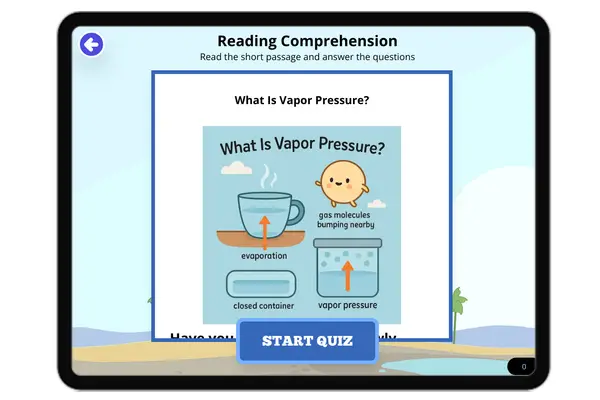
What Is Vapor Pressure? - reading educational content
What Is Vapor Pressure?
This NGSS-aligned science passage explains the concept of vapor pressure in an age-appropriate, engaging way for middle ...
MS-PS1-4MS-LS1-2
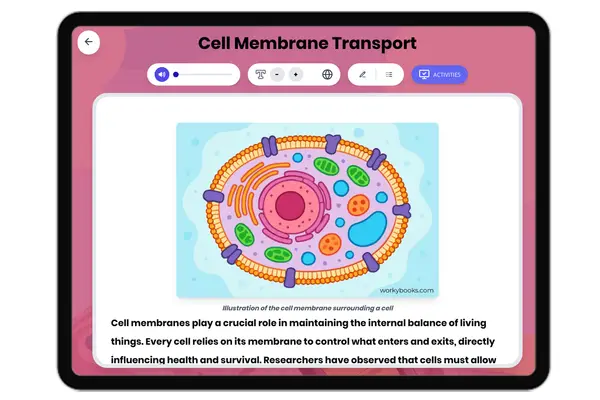
Cell Membrane Transport - reading educational content
Cell Membrane Transport
This middle school science reading passage explores how cell membranes regulate the movement of substances in and out of...
MS-LS1-2
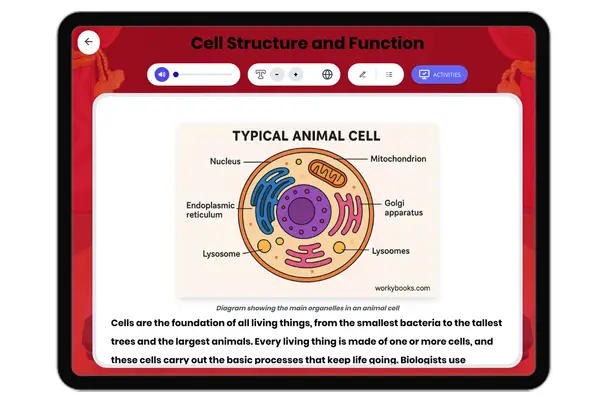
Cell Structure and Function - reading educational content
Cell Structure and Function
This middle school science passage introduces the fundamental concept that cells are the basic unit of life, aligned wit...
MS-LS1-1MS-LS1-2
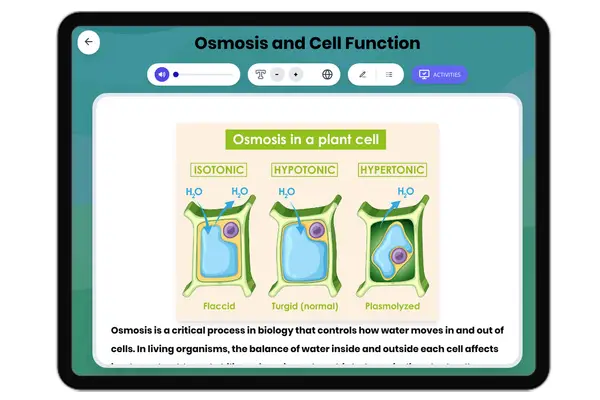
Osmosis and Cell Function - reading educational content
Osmosis and Cell Function
This informational reading passage for grades 6-8 provides a comprehensive look at osmosis and its critical role in cell...
MS-LS1-2
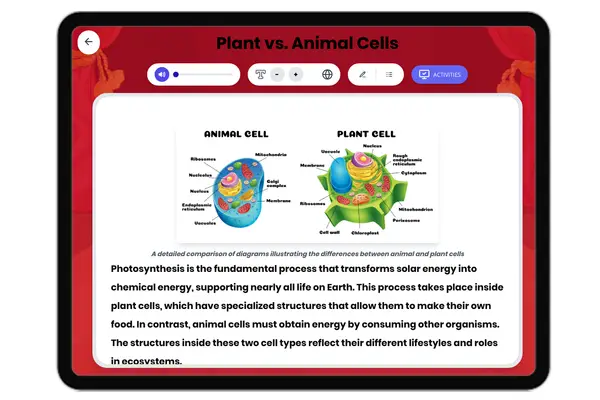
Plant vs. Animal Cells - reading educational content
Plant vs. Animal Cells
This comprehensive science passage introduces students in grades 6-8 to the similarities and differences between plant a...
MS-LS1-2
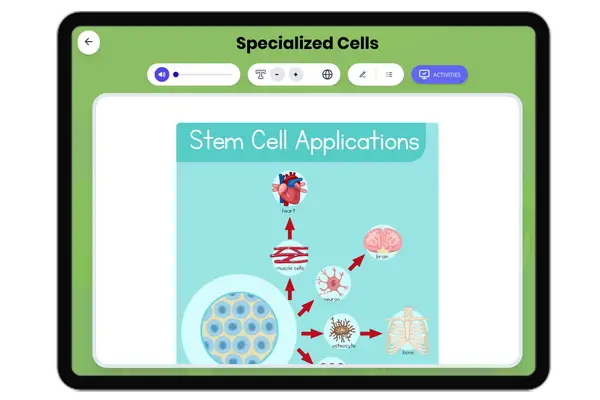
Specialized Cells - reading educational content
Specialized Cells
This passage introduces middle school students to the concept of specialized cells and explains how their unique structu...
MS-LS1-1MS-LS1-2
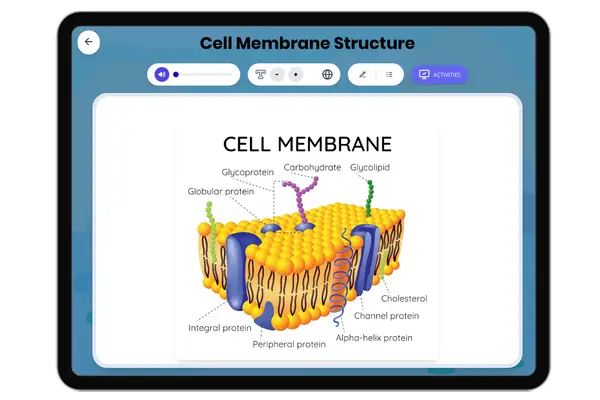
Cell Membrane Structure - reading educational content
Cell Membrane Structure
This comprehensive passage explores the structure and function of the cell membrane, aligning with NGSS standard MS-LS1-...
MS-LS1-2
Copyright © 2026 Workybooks. Made with ♥ in California.