This learning resource is available in interactive and printable formats. The interactive worksheet can be played online and assigned to students. The Printable PDF version can be downloaded and printed for completion by hand.
This engaging middle school science passage introduces students to the fascinating world of metamorphic rocks. Aligned with NGSS standards MS-ESS2-1 and MS-ESS3-1, the text explains how heat and pressure transform existing rocks deep underground, forming new minerals and textures. Students learn about the two primary types of metamorphic rocks—foliated and non-foliated—using familiar examples like slate, gneiss, marble, and quartzite. The passage explores processes such as contact and regional metamorphism, and details the sequence from parent rocks to their metamorphic forms. With a focus on scientific thinking, cause and effect, and real-world implications, the content supports comprehension, analysis, and application. The resource includes a glossary, reading quiz, writing prompts, and graphic organizers, making it ideal for science classrooms. Audio integration supports diverse learners. Keywords include metamorphic rocks, heat, pressure, rock cycle, foliation, and geology.
CONTENT PREVIEW
Expand content preview
Metamorphic rocks are an important part of Earth's crust. These rocks form when existing rocks are changed by intense heat, pressure, or chemical processes deep under the surface. Unlike rocks that form directly from magma or from sediments, metamorphic rocks are created by the transformation of other rocks. This transformation, called metamorphism, reveals information about the powerful forces shaping our planet.
How Metamorphic Rocks Form
Metamorphic rocks form through a process that changes the mineral structure and texture of existing rocks. When rocks are buried far beneath Earth's surface, they are exposed to temperatures ranging from 150°C to over 800°C and pressures thousands of times greater than at the surface. These conditions cause atoms and minerals to rearrange, creating new minerals and larger crystals. For example, the clay minerals in the sedimentary rock shale transform into the flat, hard sheets of slate. Metamorphic changes can also occur near plate boundaries where Earth's crust is pushed or pulled, or near magma chambers where heat is especially strong.
Types and Sequences of Metamorphic Rocks
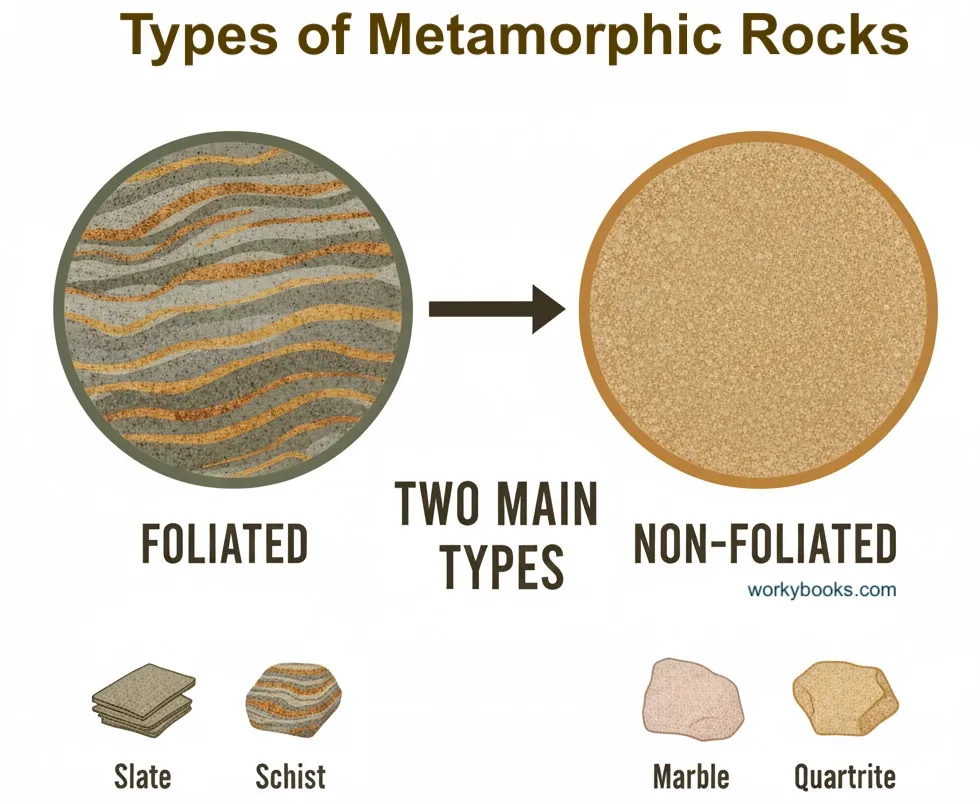
There are two main types of metamorphic rocks: foliated and non-foliated. Foliated rocks, like slate, schist, and gneiss, have mineral grains aligned in bands or layers due to directed pressure. This gives them a striped or banded appearance. Non-foliated rocks, such as marble and quartzite, do not have layers because the minerals grow in random directions. The type of metamorphic rock formed depends on the composition of the parent rock and the conditions of metamorphism. For example, shale can become slate, then schist, and finally gneiss as heat and pressure increase—a process called increasing metamorphic grade. Limestone, rich in calcite, transforms into marble, while sandstone becomes quartzite.
Metamorphism in Action: Contact and Regional
Not all metamorphism occurs the same way. Contact metamorphism happens when rocks are heated by nearby magma, changing only rocks close to the heat source. In contrast, regional metamorphism affects large areas during mountain building, as huge sections of crust are squeezed and heated over millions of years. Regional metamorphism creates most of the world's metamorphic rocks and is responsible for the formation of mountain ranges.
Metamorphic rocks are more than just beautiful stones. They help scientists understand Earth's dynamic processes, the history of plate movements, and the cycling of materials in the crust. Their unique patterns and mineral content are used in construction, art, and even as indicators of valuable resources deep underground.
Interesting Fact: Some of the oldest rocks on Earth are metamorphic, with ages reaching over 4 billion years. These ancient rocks preserve a record of Earth's earliest history!
What causes rocks to become metamorphic rocks?
Heat, pressure, or chemical processesOnly melting and coolingBreaking into small piecesErosion by water
Which of the following is a foliated metamorphic rock?
They rearrange and form new mineralsThey melt completelyThey break into sandThey dissolve in water
What does 'non-foliated' mean in the context of metamorphic rocks?
The rock has no layers or bandsThe rock is made of sandThe rock is only found near volcanoesThe rock is always soft
What is the main difference between contact and regional metamorphism?
Contact affects small areas near heat; regional affects large areas under pressureContact happens during volcano eruptions; regional happens in oceansContact creates only igneous rocks; regional creates only sedimentary rocksContact makes rocks colder; regional makes rocks softer
Why are metamorphic rocks important for scientists?
They reveal information about Earth's history and processesThey are always shinyThey are easy to find everywhereThey contain dinosaur fossils
True or False: All metamorphic rocks have visible bands or stripes.
TrueFalse
True or False: Marble forms from limestone during metamorphism.
TrueFalse
What is one use of metamorphic rocks in everyday life?
They are used in construction and artThey are only for scientific studyThey are used to make fuelThey are not used by people
Perfect For:
👩🏫 Teachers
• Reading comprehension practice
• Auto-graded assessments
• Literacy skill development
👨👩👧👦 Parents
• Reading practice at home
• Comprehension improvement
• Educational reading time
🏠 Homeschoolers
• Reading curriculum support
• Independent reading practice
• Progress monitoring
Reading Features:
📖
Reading Passage
Engaging fiction or nonfiction text
❓
Comprehension Quiz
Auto-graded questions
📊
Instant Feedback
Immediate results and scoring
📄
Printable Version
Download for offline reading
🔊
Read Aloud
Voice-over with word highlighting
Reviews & Ratings
No reviews yet. Be the first to share your experience!
Related Content
Talus Slopes: Formation and Features
This earth science passage explains talus slope formation through mechanical weathering processes, aligning with NGSS MS...
MS-ESS2-1MS-ESS2-2RST.6-8.4
Biological Weathering: Types and Examples
This passage details biological weathering processes, connecting to NGSS MS-ESS2-1 (Earth's systems) and LS2.B (ecosyste...
MS-ESS2-1MS-PS1-2RST.6-8.3
Frost Wedging: How Ice Splits Rock
This passage explains frost wedging as a mechanical weathering process. Aligned with NGSS MS-ESS2-1 (Earth’s systems) a...
MS-ESS2-1MS-ESS2-2RST.6-8.3
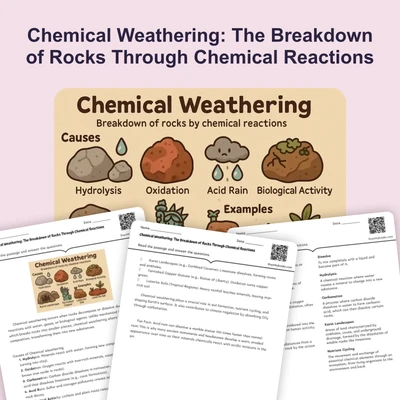
Chemical Weathering: The Breakdown of Rocks Through Chemical Reactions
This passage explains chemical weathering processes, aligned with NGSS MS-ESS2-1 (Earth’s systems) and ESS2-2 (surface ...
MS-ESS2-1MS-ESS2-2RST.6-8.4
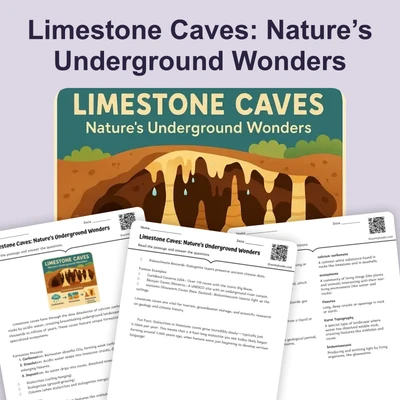
Limestone Caves: Nature’s Underground Wonders
This passage explains limestone cave formation through carbonation, aligned with NGSS MS-ESS2-1 (Earth’s systems) and L...
MS-ESS2-1LS2.CRST.6-8.7
The Coldest City in the World: Yakutsk
This NGSS-aligned science passage introduces middle school readers to Yakutsk, the coldest city on Earth. Students will ...
MS-ESS2-1
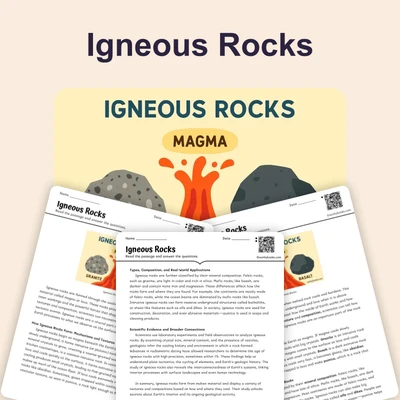
Igneous Rocks
This comprehensive passage introduces middle school students to igneous rocks, focusing on how these rocks form from mol...
MS-ESS2-1MS-ESS3-1
Sedimentary Rocks
This comprehensive middle school science passage introduces students to sedimentary rocks, detailing their step-by-step ...
MS-ESS2-1MS-ESS2-3MS-ESS3-1
Scientific Inquiry in Earth Science
This passage explores scientific inquiry in Earth science for grades 6-8, aligned with NGSS standards MS-ESS1-4, MS-ESS2...
MS-ESS1-4MS-ESS2-1MS-ESS3-5SEP
Contour Lines and Elevation
This passage, designed for grades 6-8 and aligned with NGSS standards MS-ESS2-2 and MS-ESS2-1, introduces students to th...
MS-ESS2-2MS-ESS2-1SEP.4SEP.8
Weathering
This comprehensive science reading passage for grades 6-8 focuses on the concept of weathering, aligning with NGSS stand...
MS-ESS2-1
Erosion
This comprehensive middle school science passage explains erosion—the process that transports weathered rock and soil fr...
MS-ESS2-1
Stream Erosion and Deposition
This middle school science passage, aligned to NGSS MS-ESS2-1, introduces students to the dynamic processes of stream er...
MS-ESS2-1
Wind Erosion and Deposition
This comprehensive science reading passage for grades 6-8 explores the processes of wind erosion and deposition, alignin...
MS-ESS2-1
Glacial Erosion and Deposition
This middle school science passage explores glacial erosion and deposition, focusing on the mechanisms by which glaciers...
MS-ESS2-1
Mass Movements
This NGSS-aligned passage introduces middle school students to the science of mass movements—gravity-driven motions of r...
MS-ESS2-1MS-ESS3-2
Soil Formation and Composition
This comprehensive middle school science passage explores soil formation and composition, perfectly aligned to NGSS stan...
MS-ESS2-1
Constructive and Destructive Forces
This middle school science passage explores how Earth's surface is constantly shaped by the interplay of constructive an...
MS-ESS2-1
Mountains and Mountain Building
This NGSS-aligned passage for grades 6-8 covers the fascinating processes that create Earth's highest landforms—mountain...