This learning resource is available in interactive and printable formats. The interactive worksheet can be played online and assigned to students. The Printable PDF version can be downloaded and printed for completion by hand.
This engaging history reading passage examines the origins, evolution, and significance of Chinese characters, one of the world's oldest and most enduring writing systems. Students will explore how Chinese writing began over 3,000 years ago, how it changed through different dynasties, and its impact on culture, government, and daily life. The passage provides key vocabulary, primary source examples like oracle bones, and connects Chinese writing to geography and social structure. Features include a Spanish translation, a simplified version for diverse learners, timelines, graphic organizers, and standards-aligned quiz and writing activities. Aligned with CA HSS 6.6.7, TEKS 113.18(b)(2)(C), and CCSS RI.6.3, this passage supports historical thinking skills and ELA standards. Includes a read aloud audio and glossary to support comprehension.
CONTENT PREVIEW
Expand content preview
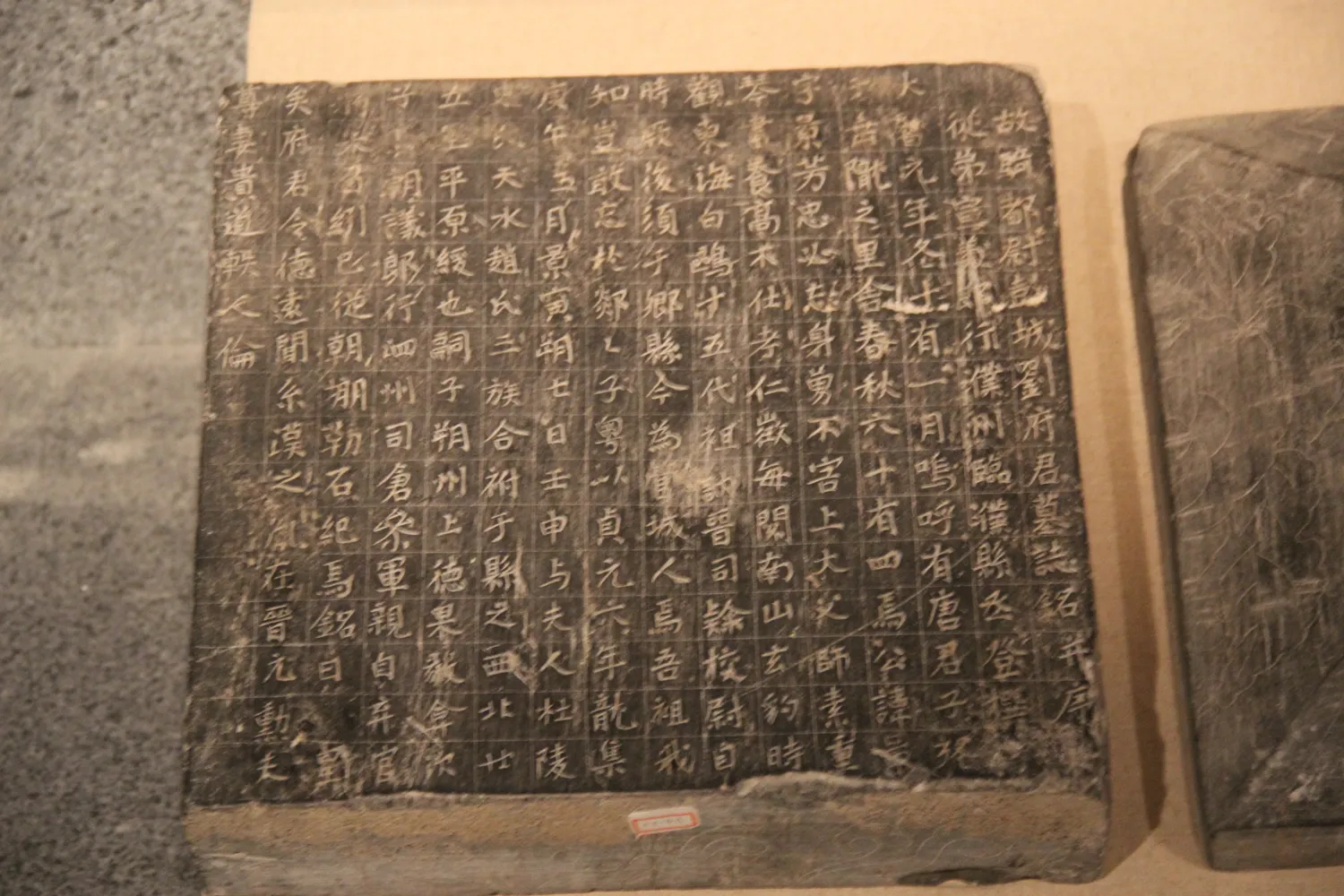
"Ancient Chinese Writing on Stone with Small Characters" by Gary Todd / Source: Wikimedia Commons (CC0).
Chinese characters, known as logograms, have formed the foundation of written communication in China for over 3,000 years. This unique writing system is one of the oldest still in use today. Unlike alphabetic writing, Chinese characters represent whole words or ideas, not just sounds. The earliest evidence of Chinese writing comes from the Shang Dynasty (around 1200 BCE), where characters were carved on oracle bones—pieces of animal bone or turtle shell used for divination.
The development of Chinese characters was closely tied to religion, government, and daily life. The characters found on oracle bones recorded questions kings asked about the future, such as harvests or military campaigns. These early inscriptions give historians valuable primary sources to study ancient beliefs and practices. Over the centuries, the writing system evolved through several dynasties, including the Zhou, Qin, and Han. Each period brought changes to the form and use of characters. For example, during the Qin Dynasty (221–206 BCE), the First Emperor standardized the script, making it easier to govern a large empire. This standardization helped unify China and made communication more efficient across regions.
Writing in Chinese was not limited to the elite. Over time, more people learned to read and write, especially during the Han Dynasty when education expanded. Calligraphy, the art of beautiful writing, became a respected skill. Scribes and officials used brushes and ink to produce government records, poetry, and literature. Archaeological discoveries, such as bamboo slips and silk manuscripts, show how writing spread beyond royal courts. The structure of Chinese society also shaped the use of writing. Scholars and officials held high status because of their literacy, while farmers and craftspeople usually had less access to education. Still, the visual nature of characters made them recognizable to many, even those who could not write themselves.
Chinese characters have shown remarkable continuity over millennia. While the shapes and styles changed, the basic system stayed the same. Even today, people in China, Japan, and other parts of East Asia use characters descended from these ancient forms. The writing system connected people across different languages and dialects because the characters represent ideas, not just sounds. This helped preserve history, culture, and government records through times of war and peace.
The story of Chinese characters illustrates how geography, politics, and society interact to shape human communication. The system’s endurance highlights the importance of writing in building and maintaining civilizations. Studying Chinese characters gives insight into the achievements and daily life of ancient China, and connects to other ancient writing systems studied in world history.
Interesting Fact: The oldest known Chinese characters, found on oracle bones, sometimes include early versions of the word for "king" written as a simple stick figure with three horizontal lines!
When did Chinese writing first appear?
Around 1200 BCE500 BCE300 CE1000 CE
What material were oracle bones made from?
Animal bones or turtle shellsBamboo sticksClay tabletsPaper scrolls
Which dynasty unified the Chinese script?
Qin DynastyHan DynastyShang DynastyTang Dynasty
Why was standardizing writing important?
It unified the empireIt made farming easierIt helped trade with RomeIt improved food storage
What is calligraphy?
Art of beautiful writingMaking clay potsBuilding housesPainting pictures
How did characters help different regions?
Connected people speaking different dialectsMade farming easierCreated new foodsImproved boat building
True or false: Chinese characters only changed once.
TrueFalse
What does the word "status" mean?
Rank or positionA type of foodA cityA tool
Perfect For:
👩🏫 Teachers
• Reading comprehension practice
• Auto-graded assessments
• Literacy skill development
👨👩👧👦 Parents
• Reading practice at home
• Comprehension improvement
• Educational reading time
🏠 Homeschoolers
• Reading curriculum support
• Independent reading practice
• Progress monitoring
Reading Features:
📖
Reading Passage
Engaging fiction or nonfiction text
❓
Comprehension Quiz
Auto-graded questions
📊
Instant Feedback
Immediate results and scoring
📄
Printable Version
Download for offline reading
🔊
Read Aloud
Voice-over with word highlighting
Reviews & Ratings
No reviews yet. Be the first to share your experience!
Related Content
Life in Ancient China
This comprehensive history reading passage explores daily life and social structure in Ancient China, focusing on the ro...
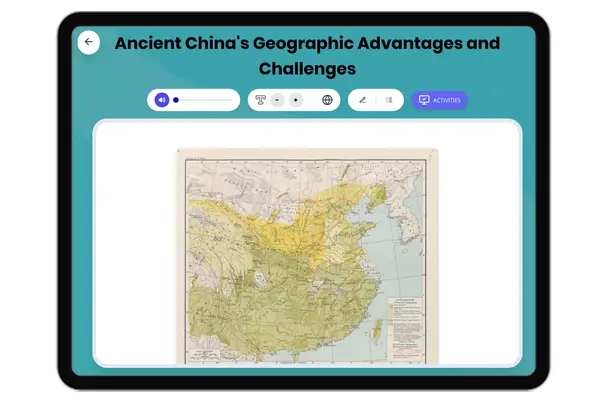
Geography of Ancient China
This passage examines the geographic advantages and challenges faced by Ancient China, exploring how natural features li...
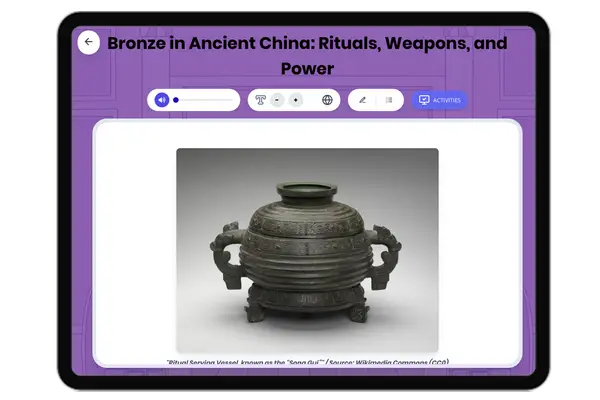
Bronze in Ancient China
This passage explores the significance of bronze in Ancient China, focusing on its use in rituals, weapons, and expressi...
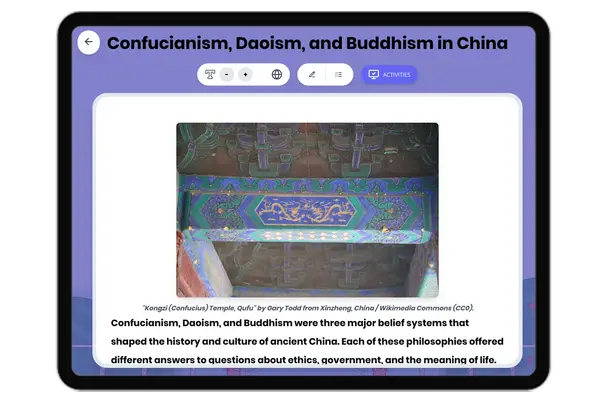
Confucianism, Daoism, and Buddhism in China
This rigorous ancient history reading passage explores the development and impact of Confucianism, Daoism, and Buddhism ...
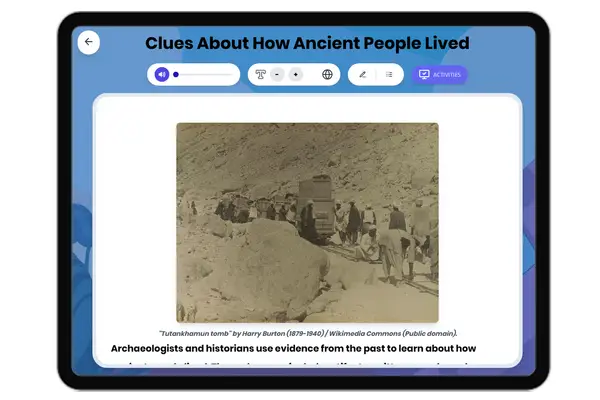
Evidence in Ancient History
This engaging history reading passage investigates how archaeologists and historians discover clues about how ancient pe...
Ancient Theocracy
This engaging history reading passage explores the concept of theocracy in ancient civilizations, where priests and reli...
Ancient Canaan
This educational passage explores the land of Canaan, the historical homeland of the ancient Israelites. Students will l...
The First Emperor: Qin Shi Huangdi Unites China
This comprehensive reading passage explores the rise of Qin Shi Huangdi, the first emperor who united ancient China. Stu...
Shi Huangdi: First Emperor of China
This rigorous history reading passage explores the remarkable reign of Shi Huangdi, the first emperor of China, and his ...
Ban Zhao: China's Woman Scholar
This passage explores the life and legacy of Ban Zhao, one of ancient China's most respected scholars and the author of ...
Ancient Philosophy
This reading passage takes students on a journey through the philosophical traditions of ancient Greece, India, and Chin...
Ancient Literature
This passage explores the importance of ancient stories and poems from civilizations such as Greece, India, and Israel. ...
Geography of Ancient Israel
This passage explores the rich geography of Ancient Israel, focusing on how landforms, climate, and natural resources sh...
Ancient Money Barter
This passage explores the fascinating evolution from barter to the earliest coins in ancient civilizations, focusing on ...
Ancient Writing Systems
This engaging history reading passage explores the origins and evolution of ancient writing systems, including cuneiform...
Ancient Science and Medicine
This comprehensive reading passage explores the development of science and medicine in ancient civilizations, including ...
Ancient Agriculture Farming
This passage explores the transformative impact of farming on ancient societies, examining how the Neolithic Revolution ...
Social structures in Ancient World
This passage explores the organization and significance of family life in ancient societies, focusing on how extended fa...
Ancient Mathematics
This passage explores the essential role of mathematics in ancient civilizations, including Mesopotamia, Egypt, Greece, ...
Trade Across Ancient India
This history reading passage explores Ancient India's trade networks and their impact on global connections. Students wi...