This learning resource is available in interactive and printable formats. The interactive worksheet can be played online and assigned to students. The Printable PDF version can be downloaded and printed for completion by hand.
This engaging history passage introduces students to the philosophy of Daoism, one of the major belief systems that shaped Ancient China. Students will learn about the origins of Daoism, its core beliefs centered on harmony with nature, and the historical context in which it emerged. The passage includes specific details about Laozi, the legendary founder, and primary sources such as selections from the Dao De Jing. It addresses how Daoism influenced Chinese society, government, and daily life, and compares it with Confucianism and Legalism. Activities include a multiple-choice quiz, writing prompts, graphic organizers, a timeline, glossary, and Spanish translation. This resource is aligned with CA HSS 6.6.3 and CCSS RH.6-8.2 standards, offering a comprehensive look at Daoism's significance in world history. Read aloud audio and bilingual support ensure accessibility for all learners.
CONTENT PREVIEW
Expand content preview
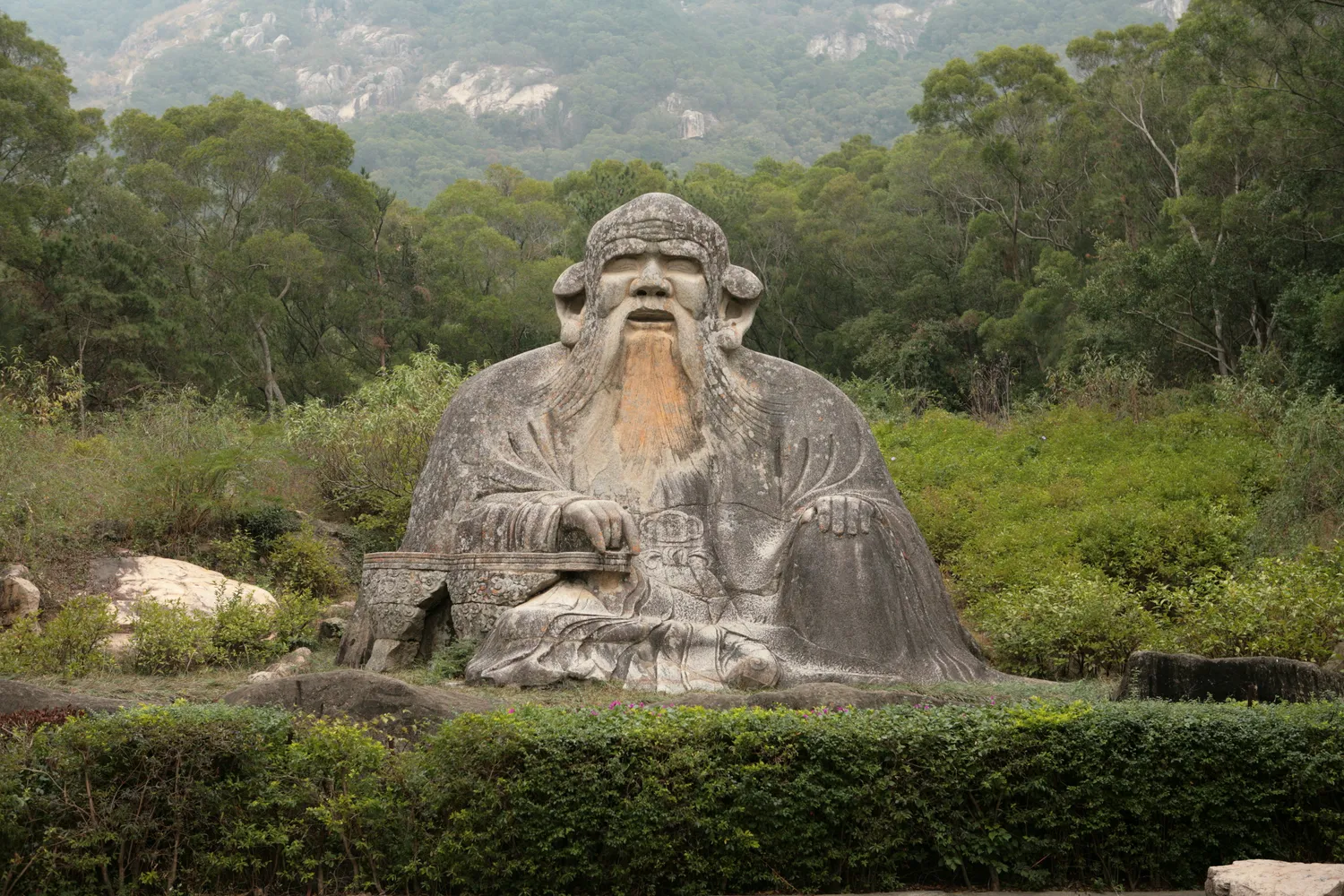
Statue of Lao Tzu in Quanzhou.jpg Source: Wikimedia Commons - Tom@HK
Daoism, also spelled Taoism, is an ancient Chinese philosophy that teaches people to live in harmony with the natural world. Scholars believe Daoism began during the late Zhou Dynasty, around the 6th century BCE, as Chinese society faced war and political chaos. The philosophy is often linked to a legendary sage named Laozi, who is said to have written the foundational text called the Dao De Jing.
Central to Daoism is the concept of the Dao, or "the Way." The Dao represents the natural order of the universe, which cannot be fully described or controlled. Daoists believe that by following the Dao, people can achieve balance and peace. The Dao De Jing encourages individuals to practice wu wei, meaning "non-action" or "effortless action." Instead of forcing things to happen, Daoism teaches that people should align their actions with the rhythms of nature, much like water flowing around rocks in a stream.
Primary sources such as the Dao De Jing offer advice through poetry and metaphor. One passage states, "Nature does not hurry, yet everything is accomplished." Archaeological evidence, including ancient manuscripts found in tombs at Mawangdui, supports the early importance of Daoist texts. Daoism also introduced the concept of yin and yang, which describes how opposite forces, such as darkness and light, are interconnected and create harmony in the universe.
Daoism changed over time but remained influential throughout Chinese history. During the Han Dynasty (206 BCE–220 CE), Daoism became more organized as a religion, with temples and rituals. Daoist ideas influenced Chinese medicine, art, and even government policies. For example, Emperor Wu of Han sometimes consulted Daoist scholars for advice. Daoism differed from Confucianism, which focused on social order and rules, and from Legalism, which stressed strict laws. Daoism valued simplicity, humility, and living close to nature, which appealed to many people, especially during times of unrest.
Today, Daoism continues to shape Chinese culture and is practiced around the world. Its teachings remind people to respect the environment and find inner peace. Studying Daoism helps us understand how ancient philosophies still influence modern life and connect to broader themes like ethics, belief systems, and the relationship between humans and nature.
Interesting Fact: Some historians believe Laozi may not have been a single person, but rather a legendary figure created to represent early Daoist ideas.
When did Daoism begin?
6th century BCE2nd century CE1st century BCE10th century CE