Safavid Empire of Persia
Interactive passage with audio narration, comprehension questions, and printable PDF.
By completing this purchase you agree to our Terms of Use and Privacy Policy. Your subscription renews automatically until you cancel. You can cancel anytime from your account settings. All sales are final and non-refundable. Digital content is available for download in your account immediately upon purchase.
What's included
Safavid Empire of Persia preview and details
About this printable Safavid Empire of Persia reading passage (Grades 5-8)
Sample passage and quiz from Safavid Empire of Persia
Reading passage and comprehension quiz preview
Safavid Empire of Persia
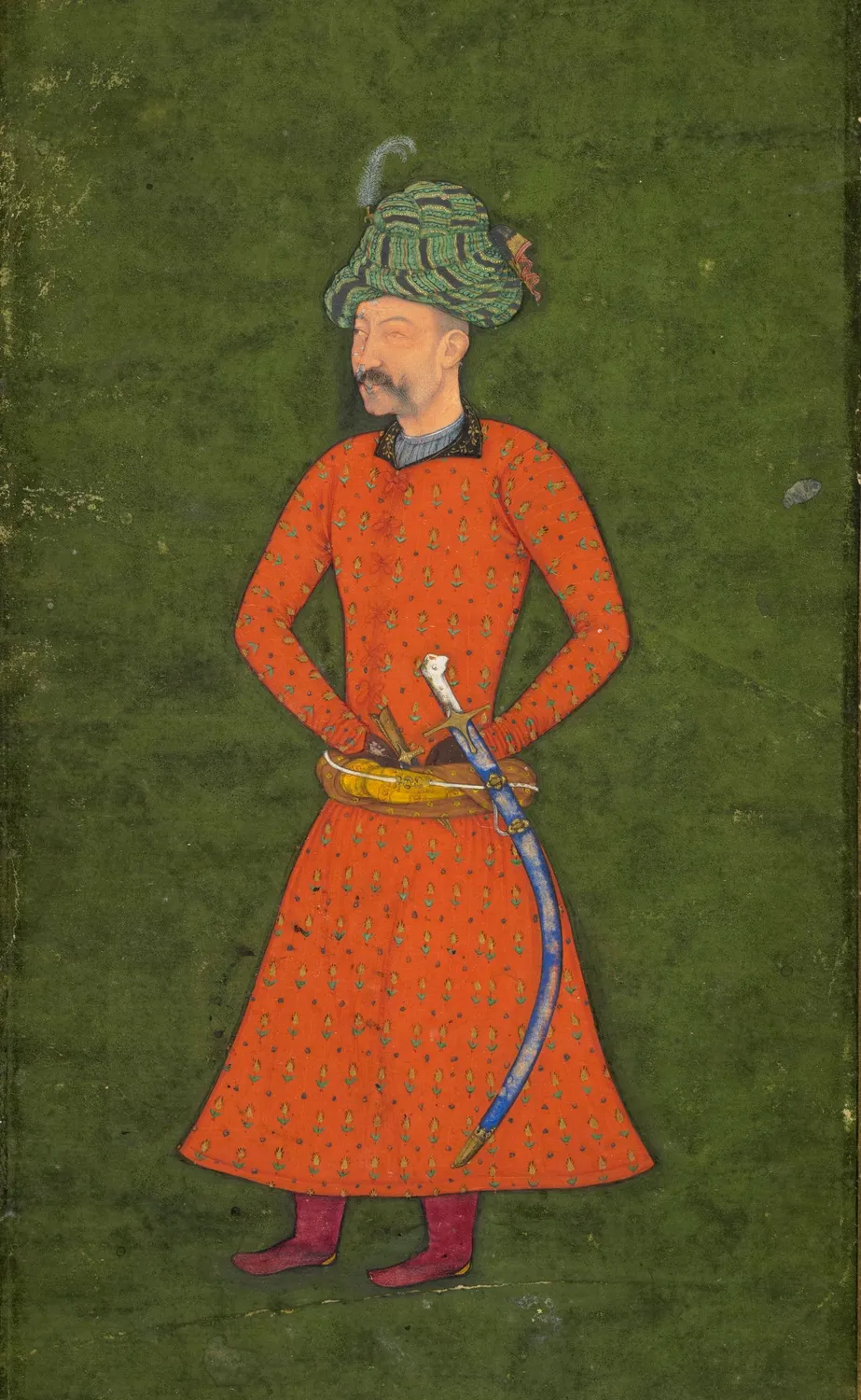
"Shah ʿAbbas I of Persia." by Bishn Dás (Probably by Bishan Das when with the Mughal Embassy to Persia from 1613-19.) / Wikimedia Commons
The Safavid Empire emerged in Persia in the early 1500s and quickly became one of the most powerful states in the region. Centered in present-day Iran, the Safavid dynasty controlled a vast territory stretching from the Caspian Sea in the north to the Persian Gulf in the south. The Safavids are celebrated for uniting Persia under a single government, advancing art and architecture, and establishing Shi'a Islam as the state religion.
One of the most significant figures in Safavid history was Shah Abbas I, who ruled from 1588 to 1629. Shah Abbas moved the capital to Isfahan, transforming it into a center of culture and trade. Under his leadership, the empire expanded its borders and strengthened its military with new gunpowder weapons. The Safavids used muskets and cannons, which allowed them to defend against rivals like the Ottoman Empire and the Uzbeks. Archaeological evidence from the city of Isfahan, including the Imam Mosque, shows the empire’s achievements in architecture and design. European travelers, such as Jean Chardin, described Isfahan as "half the world" because of its beauty and bustling markets.
The Safavid Empire was known for its religious policies and efforts to promote Shi'a Islam. Before the Safavids, Persia was mostly Sunni Muslim. By making Shi'a Islam the official faith, the Safavids created a distinct identity for Persia that set it apart from its Sunni neighbors. This change led to the construction of grand mosques, new religious schools, and the celebration of Shi'a festivals. However, the policy also caused tension with Sunni groups, sometimes leading to conflict. Primary sources, such as royal decrees and religious texts from the Safavid period, reveal the importance of religion in daily life and governance.
Trade and the Silk Road were vital to the Safavid economy. The empire’s location connected east and west, making Persia a crossroads for merchants from Asia, Europe, and Africa. Goods like silk, carpets, and ceramics were highly valued. The Safavids encouraged trade by building caravanserais—inns for travelers—along trade routes. The new capital, Isfahan, became a cosmopolitan city where people from many cultures met. Socially, society was organized into classes, with the Shah and his family at the top, followed by nobles, soldiers, merchants, and farmers. Artisans and craftsmen were respected for their skills, especially in weaving Persian rugs.
By the mid-1700s, the Safavid Empire weakened due to internal conflicts, invasions, and economic difficulties. Yet, the legacy of the Safavids remains strong in Iranian culture, religion, and art. Their introduction of Shi'a Islam shaped the region’s identity for centuries. The architecture, art, and traditions started by the Safavids continue to influence the world today.
The story of the Safavid Empire connects to broader themes of ancient civilizations, such as the impact of geography, the role of religion in society, and the rise and fall of powerful states.
Interesting Fact: The blue tiles of the Imam Mosque in Isfahan, built during the Safavid era, are made with a special glaze that still shines brightly after more than 400 years.
Comprehension quiz (8 questions)
1. Who founded the Safavid Empire?
2. What was the Safavid capital under Shah Abbas?
3. Which religion did the Safavids promote?
4. Why were gunpowder weapons important to the Safavids?
5. How did the Safavid Empire change religion in Persia?
6. What was a result of Safavid trade policies?
7. The Safavid Empire lasted until the 1700s. True or false?
8. What is a 'dynasty'?
Perfect for the way you teach
- Build comprehension skills
- Auto-graded quiz
- Differentiated reading
- Read together at home
- Improve fluency
- Quiet reading time
- Reading curriculum support
- Independent practice
- Track Lexile growth