Family Life in Ancient Civilizations
Interactive passage with audio narration, comprehension questions, and printable PDF.
By completing this purchase you agree to our Terms of Use and Privacy Policy. Your subscription renews automatically until you cancel. You can cancel anytime from your account settings. All sales are final and non-refundable. Digital content is available for download in your account immediately upon purchase.
What's included
Family Life in Ancient Civilizations preview and details
About this printable Family Life in Ancient Civilizations reading passage (Grades 6-8)
Sample passage and quiz from Family Life in Ancient Civilizations
Reading passage and comprehension quiz preview
Family Life in Ancient Civilizations
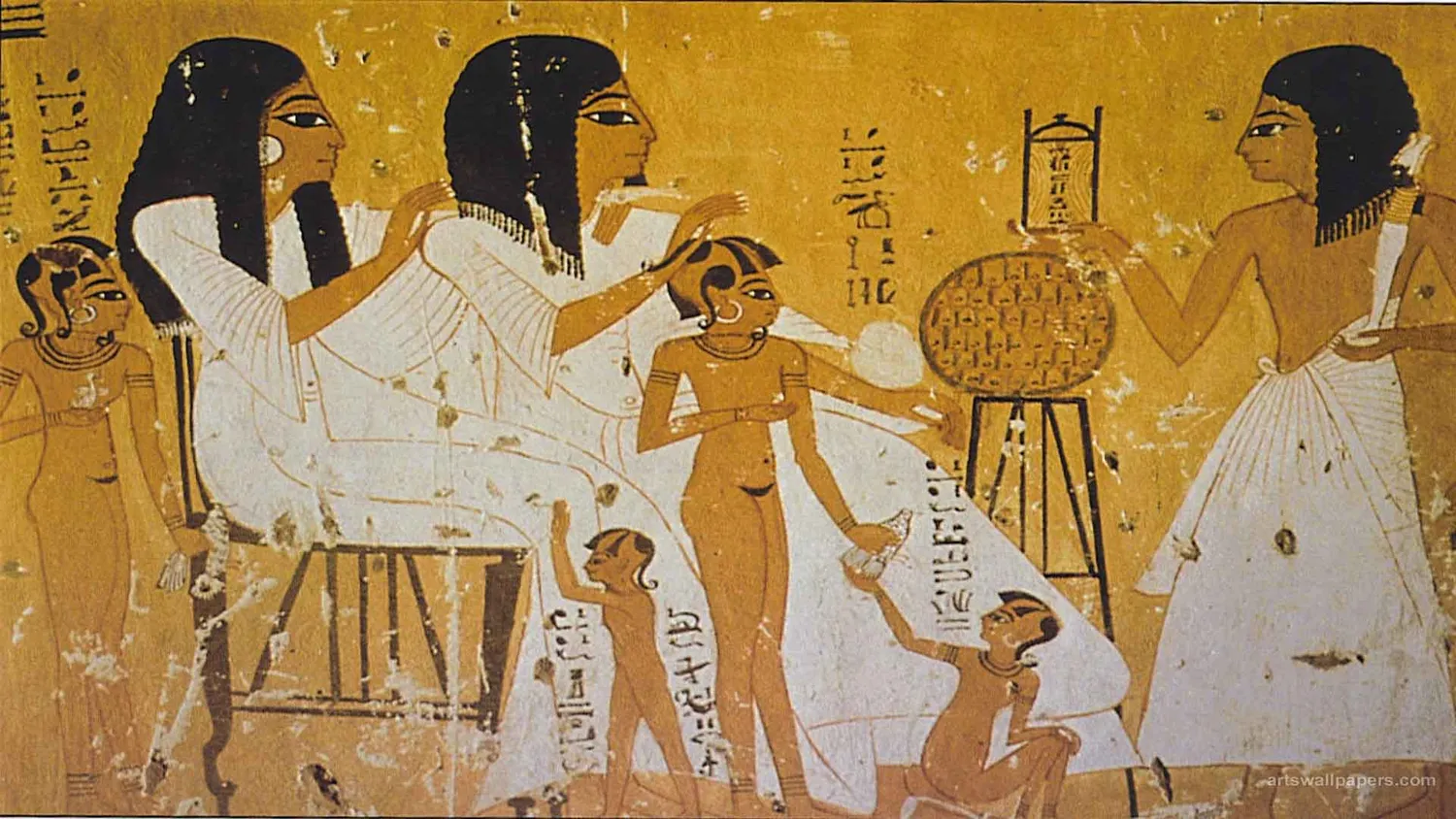
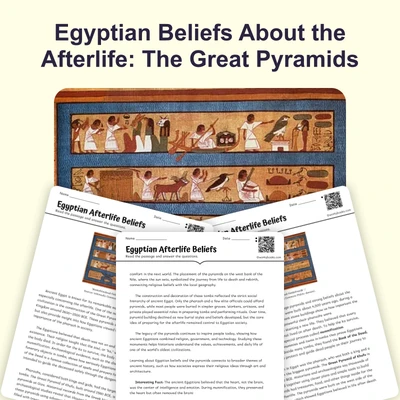
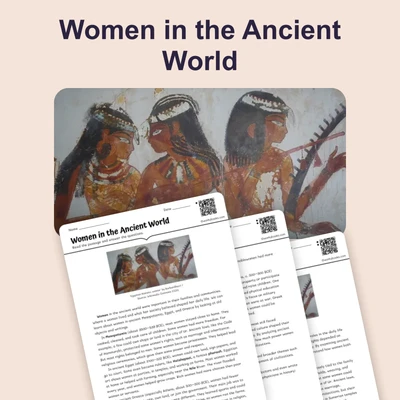
"Ancient-Egypt-Egyptian-Art-Painings-HD-Pictures" by Estere13 /
Source: Wikimedia Commons
Across ancient civilizations, family life formed the foundation of society. In places like Mesopotamia, Egypt, and ancient China, the extended family—including parents, children, grandparents, and sometimes even close friends—lived and worked together. Family groups often belonged to clans, or larger groups tied by ancestry. These connections shaped daily life, traditions, and social status for thousands of years.
In ancient Egypt, the family was seen as a central unit of society. Archaeological discoveries, like tomb paintings from the Old Kingdom (c. 2686–2181 BCE), show men, women, and children together, highlighting the importance of shared work and harmony. Egyptian law placed the father as the primary authority in the household, responsible for decisions and property. However, women also played important roles, managing the home and, in some cases, owning property. Written records demonstrate that children inherited land and jobs from their parents, showing a strong continuity of family roles across generations.
Similarly, ancient Chinese society during the Shang and Zhou dynasties (c. 1600–256 BCE) was based on respect for elders and ancestor worship. Families honored their ancestors through rituals and ceremonies, believing this would bring good fortune. The head of the family, usually the oldest male, made important choices. Archaeological digs have uncovered bronze vessels and oracle bones used in these rituals, offering direct evidence of family traditions. Large family compounds housed multiple generations, and maintaining family honor was a primary goal.
In Mesopotamia, records from the city-state of Ur (c. 2100 BCE) describe households with many relatives living under one roof. Written laws, such as the Code of Hammurabi (c. 1754 BCE), set out rules for marriage, inheritance, and behavior, reflecting the significance of the family in society. These laws show that family ties determined social class and occupation. The harsh desert environment made cooperation within extended families necessary for survival, as family members worked together to farm, trade, and protect each other.
Family life in ancient societies created stability and shaped individual identity. Although the specific roles and customs varied, the family’s central role in social organization is a theme seen across civilizations. The legacy of these ancient family structures can still be observed in cultural practices today.
Understanding ancient family life helps us see how humans have always sought connection, order, and continuity, linking the past to the present in world history.
Interesting Fact: Some ancient Egyptian children played board games with their families, as shown in paintings from tombs in Thebes.
Comprehension quiz (8 questions)
1. Who was the main authority in ancient Egyptian families?
2. Which law code set rules for family life in Mesopotamia?
3. Ancestor worship was important in which ancient civilization?
4. What did children often inherit from parents in Egypt?
5. Why did Mesopotamian families need to cooperate?
6. How were family traditions preserved across generations?
7. The head of the family made important choices. True or false?
8. What is a 'clan'?
Perfect for the way you teach
- Build comprehension skills
- Auto-graded quiz
- Differentiated reading
- Read together at home
- Improve fluency
- Quiet reading time
- Reading curriculum support
- Independent practice
- Track Lexile growth