Reading PassagePremium

Mesopotamian Math and Astronomy

Interactive passage with audio narration, comprehension questions, and printable PDF.

No ratings yet
Grades 5–8ReadingElaSocial-studiesHistoryEnglish · SpanishInteractive · Printable
Aligned toCA HSS 6.2RH.6-8.2
Just this resource
$1.50
One-time purchase
Best value
Unlock everything
$49.99$24.99/yr
50% off until Sept 15 — 10,000+ resources
Renews at $49.99/year.

By completing this purchase you agree to our Terms of Use and Privacy Policy. Your subscription renews automatically until you cancel. You can cancel anytime from your account settings. All sales are final and non-refundable. Digital content is available for download in your account immediately upon purchase.

Unlock above to use these actions

What's included

Reading passage
Audio narration
Comprehension quiz
Writing activity
Glossary & flashcards
Differentiated version
Spanish translation

Part of this bundle

Mesopotamian Math and Astronomy preview and details

About this printable Mesopotamian Math and Astronomy reading passage (Grades 5-8)

This engaging passage explores the scientific achievements of ancient Mesopotamia, the region between the Tigris and Euphrates rivers. Students will learn how Mesopotamians developed advanced mathematics, documented astronomical observations, and created the first calendars to organize society. The passage features rich vocabulary, primary source examples, and discusses the impact of these innovations on later civilizations. Activities include a reading comprehension quiz, writing prompts, graphic organizers, and a timeline. The resource is aligned with CA HSS 6.2 and CCSS RH.6-8.2 standards, supporting historical and literacy skill development. The Spanish translation and read aloud audio make this accessible for all learners. Key terms such as cuneiform, ziggurat, and scribe are introduced and defined for clarity. This passage is ideal for students studying ancient history and the foundations of science and society.
Written by Workybooks TeamPublished by Workybooks
Preview

Sample passage and quiz from Mesopotamian Math and Astronomy

Reading passage and comprehension quiz preview

Mesopotamian Math and Astronomy
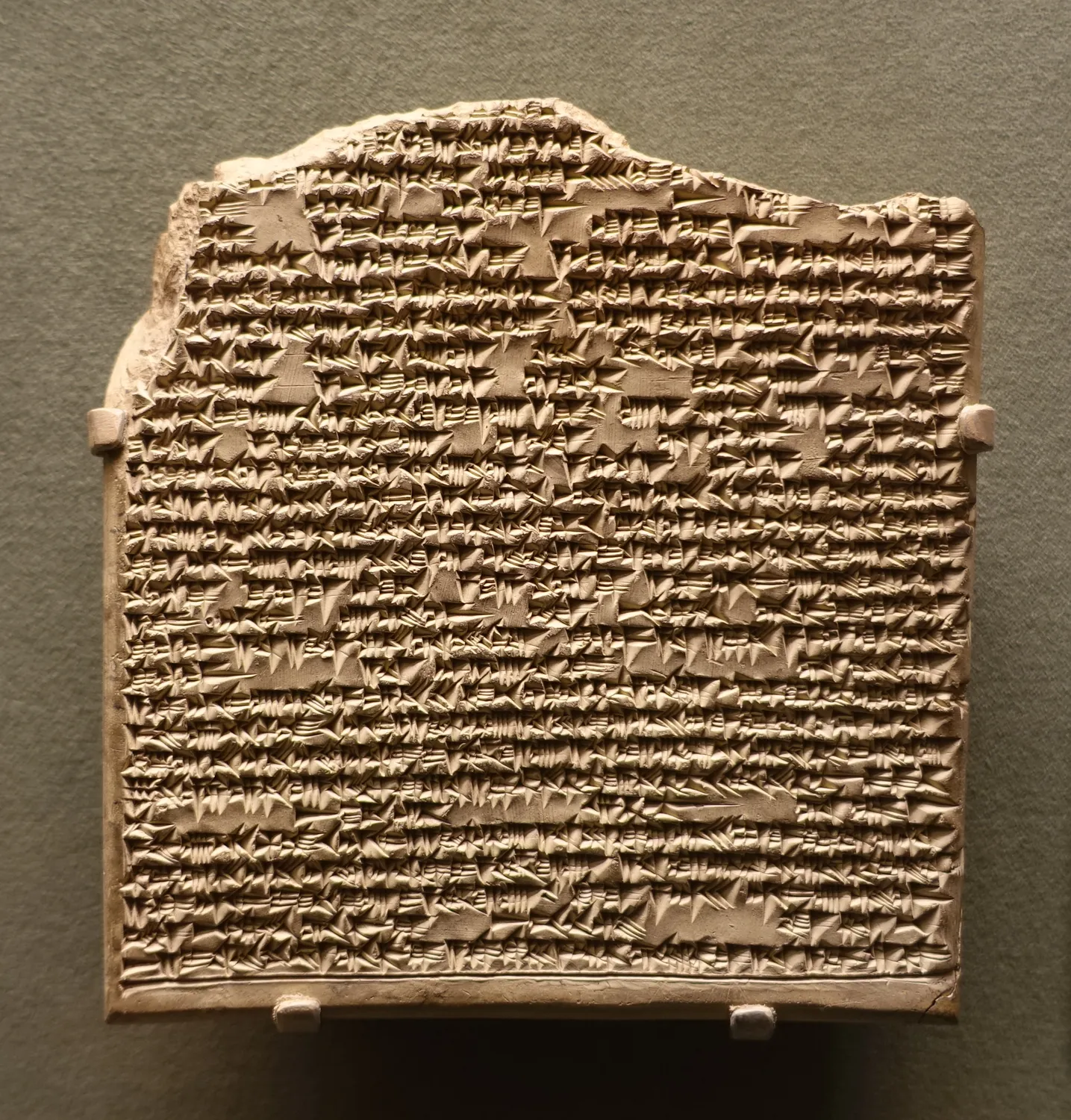
Ritual for the Observances of Eclipses, Babylonian, Mesopotamia, Seleucid period, c. 3rd-1st century BC, baked clay - Morgan Library & Museum - New York City - DSC06603

"Ritual for the Observances of Eclipses, Babylonian, Mesopotamia, Seleucid period, c. 3rd-1st century BC, baked clay - Morgan Library & Museum - New York City - by Daderot / Wikimedia Commons 

The study of science in ancient Mesopotamia began over 5,000 years ago in the land between the Tigris and Euphrates rivers, known as the "cradle of civilization." Mesopotamians developed remarkable systems for understanding mathematics, astronomy, and the measurement of time. Their discoveries helped organize daily life, support government, and influence later societies.

Mesopotamian mathematicians introduced a number system based on the number 60, called the sexagesimal system. This system made it easier to divide circles and time, and it is why we still use 60 seconds in a minute and 360 degrees in a circle today. Mesopotamian scribes used cuneiform writing on clay tablets to record calculations, trade, and taxes. Archaeologists have found tablets from the city of Uruk, dating as early as 3200 BCE, with multiplication tables and geometry problems. These records show that students in Mesopotamian schools learned advanced math to prepare for careers as scribes or officials.

Mesopotamian astronomers studied the skies from the tops of ziggurats, pyramid-like temples made from mud bricks. They observed the regular movements of the sun, moon, and planets. Their careful observations allowed them to invent one of the world's first calendars, based on the cycles of the moon. Priests and scholars charted the stars to predict seasons for planting and harvesting crops. Some tablets, such as the "Venus Tablet of Ammisaduqa" from Babylon (about 1600 BCE), list the rising and setting of Venus over many years. This data helped Mesopotamians plan religious festivals and agricultural work.

The need for accurate timekeeping led Mesopotamians to create new instruments. They used sundials and water clocks to measure hours during the day and night. These inventions helped regulate daily schedules in cities, including market times and temple rituals. The science of time influenced Mesopotamian law, religion, and social order. For example, the famous Code of Hammurabi (about 1754 BCE) included rules about business contracts that depended on precise measurements of time and goods.

Mesopotamian scientific achievements demonstrate how geography, society, and human curiosity combined to shape civilization. Their innovations in math, astronomy, and timekeeping spread to ancient Egypt, Greece, and beyond, leaving a lasting legacy. By linking science with religion, agriculture, and government, Mesopotamians helped build the foundations of modern knowledge.

This study of Mesopotamian science connects to broader themes of human adaptation, invention, and the development of complex societies in world history.

Interesting Fact: The word "Mesopotamia" comes from Greek and means "land between rivers," describing the region's unique geography.

Comprehension quiz (8 questions)

1. What is the Mesopotamian number system called?

Sexagesimal
Decimal
Binary
Roman

2. Which city had early math tablets?

Uruk
Babylon
Athens
Rome

3. What did Mesopotamians use to study the sky?

Ziggurats
Ships
Pyramids
Obelisks

4. Why did Mesopotamians chart stars and planets?

To predict seasons
To build machines
For decoration
For music

5. How did timekeeping help society?

Organized schedules
Built houses
Painted murals
Baked bread

6. What is a ziggurat?

Temple
Market
Library
Ship

7. Mesopotamian science only influenced Mesopotamia. True or false?

True
False

8. What does cuneiform mean?

Wedge-shaped writing
Round building
Star pattern
Market day
Who it's for

Perfect for the way you teach

Teachers
  • Build comprehension skills
  • Auto-graded quiz
  • Differentiated reading
Parents
  • Read together at home
  • Improve fluency
  • Quiet reading time
Homeschoolers
  • Reading curriculum support
  • Independent practice
  • Track Lexile growth
Topics

Reviews & Ratings

No reviews yet. Be the first to share your experience!

More reading you might love

19 more
Passage
Farming in Ancient Mesopotamia - reading educational content
Grades 5–8

Farming in Ancient Mesopotamia

ancient history · CA HSS 6.2+4

$1.50
Passage
Mesopotamian Irrigation Systems - reading educational content
Grades 5–8

Mesopotamian Irrigation Systems

ancient history · CA HSS 6.2+4

$1.50
Passage
Egypt's New Kingdom - reading educational content
Grades 5–8

Egypt's New Kingdom

ancient history · CA HSS 6.2+2

$1.50
Passage
How Mesopotamia Was Ruled - reading educational content
Grades 5–8

How Mesopotamia Was Ruled

ancient history · CA HSS 6.2+3

$1.50
Passage
Epic of Gilgamesh - reading educational content
Grades 5–8

Epic of Gilgamesh

ancient history · CA HSS 6.2+3

$1.50
Passage
Legacy of Ancient Civilizations - reading educational content
Grades 5–8

Legacy of Ancient Civilizations

ancient history · CA HSS 6.2+2

$1.50
Passage
Ancient Egyptian Afterlife - reading educational content
Grades 5–8

Ancient Egyptian Afterlife

ancient history · CA HSS 6.2+2

$1.50
Passage
Comparing Ancient Religions and Beliefs - reading educational content
Grades 5–8

Comparing Ancient Religions and Beliefs

ancient history · CA HSS 6.2+3

$1.50
Passage
Rosetta Stone Decoded - reading educational content
Grades 6–8

Rosetta Stone Decoded

ancient history · CA HSS 6.2+4

$1.50
Passage
Inventions of Ancient Mesopotamia - reading educational content
Grades 5–8

Inventions of Ancient Mesopotamia

ancient history · CA HSS 6.2+5

$1.50
Passage
Ancient Taxes and Tribute - reading educational content
Grades 6–8

Ancient Taxes and Tribute

ancient history · CA HSS 6.2+3

$1.50
Passage
Ancient Coins and Barter - reading educational content
Grades 6–8

Ancient Coins and Barter

ancient history · CA HSS 6.2+2

$1.50
Passage
Neolithic Tools - reading educational content
Grades 6–8

Neolithic Tools

ancient history · CA HSS 6.2+2

$1.50
Passage
Family Life in Ancient Civilizations - reading educational content
Grades 6–8

Family Life in Ancient Civilizations

ancient history · CA HSS 6.2+3

$1.50
Passage
Roles of Women in Ancient Societies - reading educational content
Grades 5–8

Roles of Women in Ancient Societies

ancient history · CA HSS 6.2+4

$1.50
Passage
Mesopotamia Ziggurats - reading educational content
Grades 5–8

Mesopotamia Ziggurats

ancient history · CA HSS 6.2+3

$1.50
Passage
Egyptian Social Classes - reading educational content
Grades 5–8

Egyptian Social Classes

ancient history · CA HSS 6.2+5

$1.50
Passage
King Solomon and the First Temple - reading educational content
Grades 6–8

King Solomon and the First Temple

ancient history · CA HSS 6.2+4

$1.50
Passage
King David of Israel - reading educational content
Grades 6–8

King David of Israel

ancient history · CA HSS 6.2+3

$1.50
Copyright © 2026 Workybooks. Made with ♥ in California.