First Americans Arrive
Interactive passage with audio narration, comprehension questions, and printable PDF.
By completing this purchase you agree to our Terms of Use and Privacy Policy. Your subscription renews automatically until you cancel. You can cancel anytime from your account settings. All sales are final and non-refundable. Digital content is available for download in your account immediately upon purchase.
What's included
Part of this bundle

First Americans Arrive preview and details
About this printable First Americans Arrive reading passage (Grades 6-8)
Sample passage and quiz from First Americans Arrive
Reading passage and comprehension quiz preview
First Americans
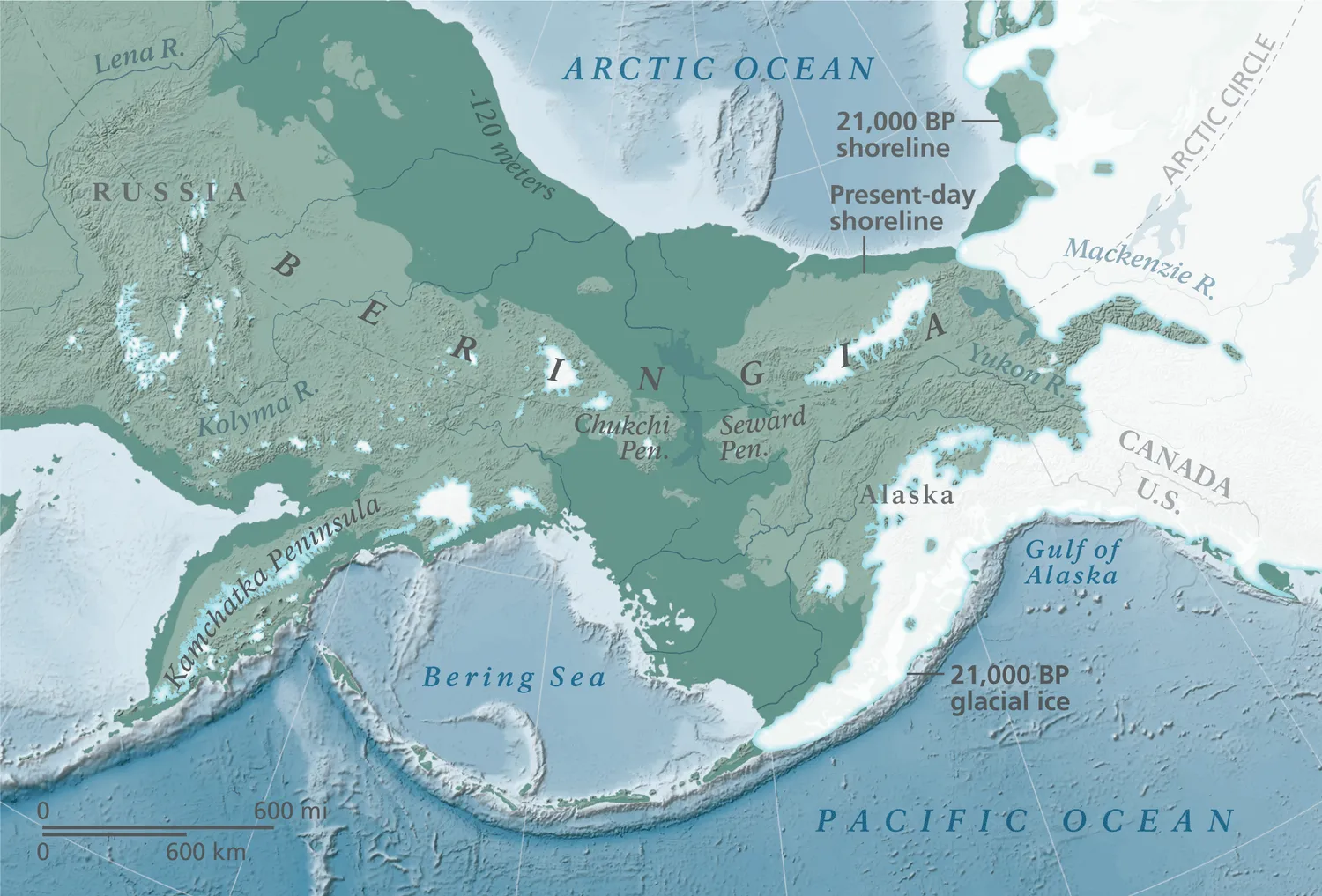
"Beringia-Map Bathymetry web72 final". Image by Unknown author.
The first humans arrived in the Americas over 12,000 years ago, marking one of history’s most significant migrations. These early hunter-gatherers traveled from northeastern Asia to North America, crossing a land bridge called Beringia that once connected Siberia and Alaska. Their journey was shaped by dramatic changes in Earth's climate and geography during the last Ice Age.
During the last Ice Age, vast sheets of ice covered much of the northern world. Sea levels dropped, exposing land that connected continents. Around 18,000 to 12,000 years ago, Beringia emerged as a wide, grassy plain. Archaeological evidence, such as stone tools found at sites like Bluefish Caves in Canada, suggests that people may have used this route to move east. Some scientists believe these early migrants followed herds of large animals like mammoths and bison, using their knowledge of the environment for survival. Others suggest coastal routes were possible, with people traveling by boat along the Pacific shoreline. Although exact migration paths are still debated, most experts agree that people reached the Americas by at least 12,000 years ago.
Life for these early Americans was challenging. As nomads, they moved often to find food, water, and shelter. They used stone artifacts for hunting and daily tasks. Sites like Monte Verde in Chile, dated to about 14,500 years ago, provide evidence of human settlement far south in the Americas. The spread of people across North and South America happened over thousands of years, leading to the development of diverse cultures. Each group adapted to their local environment, from cold Arctic regions to warm forests and grasslands.
This migration changed the course of human history. The peopling of the Americas led to new ways of life, technologies, and social organizations. Over time, these early settlers became the ancestors of Native American peoples, each with unique languages, traditions, and beliefs. The journey across Beringia shows how humans adapt to their surroundings and shape the world through migration and discovery.
Understanding the arrival of the first Americans connects to larger themes in history, such as human adaptation, the significance of migration, and the relationship between people and their environment.
Interesting Fact: Ancient footprints discovered in White Sands, New Mexico, show humans lived in North America at least 23,000 years ago—much earlier than previously believed.
Comprehension quiz (8 questions)
1. What is Beringia?
2. Where is Monte Verde located?
3. How did early humans survive?
4. What caused Beringia to appear?
5. Why did early Americans move often?
6. What is the significance of White Sands footprints?
7. The Ice Age helped expose Beringia.
8. What does 'artifacts' mean in the passage?
Perfect for the way you teach
- Build comprehension skills
- Auto-graded quiz
- Differentiated reading
- Read together at home
- Improve fluency
- Quiet reading time
- Reading curriculum support
- Independent practice
- Track Lexile growth