First Humans Reach Australia
Interactive passage with audio narration, comprehension questions, and printable PDF.
By completing this purchase you agree to our Terms of Use and Privacy Policy. Your subscription renews automatically until you cancel. You can cancel anytime from your account settings. All sales are final and non-refundable. Digital content is available for download in your account immediately upon purchase.
What's included
Part of this bundle

First Humans Reach Australia preview and details
About this printable First Humans Reach Australia reading passage (Grades 6-8)
Sample passage and quiz from First Humans Reach Australia
Reading passage and comprehension quiz preview
Early Humans Reach Australia
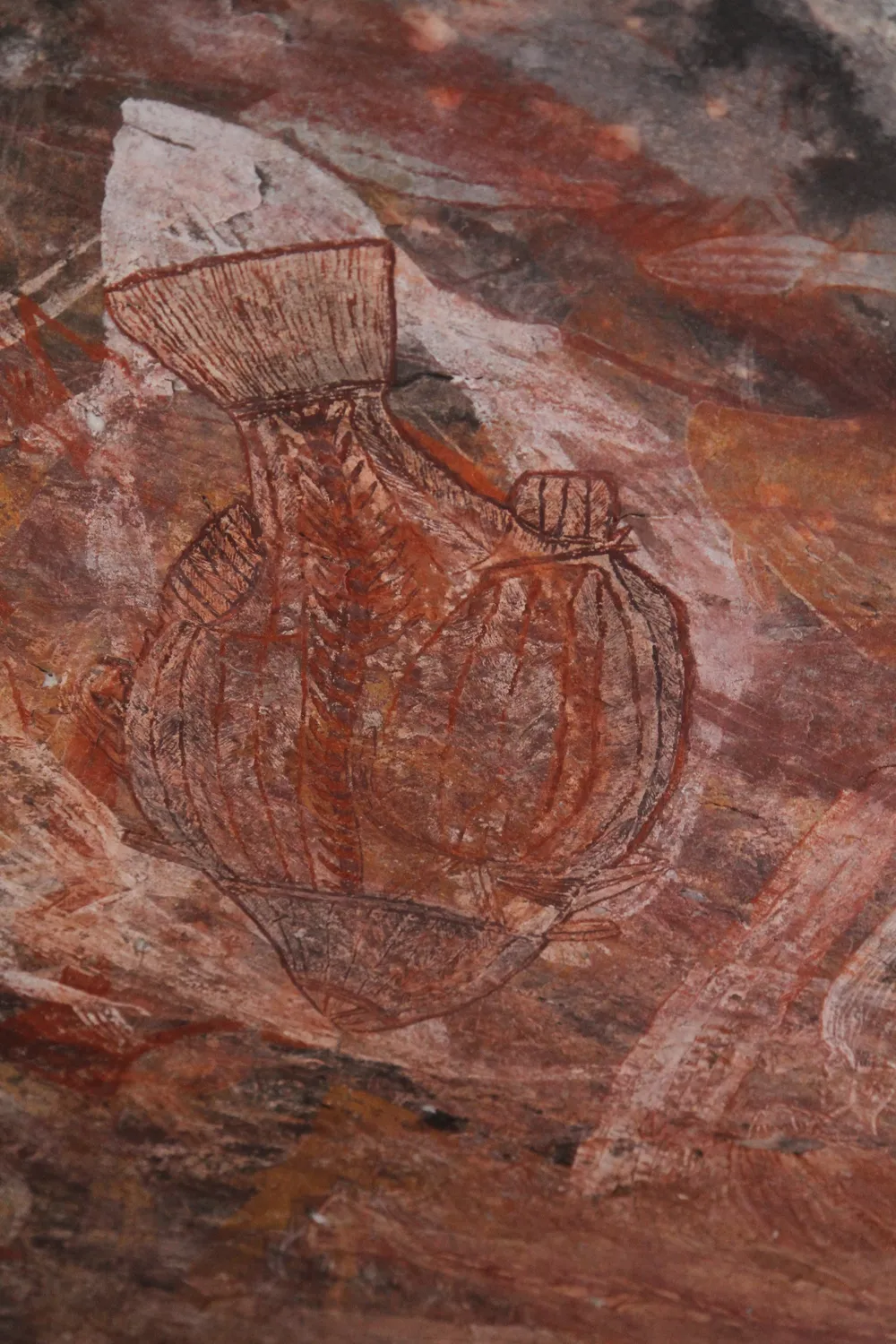
"Ubirr rock art Jul2013 23" by Dave Pape / Wikimedia Commons.
Archaeological evidence shows that early humans arrived in Australia at least 60,000 years ago by crossing the ocean from Southeast Asia. This migration is one of humanity's most remarkable achievements, as it required advanced planning, adaptation to new environments, and the use of boats or rafts long before many other cultures built such watercraft.
Scientists have found ancient stone tools and charcoal from campfires at sites like Madjedbebe in northern Australia, which date back over 65,000 years. These discoveries suggest that early Australians already possessed skills in toolmaking and fire use. Archaeologists believe small groups crossed the islands of Indonesia, known as Wallacea, navigating strong currents and open seas. These journeys required some of the earliest known maritime technology, as there were no land bridges connecting Australia to Asia, even during periods of lower sea levels.
The migration likely took place in several stages. People may have traveled island to island, using simple rafts or canoes, guided by the stars, ocean currents, and their knowledge of the environment. The first arrivals settled in the north, adapting to Australia's unique climate and ecosystems. Over thousands of years, they spread across the continent, developing distinct cultures and languages. Evidence from rock art, such as the ancient paintings at Kakadu, provides clues about their spiritual beliefs and daily life.
This journey had a tremendous impact on both people and the environment. As humans spread, they hunted new animals and adapted to changing climates, sometimes contributing to the extinction of large species like the megafauna. Social organization evolved, with groups developing complex systems of cooperation and trade. The ability to cross open water set early Australians apart from other Stone Age societies, marking a major step in human innovation.
Understanding the migration to Australia helps historians connect the themes of exploration, adaptation, and the interaction between humans and geography. It also highlights the diversity and resilience of ancient peoples.
Interesting Fact: Early Australian settlements are among the oldest continuous cultures in the world, with Aboriginal traditions and knowledge passed down for tens of thousands of years.
Comprehension quiz (8 questions)
1. How did early humans reach Australia?
2. What was found at Madjedbebe?
3. What technology did early Australians use?
4. Why did early humans travel island to island?
5. What was one effect of migration?
6. How did early Australians adapt?
7. Early humans crossed by land bridge.
8. What does 'innovation' mean?
Perfect for the way you teach
- Build comprehension skills
- Auto-graded quiz
- Differentiated reading
- Read together at home
- Improve fluency
- Quiet reading time
- Reading curriculum support
- Independent practice
- Track Lexile growth