Reading PassagePremium

Freshwater Biome

Interactive passage with audio narration, comprehension questions, and printable PDF.

No ratings yet
Grades 5–8ScienceElaEnglish · SpanishInteractive · Printable
Just this resource
$1.50
One-time purchase
Best value
Unlock everything
$49.99$29.99/yr
40% off until Oct 31 — 10,000+ resources
Renews at $49.99/year.

By completing this purchase you agree to our Terms of Use and Privacy Policy. Your subscription renews automatically until you cancel. You can cancel anytime from your account settings. All sales are final and non-refundable. Digital content is available for download in your account immediately upon purchase.

Unlock above to use these actions

What's included

Reading passage
Audio narration
Comprehension quiz
Writing activity
Glossary & flashcards
Differentiated version
Spanish translation

Freshwater Biome preview and details

About this printable Freshwater Biome science reading passage, NGSS-aligned (Grades 5-8)

This engaging science reading passage introduces Grade 6-8 students to the fascinating world of freshwater biome characteristics. Aligned with NGSS standards, the passage explains key concepts like ecosystems, biodiversity, and adaptation, highlighting real-world examples such as lakes, rivers, and wetlands. Important science vocabulary is bolded and defined, and a glossary helps reinforce understanding. Students can test their knowledge with an 8-question multiple-choice quiz and deepen their learning through writing activities that connect science concepts to everyday life. The content is clearly written, age-appropriate, and includes a Spanish translation for bilingual learners. Audio integration supports diverse learning needs. This resource builds scientific literacy, supports comprehension of natural environments, and encourages curiosity about the importance of freshwater biomes for people and wildlife.
Written by Workybooks TeamPublished by Workybooks
Preview

Sample passage and quiz from Freshwater Biome

Reading passage and comprehension quiz preview

Freshwater Biome Characteristics
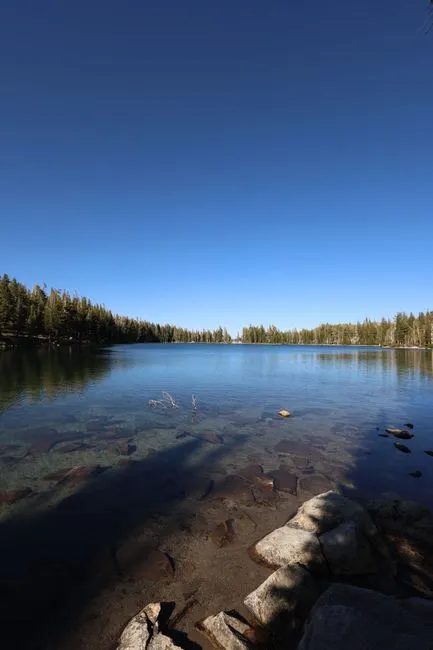
Crystal clear lake surrounded by trees under a bright blue sky in Mammoth Lakes, California.

"Crystal clear lake surrounded by trees under a bright blue sky in Mammoth Lakes, California." by Vasilis Karkalas / Pexels.

The freshwater biome includes all ecosystems found in water with low salt content. Unlike oceans, freshwater biomes have less than 1% salt in the water. These biomes are important because they provide homes for many plants and animals and supply water for people, farming, and industry.

There are several main types of freshwater biomes: ponds, lakes, rivers, streams, and wetlands. Ponds and lakes are standing bodies of water, while rivers and streams are moving bodies of water. Wetlands are areas where land is often covered by shallow water. Each type of biome has unique features that make it special.

Freshwater biomes have many layers that support different organisms. In lakes and ponds, the surface zone receives sunlight, helping plants like algae to grow. The deep-water zone is darker and colder, and is home to fish like trout. Wetlands are rich in plant life such as cattails and lily pads, which provide food and shelter for frogs, insects, and birds.

One key idea in science is biodiversity, which means the variety of living things in an ecosystem. Freshwater biomes are very biodiverse. For example, a single pond might have insects, fish, turtles, birds, and hundreds of plant species. These organisms interact with each other and with their environment, forming a complex web of life.

Another important concept is adaptation. Freshwater organisms have special traits that help them survive. For instance, frogs have webbed feet for swimming, and water lilies have leaves that float on the surface to get sunlight. Fish use gills to breathe underwater.

Freshwater biomes are important to humans. They supply drinking water, provide food like fish, and are used for recreation such as swimming and boating. Wetlands also help filter pollution and protect areas from flooding by soaking up extra water.

However, freshwater biomes are sensitive to changes. Pollution, building dams, and climate change can harm these habitats and reduce biodiversity. Protecting freshwater biomes is important for both people and wildlife.

Interesting Fact: The Amazon River, the world’s largest river by volume, releases about 20% of all the fresh water that flows into the oceans!

Comprehension quiz (8 questions)

1. What defines a freshwater biome?

Low salt water content
High salt water content
Only moving water
Only in oceans

2. Which is a standing body of water?

River
Pond
Stream
Wetland

3. What do wetlands help prevent?

Flooding
Sunlight
Salt water
Drought

4. Why do water lilies float?

Find food
Get sunlight
Hide from fish
Filter pollution

5. What might happen if a lake is polluted?

Biodiversity decreases
More fish survive
Water becomes salty
Plants grow faster

6. Moving bodies of water include:

Ponds and lakes
Rivers and streams
Lakes and wetlands
Ponds and wetlands

7. All freshwater biomes have high salt content. True or False?

True
False

8. What is biodiversity?

Only fish in water
Variety of living things
Sunlight in water
Amount of salt
Who it's for

Perfect for the way you teach

Teachers
  • Build comprehension skills
  • Auto-graded quiz
  • Differentiated reading
Parents
  • Read together at home
  • Improve fluency
  • Quiet reading time
Homeschoolers
  • Reading curriculum support
  • Independent practice
  • Track Lexile growth
Topics

Reviews & Ratings

No reviews yet. Be the first to share your experience!

More reading you might love

20 more
Passage
Biomes: Aquatic Ecosystems reading passage

Biomes: Aquatic Ecosystems

Reading Passage · MS-LS2-1

$1.50
Worksheet
Desert Ecosystems worksheet

Desert Ecosystems

Worksheet · W.5.2.D

Free
Passage
Meadow Ecosystem reading passage

Meadow Ecosystem

Reading Passage · 2-LS2-1

$1.50
Passage
Abiotic Factors in Ecosystems reading passage

Abiotic Factors in Ecosystems

Reading Passage · MS-LS2-1

$1.50
Passage
Grand Canyon Ecosystems reading passage

Grand Canyon Ecosystems

Reading Passage

$1.50
Passage
Tree Ecosystem reading passage

Tree Ecosystem

Reading Passage

Free
Passage
Biomes: Terrestrial Ecosystems reading passage

Biomes: Terrestrial Ecosystems

Reading Passage · MS-LS2-1

$1.50
Passage
Snow Leopard's Ecosystem Role reading passage

Snow Leopard's Ecosystem Role

Reading Passage · MS-LS4.D+3

Free
Passage
Ecosystem Services reading passage

Ecosystem Services

Reading Passage · MS-LS2-5+1

Free
Worksheet
Land Ecosystems worksheet

Land Ecosystems

Worksheet · TX.SCI.6.12A+2

$1.50
Worksheet
Water Ecosystems worksheet

Water Ecosystems

Worksheet · TX.SCI.6.12A+2

$1.50
Passage
Pond Ecosystem reading passage

Pond Ecosystem

Reading Passage

Free
Passage
Water in Ecosystems reading passage

Water in Ecosystems

Reading Passage · MS-LS2-3+1

$1.50
Interactive
Life in Different Habitats game

Life in Different Habitats

Game

$1.50
Passage
Carbon in Ecosystems reading passage

Carbon in Ecosystems

Reading Passage · MS-LS2-3

Free
Passage
Biodiversity and Ecosystem Health reading passage

Biodiversity and Ecosystem Health

Reading Passage · MS-LS2-5

$1.50
Passage
Photosynthesis in Ecosystems reading passage

Photosynthesis in Ecosystems

Reading Passage · MS-LS1-6+1

$1.50
Passage
Arctic Fox Food Web and Ecosystem Role reading passage

Arctic Fox Food Web and Ecosystem Role

Reading Passage

$1.50
Interactive
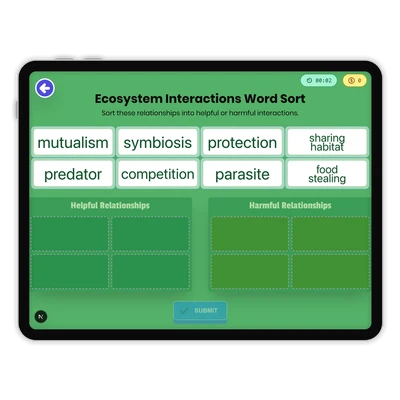
Ecosystem Interactions Word Sort game

Ecosystem Interactions Word Sort

Game

$1.50
Passage
Climate Change: Vulnerable Ecosystems reading passage

Climate Change: Vulnerable Ecosystems

Reading Passage · MS-ESS3-5+1

$1.50
Copyright © 2026 Workybooks Classroom. Made with ♥ in California.