This learning resource is available in interactive and printable formats. The interactive worksheet can be played online and assigned to students. The Printable PDF version can be downloaded and printed for completion by hand.
This comprehensive science passage introduces middle school students to the mechanisms and applications of geothermal energy, aligning with NGSS standards MS-PS3-4, MS-ESS3-3, and MS-ESS3-4. Students will learn how heat from Earth's interior, produced by magma and radioactive decay, can be used to generate electricity through various types of power plants like dry steam, flash steam, and binary cycle plants. The passage explores direct uses, such as building heating and hot springs, while discussing the advantages of geothermal energy, including reliability and low emissions, and its challenges, such as limited locations and high initial costs. Integrated audio support is available for enhanced accessibility. The passage includes vocabulary support, Spanish translations, differentiated readings, comprehension activities, and interactive graphic organizers to foster deep understanding and critical thinking skills.
CONTENT PREVIEW
Expand content preview
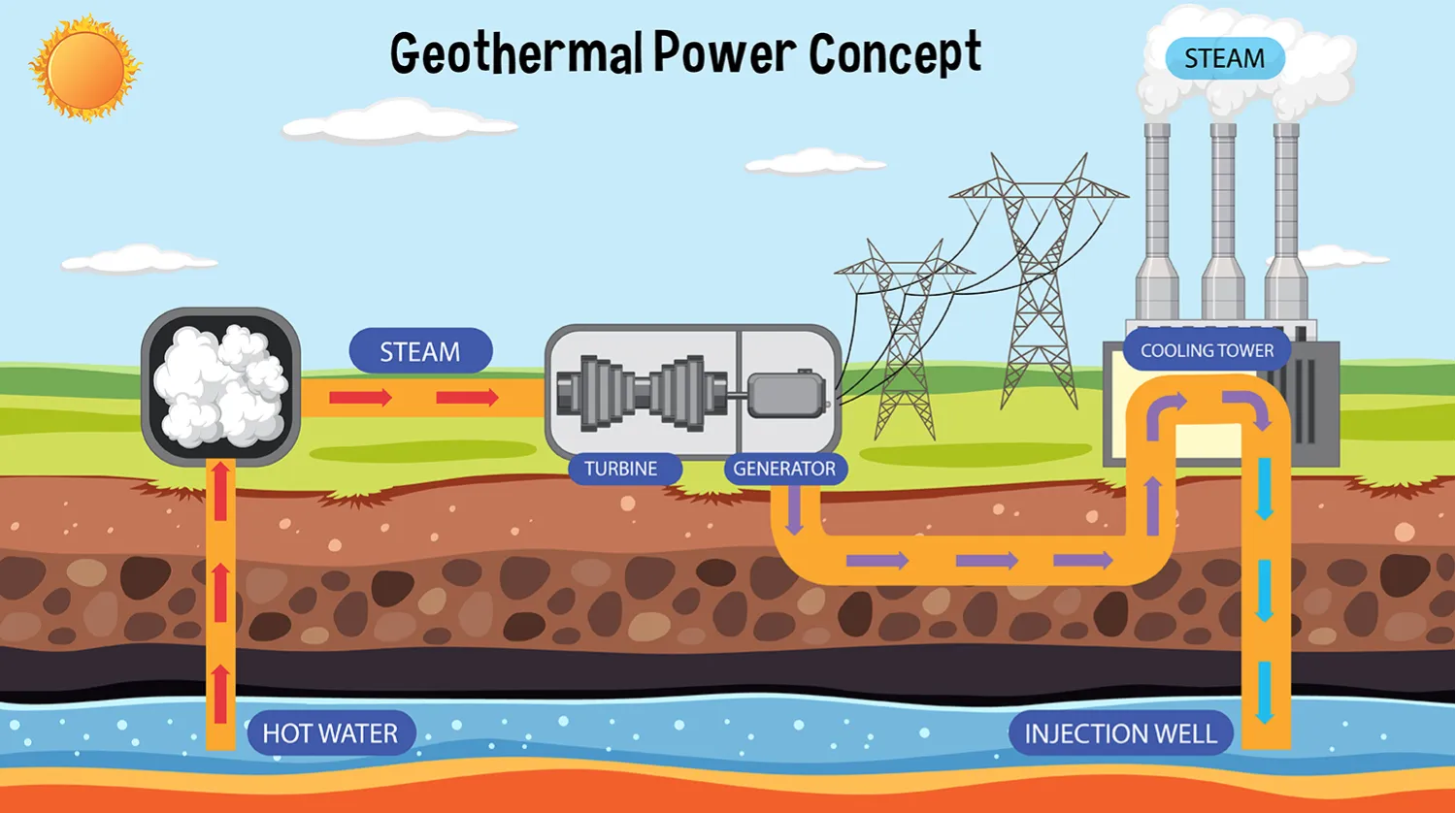
Geothermal power plant
Geothermal energy is the process of capturing heat from inside the Earth to generate electricity and provide direct heating. This type of energy is considered renewable because the Earth's internal heat is almost limitless compared to human needs. Countries like Iceland and New Zealand rely heavily on geothermal energy for both electricity and heating, making it a critical resource for reducing fossil fuel use.
The main source of geothermal energy is the intense heat found far beneath Earth's surface. This heat is produced by two primary mechanisms: the cooling of magma and the radioactive decay of elements in the Earth's crust. Magma is molten rock that rises from the mantle, sometimes reaching close to the surface, especially near tectonic plate boundaries. Radioactive elements like uranium, thorium, and potassium release energy as they decay, continuously warming the crust. In some regions, this underground heat can raise groundwater temperatures to over 350°C (662°F).
How Geothermal Power Plants Work
To generate electricity, engineers drill deep wells to access hot water and steam trapped underground. There are three main types of geothermal power plants. Dry steam plants use steam directly from the ground to spin turbines. Flash steam plants bring very hot water to the surface, where a drop in pressure causes it to turn into steam, which also spins a turbine. Binary cycle plants use moderately hot water to heat a secondary liquid with a lower boiling point, creating vapor that drives a turbine. Each method is chosen based on the temperature and pressure of the geothermal source.
Direct Uses and Environmental Impact
Geothermal energy is not just for electricity. It can also provide direct heating for buildings, greenhouses, and even swimming pools. In some places, natural hot springs are used for bathing or heating. Geothermal heating systems can reduce home energy bills by up to 50%. A major advantage of geothermal energy is its reliability; it provides constant power, unlike solar or wind energy. Additionally, geothermal systems produce very low emissions of greenhouse gases, making them environmentally friendly.
Challenges and Limitations
However, geothermal energy has some challenges. It is only practical in areas where Earth's heat comes close enough to the surface, such as volcanic regions or tectonic plate boundaries. Building geothermal plants requires high upfront investment for drilling and equipment. In rare cases, extracting geothermal energy can cause induced seismicity, or small earthquakes, due to changes in underground pressure. Careful monitoring and engineering can reduce these risks, but location and cost remain barriers.
Geothermal energy demonstrates the interconnectedness of Earth's systems. It shows how Earth's internal heat, geological processes, and human technology can work together to provide clean, sustainable energy for communities.
Interesting Fact: The world's first geothermal power plant began operation in Larderello, Italy, in 1904. Today, geothermal energy supplies about 0.3% of the world's electricity, but in Iceland, it provides over 25%!
What is the primary source of geothermal energy?
Heat from inside the EarthSunlightWindRainwater
Which country gets over 25% of its electricity from geothermal energy?
IcelandUnited StatesJapanAustralia
What is 'flash steam' in a geothermal power plant?
Using steam directly from undergroundHot water turns to steam when pressure dropsUsing a secondary liquid to make vaporCollecting steam from hot springs
What is a main environmental benefit of geothermal energy?
It produces very low emissionsIt works only during the dayIt increases air pollutionIt uses fossil fuels
What does the term 'induced seismicity' mean as used in the passage?
Natural earthquakes caused by tectonic platesEarthquakes caused by extracting geothermal energyVolcano eruptions near power plantsHeavy rain causing landslides
Which of the following best describes a 'binary cycle' plant?
Uses steam directly from the groundUses hot water to heat another liquid to make vaporUses the sun's heat to boil waterBurns fossil fuels to make steam
Why can't geothermal energy be used everywhere?
It needs areas where Earth's heat is close to the surfaceIt needs strong windsIt only works in desertsIt requires a lot of rain
Geothermal heating systems can reduce home energy bills by up to what percentage?
10%25%50%75%
True or False: Geothermal energy is a non-renewable resource.
TrueFalse
True or False: Flash steam plants use a secondary liquid to generate vapor.
TrueFalse
Perfect For:
👩🏫 Teachers
• Reading comprehension practice
• Auto-graded assessments
• Literacy skill development
👨👩👧👦 Parents
• Reading practice at home
• Comprehension improvement
• Educational reading time
🏠 Homeschoolers
• Reading curriculum support
• Independent reading practice
• Progress monitoring
Reading Features:
📖
Reading Passage
Engaging fiction or nonfiction text
❓
Comprehension Quiz
Auto-graded questions
📊
Instant Feedback
Immediate results and scoring
📄
Printable Version
Download for offline reading
🔊
Read Aloud
Voice-over with word highlighting
Reviews & Ratings
No reviews yet. Be the first to share your experience!
Related Content
Natural Disaster: Volcanic Eruptions
Volcanoes can erupt with lava and ash, changing the landscape. While dangerous, they also create fertile land and new la...
RI.3.1RI.4.4RI.4.2RI.5.2
Natural Disaster: Tornadoes
Tornadoes are dangerous spinning columns of air. Knowing the signs and having safety plans can help protect you from the...
RI.3.1RI.4.4RI.4.2RI.5.2
What Is an Endothermic Reaction?
This engaging science passage introduces middle school readers to the concept of endothermic reactions, aligned with NGS...
MS-PS3-44-PS3-34-PS3-2
What Is an Exothermic Reaction?
This science passage introduces students to the idea of exothermic reactions—chemical changes that release heat or light...
MS-PS3-44-PS3-34-PS3-2
Is Freezing Endothermic or Exothermic?
This clear and accessible passage helps students understand why freezing is an exothermic process, even though frozen ob...
MS-PS3-44-PS3-34-PS3-2
What Is Thermal Contraction?
This middle school science passage introduces the concept of thermal contraction, aligned with NGSS standard MS-PS1-4. I...
MS-PS3-44-PS3-34-PS3-2
What Is Gravitational Energy?
This engaging science passage for middle school students explores the concept of gravitational energy, a form of potenti...
MS-PS3-44-PS3-34-PS3-2
What Is Kinetic Energy?
This NGSS-aligned reading passage introduces 6th–8th grade students to the concept of kinetic energy—energy that an obje...
MS-PS3-44-PS3-34-PS3-2
Understanding Mechanical Energy
This science passage is crafted for 6th–8th grade students and focuses on mechanical energy—specifically the combination...
MS-PS3-44-PS3-34-PS3-2
Chemical Energy
This informational science passage on chemical energy is designed for middle school students and aligns with the NGSS st...
MS-PS3-44-PS3-34-PS3-2
Sublimation: The Solid-to-Gas Magic
This engaging NGSS-aligned reading passage explores the science of sublimation, a unique phase change where a solid turn...
MS-PS3-44-PS3-34-PS3-2
Human Impacts: Pollution
This middle school science reading passage, aligned with NGSS standards MS-LS2-4 and MS-ESS3-3, examines the mechanisms ...
MS-LS2-4MS-ESS3-3
Human Impacts: Habitat Destruction
This grade 6-8 science passage explores human impacts on ecosystems, focusing on habitat destruction as the leading caus...
MS-LS2-4MS-LS2-5MS-ESS3-3
Ecosystem Services
This engaging middle school science passage introduces students to the concept of ecosystem services, the vital benefits...
MS-LS2-5MS-ESS3-3
Conservation Strategies
This comprehensive passage introduces students in grades 6-8 to the major strategies used in conservation biology, such ...
MS-LS2-5MS-ESS3-4
Environmental Problems and Solutions
This passage for grades 6-8 introduces major environmental problems such as habitat loss, pollution, climate change, inv...
MS-LS2-4MS-ESS3-3MS-ESS3-4
Sustainability and Individual Action
This reading passage for grades 6-8 introduces the concept of sustainability, defined as meeting current needs without c...
MS-ESS3-4
Restoration Ecology
This passage introduces middle school students to the vital field of restoration ecology, aligning with NGSS standards M...
MS-LS2-4MS-ESS3-4
Climate Change: Solutions and Mitigation
This passage explores scientific solutions and mitigation strategies for climate change, designed for middle school scie...
MS-ESS3-4MS-ESS3-5
Scientific Theories
This reading passage for grades 6-8 introduces students to the concept of scientific theories, emphasizing that these ar...
MS-PS1-1MS-PS1-4MS-PS3-4SCIENCE AND ENGINEERING PRACTICES